Washington funds GlobalFoundries' onshore photonics while China's module makers fund its margins
Weeks after the US finalized up to $375 million in milestone-tied CHIPS money for GlobalFoundries' quantum business, the foundry's photonics chief was in Shanghai talking up "strong" demand from Chinese optical-module makers. One photonics engine now has two paymasters.
 Vincent Jiangthree-minute read
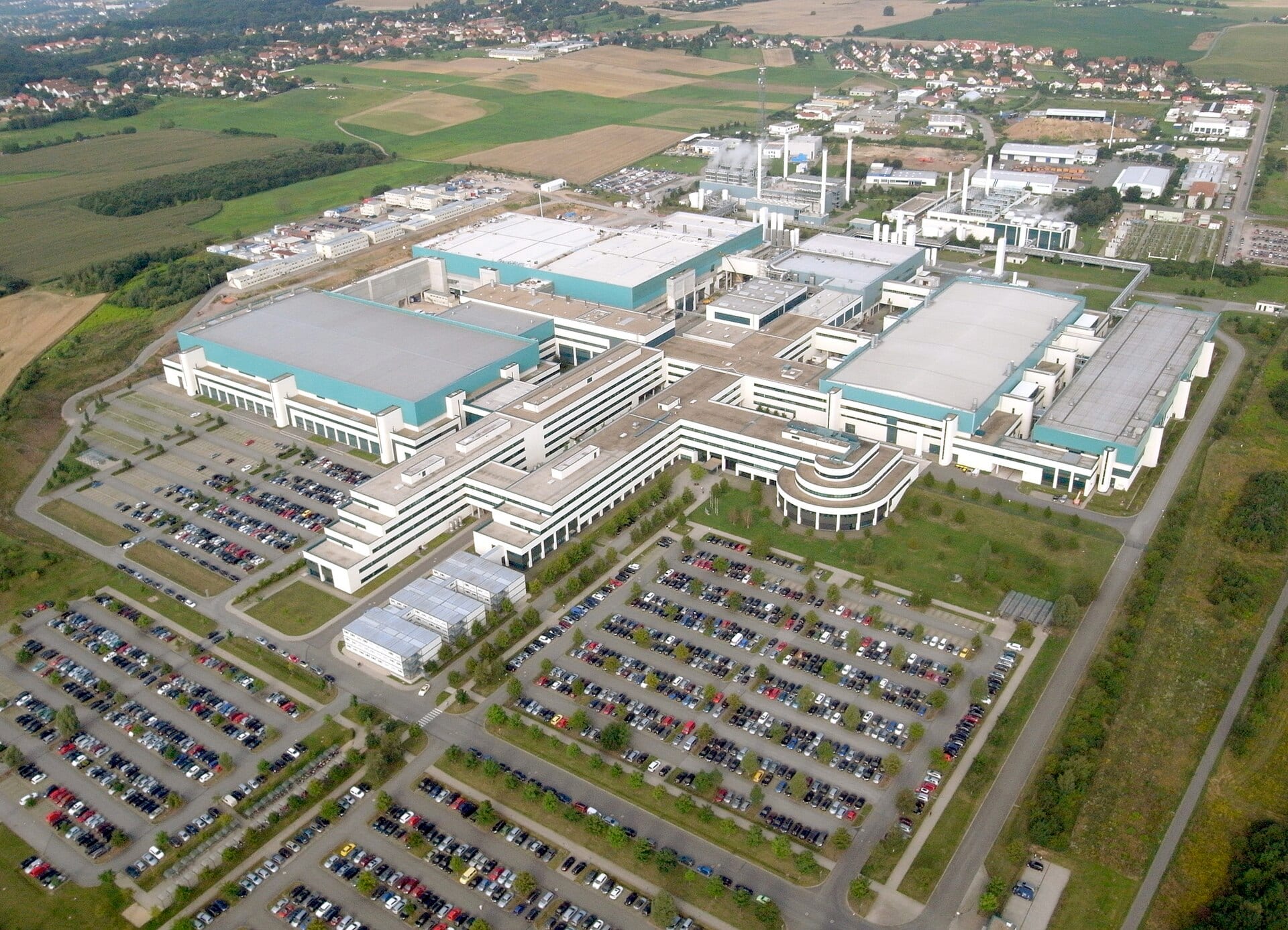
Shanghai says demand is strong
At GlobalFoundries'+9.53% — GlobalFoundries, up 9.53 percent today annual tech summit in Shanghai, Shankaran Janardhanan, senior vice-president for photonics and radio frequency, called demand from Chinese optical-module makers "strong" 1. Those makers now ship in volume to US hyperscalers as data-center standards jump from 100 to 200 gigabits per second per lane 1. Earlier this month GF opened a Guangzhou office to deepen a partnership with local foundry Zen Semi, a deal that transfers 40-nanometre automotive-chip know-how and builds manufacturing capability inside China 1. The company has operated there for 12 years 1.
Washington put $675 million on the table in six weeks
On 8 September, GF finalized a definitive agreement with the Commerce Department's CHIPS R&D Office: up to $375 million over five years, tied to milestones, for its Quantum Technology Solutions business 2. That followed a 29 July letter of intent for a further $300 million to accelerate silicon photonics, with co-packaged optics the stated focus 3. The quantum award carried an equity kicker: 9,907,399 shares issued to Commerce at $37.85, roughly 1% of the company, which the department has already filed to sell 4. Chief executive Tim Breen calls silicon photonics "essential to AI infrastructure" 3.
The receipts: the China-facing line is the growth line
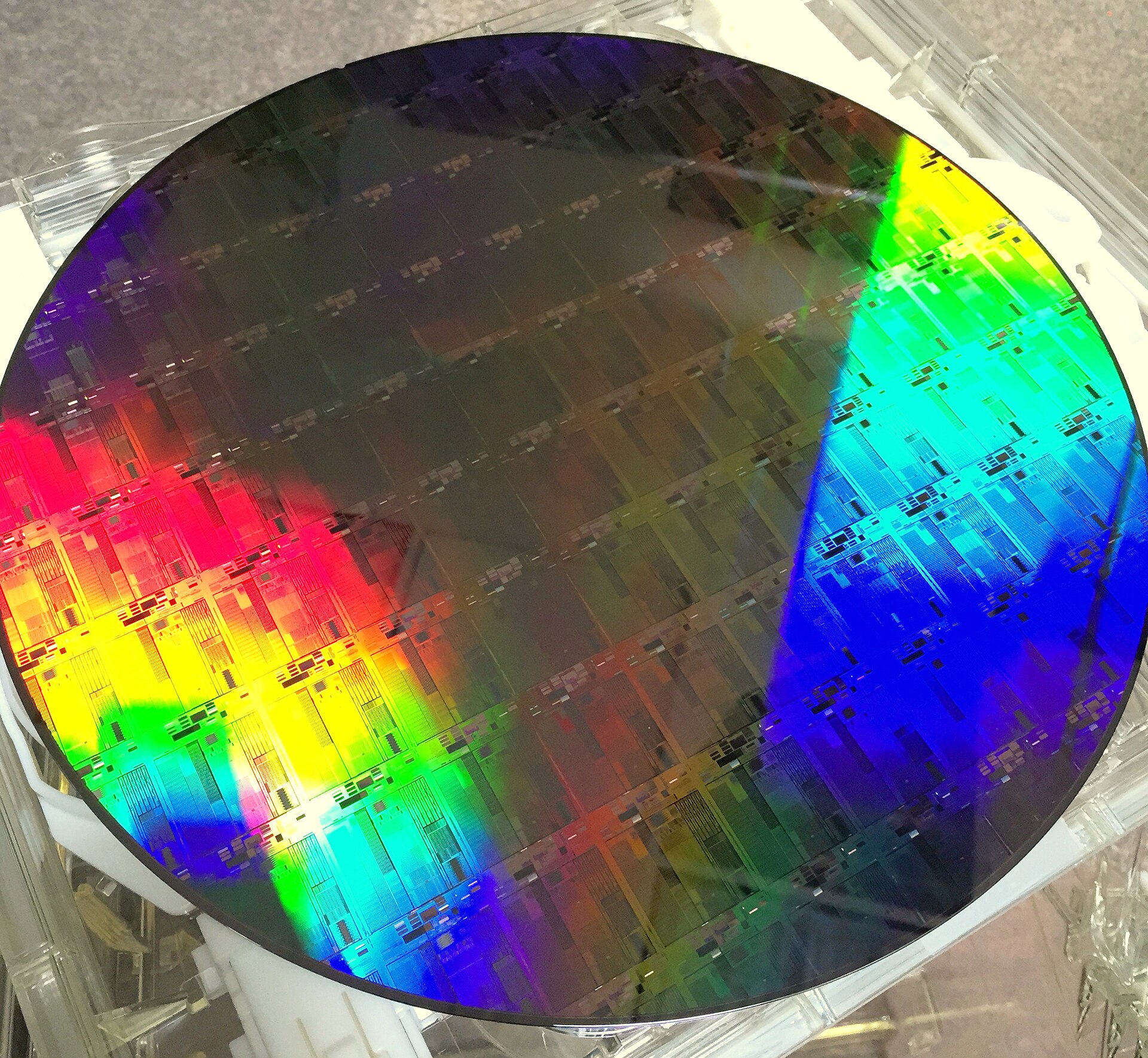
The module trade sits inside GF's growth engine. Communications infrastructure and data-center revenue reached $286 million in the second quarter, up 62% year over year, the seventh consecutive quarter of double-digit growth 56, and management lifted full-year segment growth guidance to 50-60% 6. Group gross margin hit 28.3% in Q2 2026, from 24.2% a year earlier 5. GF says it supplies four of the five largest optical-transceiver makers, with 200-gigabit-per-lane output already in production 7.
Gross margin has climbed almost six points off its Q1 2025 trough
Data
| IFRS gross margin | |
|---|---|
| Q3 '24 | 23.8% |
| Q4 '24 | 24.5% |
| Q1 '25 | 22.4% |
| Q2 '25 | 24.2% |
| Q3 '25 | 24.8% |
| Q4 '25 | 27.8% |
| Q1 '26 | 27.6% |
| Q2 '26 | 28.3% |
Group revenue has stayed in a $1.6-1.8 billion band while the data-center line carries the growth
Data
| Quarterly revenue | |
|---|---|
| Q3 '24 | $1.74B |
| Q4 '24 | $1.83B |
| Q1 '25 | $1.59B |
| Q2 '25 | $1.69B |
| Q3 '25 | $1.69B |
| Q4 '25 | $1.83B |
| Q1 '26 | $1.63B |
| Q2 '26 | $1.79B |
GF's defense: the chain was never national
Janardhanan's counter is structural: "In the semiconductor industry, I don't think there is any single region that is able to independently cover the entire value chain" 1. GF's fabs span the US, Europe and Asia 1, and the quantum money funds cryogenic CMOS and packaging for quantum chips, a different product line from the modules 2. Nothing in the record shows either side calling the two tracks a conflict; the tension is in the incentives, not the statements.
Three dated tests will tell if the bet holds
Three dated things decide whether the two-track bet holds: whether the $300 million photonics letter of intent hardens into a definitive award like September's quantum agreement 23; when Commerce's 1% stake reaches the market under its shelf registration 4; and whether gross margin reaches the 30% target management set for year-end 6. Washington is paying for the capability; the volume still books through the module makers.
Get Chips by email, free
How AI demand is reshaping chipmakers, memory and the fabs behind them. In our daily email, every weekday.
Reader comments
0 comments