Google's reported 3-million-unit TPU switch to Intel packaging forces Nvidia and AMD to prepay substrates
Google's ninth TPU moves its wiring from TSMC's silicon interposers into the organic substrates that Ibiden and Unimicron build. For Ibiden, which draws 29.4% of sales from Nvidia, that means a second deep-pocketed bidder for the same lines.
 Richard Tangthree-minute read
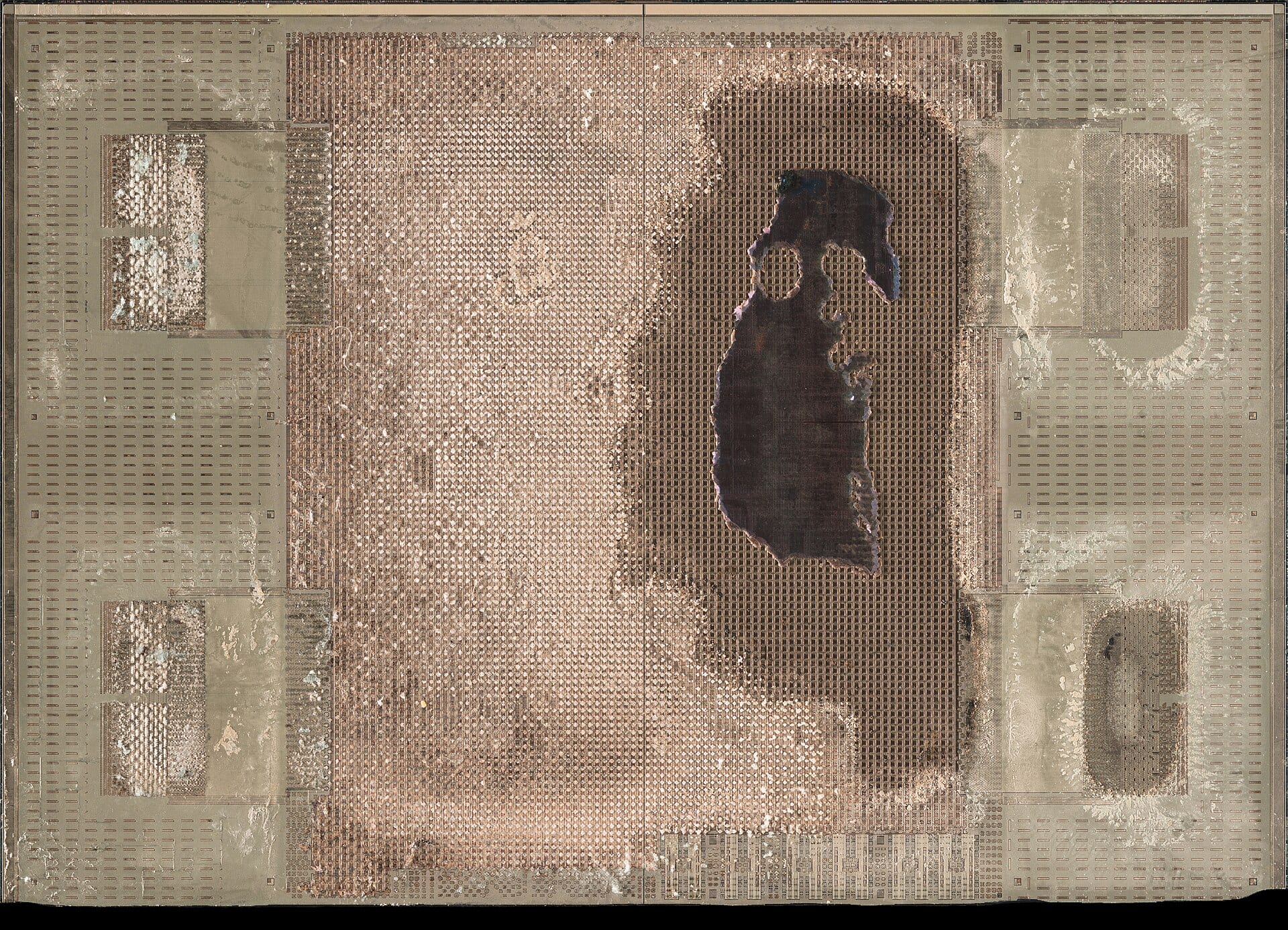
Google's ninth-generation Tensor Processing Unit, codenamed Humufish, is due for volume production by late 2027, and its move to Intel's+12.73% — Intel, up 12.73 percent today EMIB packaging has already pushed Nvidia+32.27% — Nvidia, up 32.27 percent today and AMD+8.48% — AMD, up 8.48 percent today into paying substrate makers up front for allocation 12. The leverage now sits with Japan's Ibiden−11.18% — Ibiden, down 11.18 percent today and Taiwan's Unimicron−9.90% — Unimicron, down 9.90 percent today, whose qualified substrate lines every large AI chip buyer must now pay for in advance 1.
The package becomes mostly substrate
Every TPU since the third generation has been packaged in TSMC's+15.63% — TSMC, up 15.63 percent today CoWoS, which spreads a silicon interposer across the whole package 2. Intel's EMIB does the opposite: tiny silicon bridges carry only the dense die-to-die links, everything else routes through an ordinary organic substrate, and the T variant sends power vertically through the bridge 2.
A package that is mostly organic substrate is built on the product Ibiden and Unimicron sell, and both supply into EMIB advanced packaging 1. Google's+6.37% — Google, up 6.37 percent today reported order, above three million units for 2028, is the demand Nvidia is paying to fence off 3.
Yield, not design, is the bottleneck
The pinch is already visible. GF Securities, a broker whose analysts track the chip supply chain, reported on October 13 that TPU v9 faces a slight delay because of EMIB substrate yield, which puts the problem in the substrate line rather than in Intel's bridge 4. Ibiden cannot build its way out in time: on October 29 its board approved about ¥151 billion for a new substrate plant that reaches mass production only in fiscal 2029, after Humufish ramps 5.
Now the hyperscalers bid for the same lines
Nvidia has asked partners to quadruple capacity, against the 2.5x expansion already announced 1. We covered Nvidia paying Ibiden, Samsung Electro-Mechanics and Unimicron for substrate capacity in October, and traced the newest money to Kinsus four days ago 1. What is new since both is the buyer on the other side of the table: the hyperscalers, the giant cloud operators such as Google, whose in-house chips now compete for the same lines 1.
Ibiden's one-customer risk becomes a two-bidder contest
For Ibiden, the second bidder changes the risk that has defined the stock. Nvidia was 29.4% of sales in the year to March 2026, and the shares fell more than 8% in a single session in mid-November on Nvidia's leadership turmoil 6. A second customer of that scale bidding for the same lines caps the damage any one client can do.
The layer beneath is already getting paid
Ibiden's own numbers show the layer already being paid: it guides operating profit to more than double in the year to March 2027, and its October filing ties the new capacity to AI demand moving from training toward inference and then agentic use 5. Google is meanwhile shuffling its design partners, cutting one high-end Broadcom+2.38% — Broadcom, up 2.38 percent today-designed chip line from its 2027 plans while raising MediaTek-designed orders 7. Broadcom fell just over 12% the day that landed 8.
Two disclosures decide how far this runs
Two disclosures would confirm how far this runs: a signed Google substrate order with Ibiden or Unimicron, which no source yet discloses, and EMIB yield recovering before the late-2027 ramp 4. Until Ibiden's fiscal-2029 capacity lands, the substrate owners hold the scarce asset and the chip designers finance the layer beneath them 4.
Get Chips by email, free
How AI demand is reshaping chipmakers, memory and the fabs behind them. In our daily email, every weekday.
Reader comments
0 comments