HeyGen sells Avatar 6 while Tavus's Griffin scores 3.83 against a human's 3.92 and still has no price
HeyGen put Avatar 6 on general availability on November 17 with a public API and first place in New Measure's blind Avatar Arena; Tavus's Griffin, which Tavus says is the highest score ever recorded for an AI on NVIDIA's face-to-face benchmark, is still a preview with no price. Revenue accrues to HeyGen today because Avatar 6 is the model on sale; Tavus's best model is not.
 Vincent Jiangthree-minute read
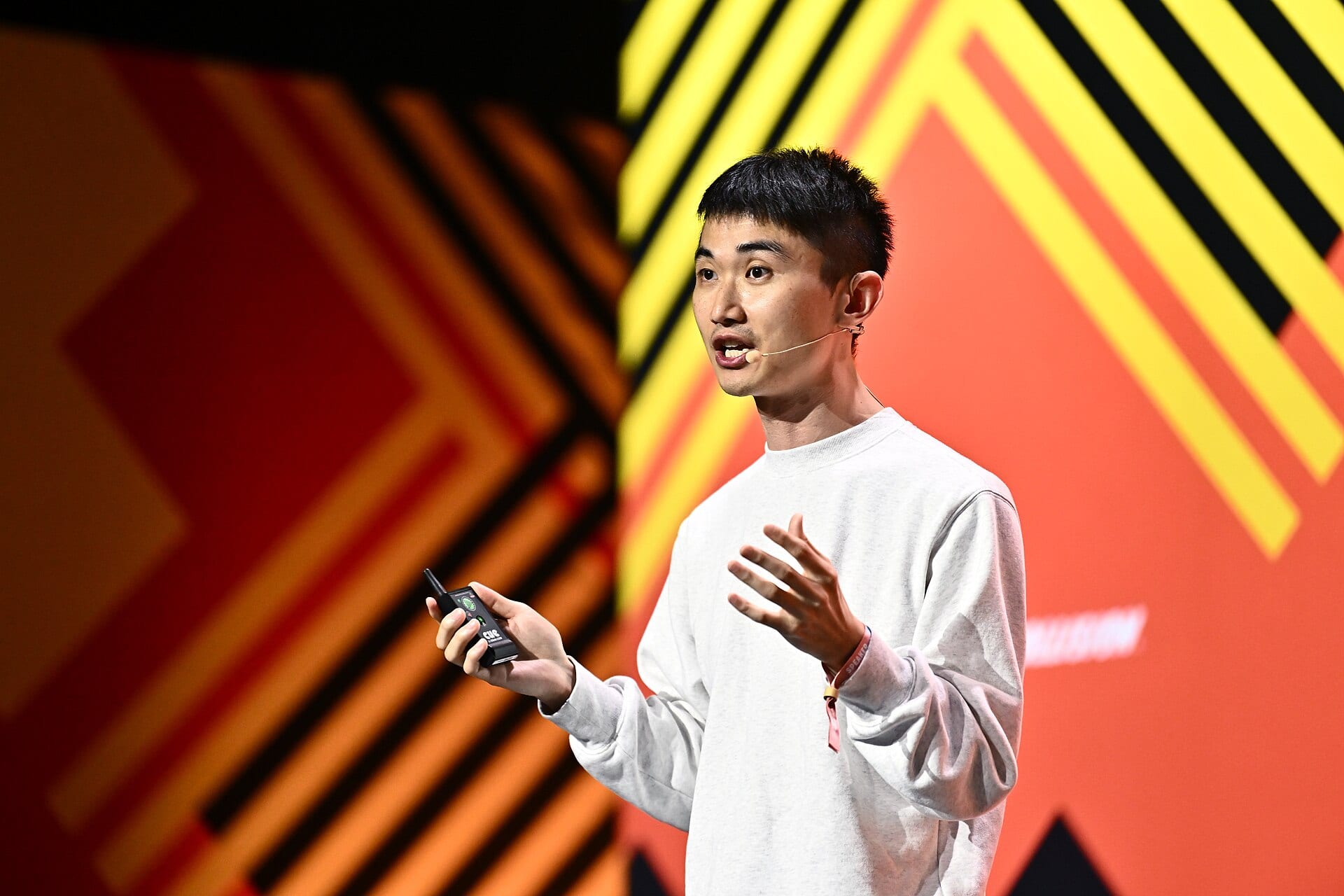
Seven weeks after Tavus, a San Francisco AI research lab, unveiled Griffin on October 1 as the first "Human Interaction Model," a full-duplex model that holds live face-to-face conversations, its own site still lists "Griffin (Preview)" in the model menu, with no price and no release date 12. Only Griffin-Lite has shipped, to select trusted testers, while Tavus builds the disclosure and safety mechanisms it says the model needs 1.
Tavus has raised $70M from CRV, Sequoia Capital, Scale Venture Partners and Y Combinator; its 150,000-plus developers and customers include Amazon−2.75% — Amazon, down 2.75 percent today, Mayo Clinic and Salesforce−0.18% — Salesforce, down 0.18 percent today 1. What they can buy today is a generation older: self-serve plans from $22 to $975 a month run the Phoenix-4.5 pipeline, and Griffin appears in no tier 3.
The scores lead the field, the sales do not
On NVIDIA's VideoFDB benchmark of face-to-face AI, Griffin scored 3.83 out of 5 on generation, 0.09 below the 3.92 human reference; the next-highest published system managed 2.80 1.
Griffin scores 3.83 on NVIDIA's VideoFDB, 0.09 below the human reference
The next best published system is more than a point behind.
Data
| Value | |
|---|---|
| Human reference | 3.92/5 |
| Tavus Griffin | 3.83/5 |
| Next best published AI | 2.8/5 |
The 48% headline comes from a live study Tavus ran itself: of 54 participants who held one-minute video calls with Griffin, 48% believed they had been talking to a human 14. The previous Tavus stack convinced one rater in 41, or 2.4% 4.
HeyGen's Avatar 6 is already on sale
HeyGen~$500M — HeyGen, private, latest valuation ~$500M, a rival whose platform turns scripts into presenter videos, put Avatar 6 on general availability on November 17 with a public API 56, and says it doubled to $200 million in annual recurring revenue in the eight months to June 5. It tops New Measure's blind Avatar Arena, a chess-style preference rating: 1,197 Elo on personal avatars, 1,237 on stock presenters 6.
Every headline number carries an asterisk
The 48% has no independent confirmation 7. Maty Bohacek, a Stanford researcher, told the publication AI Engineer that 99% of participants caught Tavus's previous model in his academic test, and that AI agents impersonating people beat phone and Zoom−2.18% — Zoom, down 2.18 percent today verification in 65% of runs 7.
HeyGen's banner 84.4% is arithmetic: raters picked Avatar 6 as the real recording in 42.2% of side-by-side viewings, and the advertised figure doubles that 6. The arena's clips ran 35 seconds or less in 97% of comparisons, on renders that typically took about three minutes 6.
The next number that matters is a price
Tavus is monetizing a generation its own benchmark numbers say it has surpassed, while Avatar 6 is the model a buyer can put on a credit card 36. The capital behind both is venture money: Tavus's $70M from CRV, Sequoia, Scale and Y Combinator 1, and HeyGen's $60M round at a $500 million valuation led by Benchmark in June 2024 8.
The signal to watch is pricing. When Tavus publishes a Griffin rate card, buyers can compare a live-conversation model against Avatar 6 on cost, not on claims 6.
Get Model by email, free
The AI labs, their models, and the business behind them. In our daily email, every weekday.




Reader comments
0 comments