HeyGen's Avatar 6 scored 84% on realism, but its 42.2% pick rate was below chance
Avatar 6 launched November 17, 2026, with an 84% realism figure and first place in a blind arena; the score doubles a below-chance pick rate, and the arena capped 97% of clips at 35 seconds. That is the evidence base under a company claiming $200 million of annual revenue.
 Vincent Jiangthree-minute read
The 84 percent, taken apart
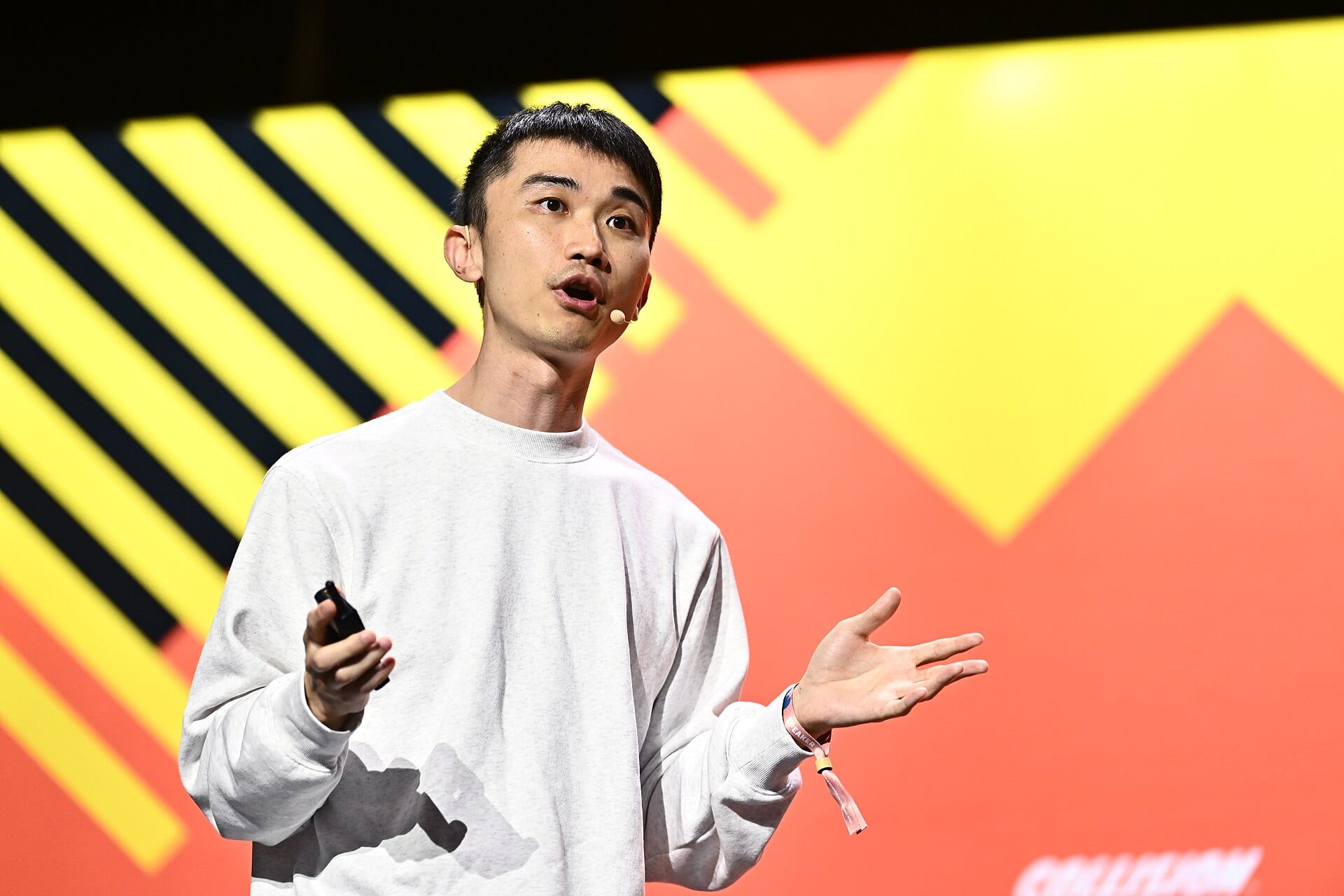
HeyGen~$500M — HeyGen, private, latest valuation ~$500M launched Avatar 6 on November 17, 2026, an audio-driven avatar model that reads a script and times the gestures to the words 1. The headline evidence: 84% of participants in a Turing-style test found the avatar as realistic as the person it represents 1. Chief executive Joshua Xu sells trust, and names the stake: "People decide in seconds whether a video feels like a person talking to them, and when it doesn't, they stop listening" 1.
Of 270 side-by-side answers, 42.2% picked the avatar
The technical report published the same day scores indistinguishability at 84.4% and shows the arithmetic underneath: outside raters chose Avatar 6 as the real recording in 42.2% of 270 side-by-side answers, below the 50% a coin flip delivers, and the headline score doubles that share 2. A separate single-clip test had 65.1% of answers calling Avatar 6 real, against 78.9% for genuine recordings 2. Doubling a below-chance pick rate does not move it above chance.
Raters judged the real person real more often than the avatar
The avatar scored below the real recording, and below a coin flip head-to-head
Data
| Value | |
|---|---|
| Genuine recording | 78.9% |
| Avatar 6, own voice (single clip) | 65.1% |
| Avatar 6 (head-to-head pick) | 42.2% |
First place, measured on half-minute clips
The independent evidence is real but short. New Measure's Avatar Arena, blind votes across eight avatar providers from October 27 to November 16, ranks Avatar 6 first in both categories, Elo 1,197 for personal avatars and 1,237 for stock presenters against a 1,000 average 3.
The same results page draws its own fence: the typical script ran 62 words, 97% of comparisons had both videos at 35 seconds or shorter, and the round cannot say which provider wins a two-minute explanation, let alone a long lesson 3. HeyGen's demonstrations run 25 to 28 minutes 2. Renders typically took about three minutes against roughly one for Runway's GWM-1 avatars, and one in ten HeyGen videos ran past 9.5 minutes 3. Even the runner-up ran partly on HeyGen: Creatify's personal-avatar voice used HeyGen's voice clone 3.
The number that survives, on HeyGen's own metric
One result holds up on any reading: HeyGen's editor regenerates only the edited span, changing 34.4% of frames on average across 20 edits, while MiniMax's H3-max, Alibaba's−2.51% — Alibaba, down 2.51 percent today Wan 3.0, ByteDance's Seedance 2.5 and HappyHorse Edit rewrote 99.7% to 100%, the whole take 2. Against general video models the edge narrows: 50.1% versus Wan 3.0 from a photo, a tie by HeyGen's own label, 54.9% versus Kuaishou's Kling 4.0 and 72.4% versus Seedance 2.5 2.
HeyGen's editor rewrites a third of the frames; four rivals rewrite nearly all
Data
| Value | |
|---|---|
| MiniMax H3-max | 100% |
| Alibaba Wan 3.0 | 100% |
| HappyHorse Edit | 100% |
| ByteDance Seedance 2.5 | 99.7% |
| HeyGen Avatar 6 editor | 34.4% |
Against general video models, Avatar 6's edge runs from a tie to 72%
HeyGen tied Wan 3.0 and edged Kling 4.0; the clear win is Seedance 2.5
Data
| Avatar 6 share of preferring answers | |
|---|---|
| vs Seedance 2.5 (ByteDance) | 72.4% |
| vs Kling 4.0 (Kuaishou) | 54.9% |
| vs Wan 3.0 (Alibaba) | 50.1% |
The private mark, and the listed labs it benchmarks
HeyGen is private, last priced at $500 million in June 2024 on $35 million of annual recurring revenue, and says it passed $200 million in June 2026, doubled in eight months, an unaudited run rate 1 4.
Public money sits in its comparison table: MiniMax, which floated in Hong Kong in January and opened H3's weights within days of release, is now graded on an edit metric written by a company that shipped on ByteDance's Seedance 2.0 in April and now sells its own avatar, video and voice stack 5 6. The consent story has a seam, too: the release requires explicit consent for realistic videos of real people, while the API documentation restricts realistic video references to enterprises and lets some contracts skip the consent step 1 7.
Watch the long-form round
The open question is duration. Until a long-form round of the arena runs, a product demonstrated at 28 minutes is being marked on evidence gathered 35 seconds at a time 3.
Get Model by email, free
The AI labs, their models, and the business behind them. In our daily email, every weekday.




Reader comments
0 comments