Kaiser therapists ratified a contract barring layoffs to 2029 and giving their union a say over AI
The four-year deal bars layoffs through September 2029 and makes any AI change to behavioral care a matter for union consultation and bargaining, which rewrites what clinical-AI vendors can sell into the California giant. The same week, another Kaiser union went to federal court over 50 jobs headed to Georgia.
 Vincent Jiangthree-minute read
Drafted with AI from the documents listed under Sources, then edited and fact-checked by Vincent Jiang. How we work
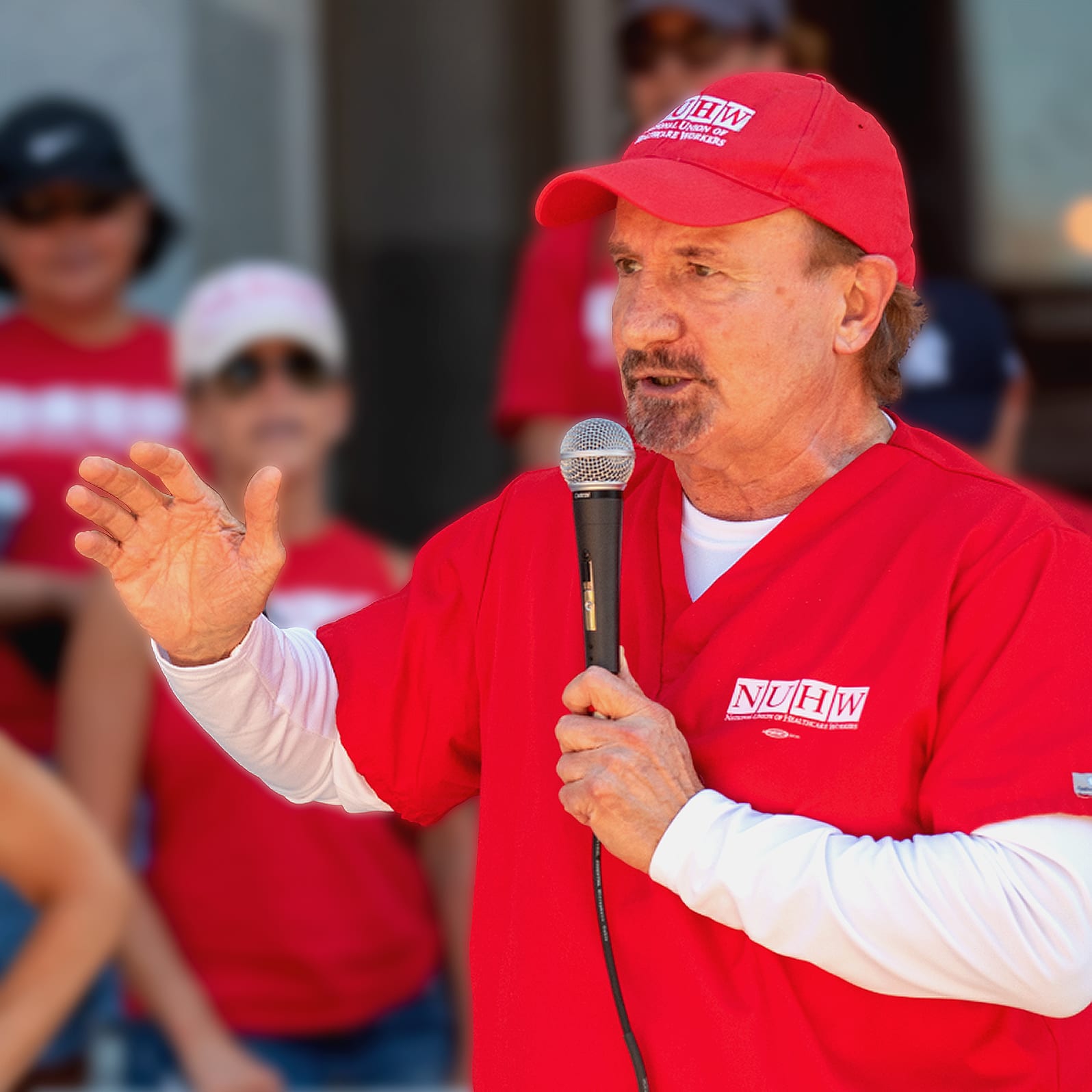
Kaiser Permanente's mental health therapists, social workers and psychologists in Northern California and the Central Valley ratified a four-year contract with 97% support, and buried inside it is a clause the vendor world should read twice: before Kaiser changes how it delivers behavioral care, including through AI or any new technology, it must consult a union-appointed advisory group of clinicians and then bargain over the effects 1. Turnout was about 80% of roughly 2,200 covered clinicians; the union's release puts the headcount at 2,400 13.
The contract takes the headcount lever off the table
The deal is retroactive to September 2025 and runs through September 2029, with raises totaling 17.5%, starting at 9.5% immediately 1. Layoffs are barred through the second-to-last day of the agreement, and the roughly seven hours a week clinicians spend on patient messages and notes are preserved 1. Those hours are exactly the work clinical-AI vendors price their agents against: transcription Kaiser has used since 2024, message drafting, intake screening 3. With the layoff lever locked away until nearly 2030, the return on such a deployment has to come from clinician throughput, not from not hiring 3.
| Term | What the ratified contract says |
|---|---|
| Length | Retroactive to September 2025, runs through September 2029 |
| Raises | 17.5% over the term, with 9.5% immediate |
| Layoffs | Barred through the second-to-last day of the agreement |
| Message and note time | Roughly seven hours a week preserved |
| Covered clinicians | About 2,200; the union's release counts 2,400 |
| Ratification | 97% yes on roughly 80% turnout |
| AI and new technology | A union-appointed advisory group of clinicians is consulted, then effects are bargained |
Kaiser argued the opposite case the same week
In Portland, the Oregon Federation of Nurses and Health Professionals went to federal court on Friday to stop Kaiser from eliminating around 50 full-time remote jobs in Oregon and Southwest Washington and moving the work to a new coordination center in Georgia, staffed by employees of another union, UFCW Local 1996, by January 12 2. Kaiser says it followed contractual processes and affected workers keep full pay and benefits for a year 2.
The consultation duty now binds Kaiser's behavioral-care deployments in California while the same employer defends a cost-driven job transfer in Oregon, so the union seat and the cost case are live at once.
The no-layoff bar deletes the vendor math
The mechanism matters for anyone holding clinical-AI exposure. Vendors whose ROI case rests on the headcount lever, not hiring or cutting staff because software absorbs their hours, lose that math here: the no-layoff bar removes those savings to September 2029 1. What can still be sold into Kaiser behavioral health is throughput-priced tooling, software that measurably raises what each clinician can handle within the protected seven hours of messages and notes 1. That turns a contract clause into a filter on the buyer side.
State regulators and bills are next in line
The template can travel. The union filed complaints with California's Department of Managed Health Care over Kaiser's algorithmic screening of patients seeking care, and the department has not yet issued a determination 34; California bills AB 2575 and AB 1979 would push similar rules into law 4. Watch the advisory group's first consultation and the federal court's ruling in Oregon. Anyone pricing clinical AI into health systems should assume the buyer's union now has a seat in the demo.
Sources
- 1JR Report (Becker's syndication): Kaiser Mental Health Clinicians Ratify Contract With AI Provisions, 24 November 2026
- 2KOIN 6: Oregon union files federal motion to stop Kaiser Permanente's plan to cut jobs, 25 November 2026
- 3Los Angeles Times (via MSN): Kaiser mental health clinicians in California ratify labor contract with some AI guardrails, 17 November 2026
- 4The American Prospect / Capital & Main: Mental Health Workers Say Algorithmic Triage Is Hurting Patients, 27 August 2026
Get Policy & Labor by email, free
The rules governments write for AI, and what AI does to jobs. In our daily email, every weekday.





Reader comments
0 comments