Lilly Breaks Ground on $6.5 Billion to Supply the Pill Boom Medicare Is Funding
Medicare's Bridge program put 700,000 seniors on GLP-1s in three months, and 70% of them landed on Lilly drugs. A $6.5 billion Houston plant is the company's hedge on a pill shift Novo currently dominates.
 Vincent Jiangtwo-minute read
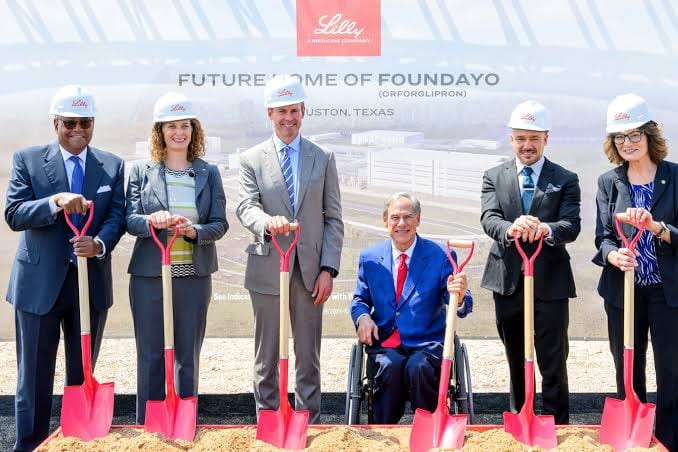
Lilly−2.44% — Lilly, down 2.44 percent as of its last quote broke ground on Monday on a $6.5 billion, one-million-square-foot plant at Generation Park in northeast Houston, the largest project of its kind in Texas history 123. Its main job is the active ingredient for Foundayo, the obesity pill that launched in April, months behind Novo's−2.70% — Novo's, down 2.70 percent as of its last quote 14. First product is due by 2030 1.
The payer built the demand first
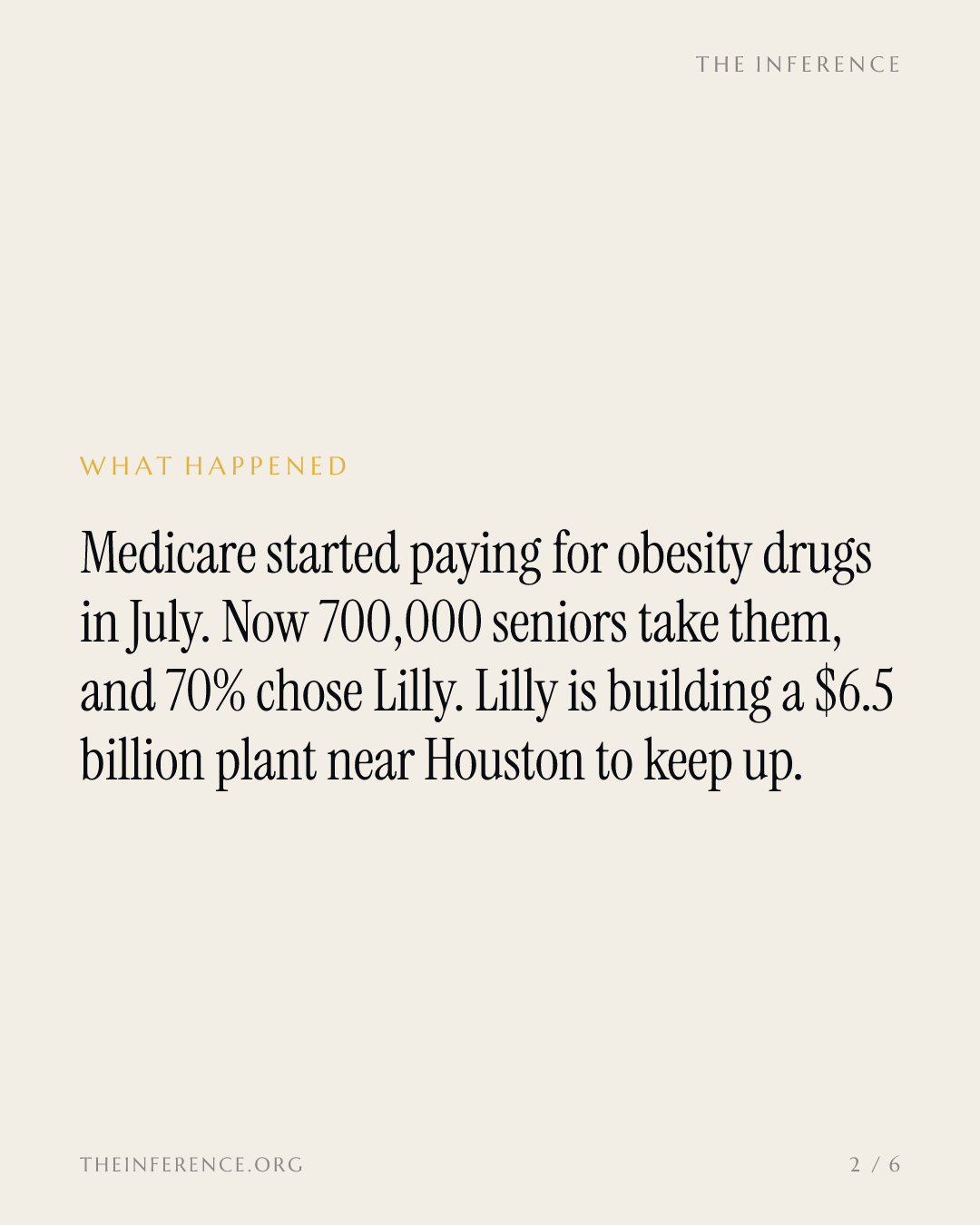
Medicare's Bridge program started covering obesity drugs in July at a $50 monthly co-pay, across roughly 66 million beneficiaries 4. Since then, 700,000 seniors have started GLP-1s, and 70% are on Lilly medicines, most still on the Zepbound injection 4. One in three new pill patients takes Foundayo, a share CEO Dave Ricks says grows every week 14.
Novo owns the pill, and still got marked down
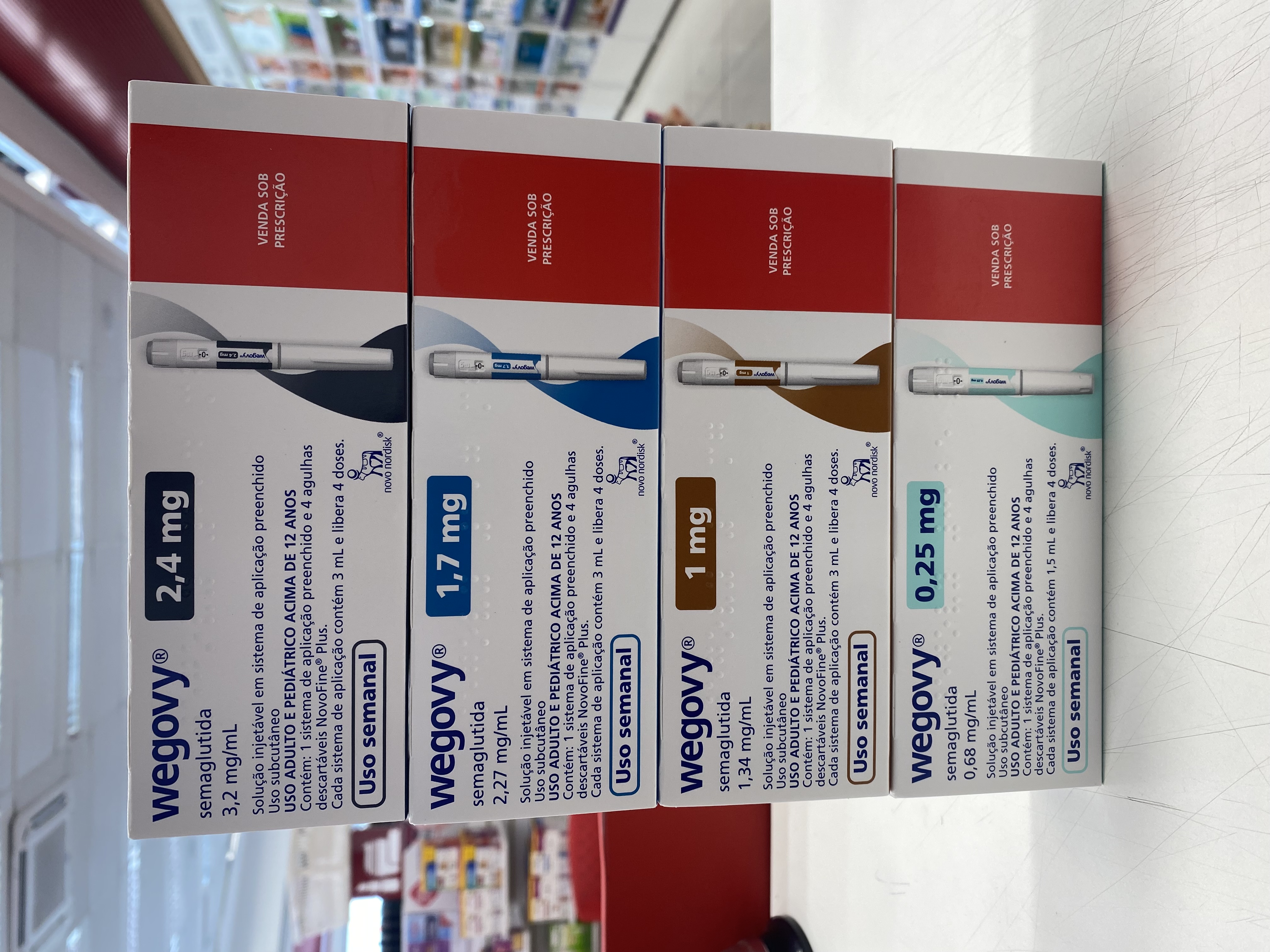
Novo's London strategy day landed the same morning. Chief executive Mike Doustdar forecast pills could take half the obesity market by 2030, above Wall Street's 14 to 40%, and pointed to more than 80% of new US oral prescriptions plus $843 million in first-half oral Wegovy sales 5. The stock still fell as much as 7%: semaglutide loses US exclusivity in 2032, and 2026 sales guidance runs flat to down 6% 6. Lilly holds about 61% of the whole market 6.
The capex is the insurance policy
Lilly has committed more than $50 billion to US manufacturing since 2020, with Houston one of 10 sites underway 12. Quarterly capex has tripled, from $0.97 billion in late 2023 to $2.93 billion in the second quarter, when revenue reached $22.97 billion, up 47.7% 7. Foundayo itself booked $98 million in its debut quarter 1. The point of the shovels is a pill boom that cannot outrun Lilly's supply.
Quarterly capex has tripled since 2023, to $2.93B
Data
| Quarterly capex | |
|---|---|
| Q3 '23 | $0.97B |
| Q4 '23 | $1.07B |
| Q1 '24 | $0.99B |
| Q2 '24 | $1.23B |
| Q3 '24 | $1.35B |
| Q4 '24 | $1.5B |
| Q1 '25 | $1.51B |
| Q2 '25 | $1.7B |
| Q3 '25 | $2.09B |
| Q4 '25 | $2.55B |
| Q1 '26 | $2.33B |
| Q2 '26 | $2.93B |
The multiple already assumes the win
Tuesday brought the reminder that convenience cuts both ways: Viking's VK2735 held 97% of prior weight loss on every-other-week injections, against 61% on placebo, and VKTX jumped 35% 89. Phase 3, regulators, manufacturing scale and payer access still separate that data from a genuine threat 10. Lilly trades near 40 times trailing earnings, up about 8% in 2026 against the S&P 500's 13% 11, on guided revenue of $85 to $87 billion and Ken Langone's call for $2,000 within four years 12. Next readings: Foundayo filings in more than 40 countries ahead of a 2027 global rollout 2, and Novo's pledge to build oral capacity for 10 times as many patients 6. Medicare funds the demand; the concrete is certain; the multiple is a belief.
Get Health by email, free
AI in medicine, pharma and biotech. In our daily email, every weekday.


Reader comments
0 comments