Apple's 200,000-person health AI study runs on OpenEvidence with no disclosed price
The 200,000-person study hands a $15 billion, ad-funded startup its first consumer channel, with no fee, equity or contract disclosed, and the closest public test of whether that free AI model is eating paid clinical reference lands in Wolters Kluwer's February results.
 Vincent Jiangthree-minute read
Two hundred thousand people, and no contract
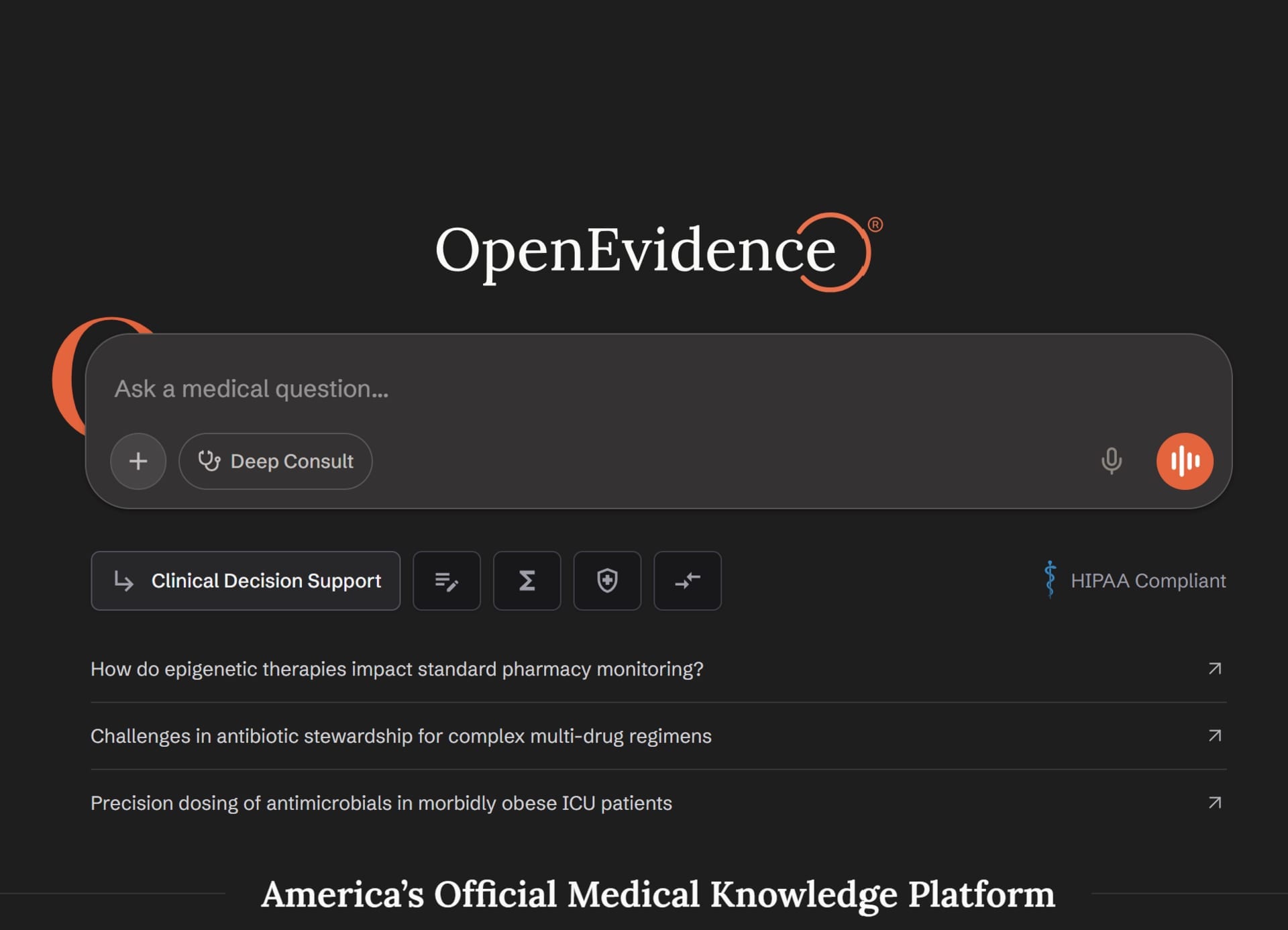
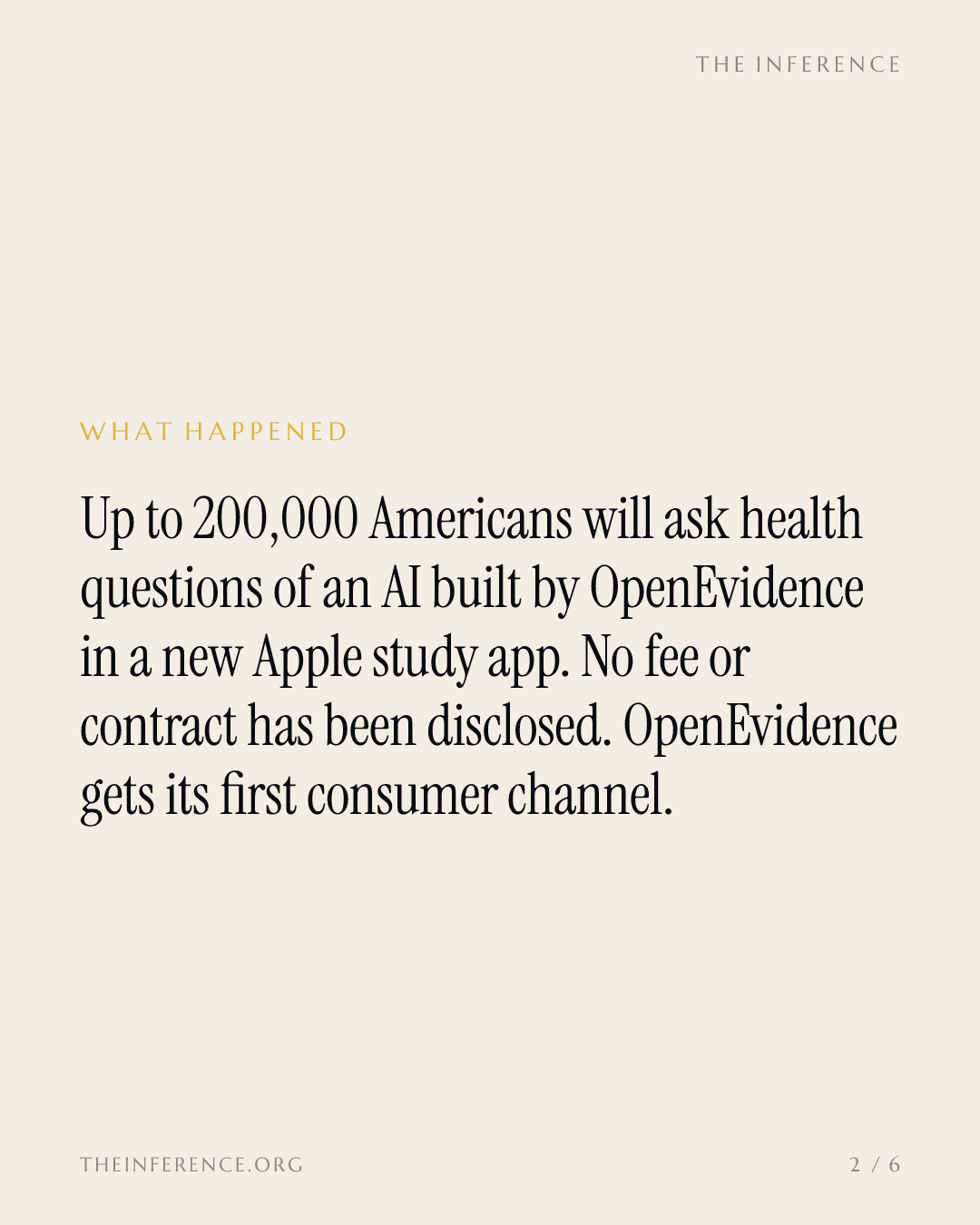
On Sunday, November 15, 2026, at the HLTH conference in Las Vegas, Apple−0.69% — Apple, down 0.69 percent today and OpenEvidence~$6B — OpenEvidence, private, latest valuation ~$6B launched the Apple Health AI Usage Study: a separate iPhone app where up to 200,000 US adults aged 21 and over ask everyday health questions of an AI built on OpenEvidence, then grade the answers on accuracy, detail and relevance 12. OpenEvidence supplies the clinical engine, grounding responses in the New England Journal of Medicine, JAMA and Nature; Apple built the research experience 14.
Apple says nothing learned will train AI models, and OpenEvidence deletes queries and responses within 24 hours 4. What has not been disclosed is anything commercial: no fee, no investment, no agreement between the two companies 3.
OpenEvidence trades its engine for distribution
The silence is the news. OpenEvidence raised $250 million at a $15 billion valuation in late September, confirmed by CEO Daniel Nadler 5. The model is free physician access funded by advertising; Sacra estimated a $300 million annualized revenue run rate as of end-July 2026, an estimate, not audited accounts 3.
A JAMA study published October 15, 2026, counted 952,008 verified US clinician users and 271 million questions from January 2024 to June 2026, with monthly active users climbing from 355 to 703,265 3.
OpenEvidence already reaches three times the people Apple hopes to enroll
The study is a rounding error next to the audience OpenEvidence already has
Data
| Value | |
|---|---|
| OpenEvidence clinician MAU, Jun 2026 | 703,265 |
| Physicians among its verified users | 556,200 |
| Apple study target participants | 200,000 |
Apple's endorsement puts a physician-focused tool in front of consumers, and Apple keeps the user relationship and the data. OpenEvidence, by the public record, is trading its clinical engine for distribution. Nadler's own framing at the launch: "Apple is the most trusted and loved brand and product among consumers... you have to bring these two things together" 2.
The trust question cuts both ways
OpenEvidence's valuation rests on doctors' trust; consumer exposure either multiplies the audience or risks medicalizing a professional brand. A March 2026 KFF survey found 32% of US adults had asked an AI chatbot about their health in the prior year, and 77% worried about medical data privacy 3. The stakes of a wrong answer on the phone in someone's pocket are different from those at the point of care.
February 24 is the scoreboard
The listed scoreboard is Wolters Kluwer0.00% — Wolters Kluwer, unchanged today, owner of UpToDate, the paid clinical reference OpenEvidence undercuts. Health grew 5% organically in the nine months to September, with "continued good renewals" for UpToDate Enterprise 7.
Two days before Apple's launch, Wolters Kluwer agreed to buy AgileMD for up to $100 million to push UpToDate Expert AI, now in over 2,700 US hospitals, into EHR workflows 6. Its full-year results on February 24, 2027, will show whether free AI citation engines are denting paid renewals 4. Whether Apple ever ships a health chatbot in the Health app or Siri is undisclosed; the study results will be the tell 4.
Learn more in our earlier reporting on the ACP licensing deal with OpenEvidence and in the sources below.
Get Health by email, free
AI in medicine, pharma and biotech. In our daily email, every weekday.



Reader comments
0 comments