Meta tells investors its AI bet is paying off and tells the IRS it might fail
Meta's $3.9 billion research credit now outstrips the free cash flow its buildout produces each quarter, and the four chief executives' answers to Congress are overdue.
 Vincent Jiang · 4 min read
The October 12 deadline passed yesterday with no public answers. Senator Elizabeth Warren and five Senate colleagues gave the chief executives of Amazon+0.08% — Amazon, up 0.08 percent today, Google, Meta+2.78% — Meta, up 2.78 percent today and Microsoft+1.02% — Microsoft, up 1.02 percent today two weeks to explain the tax breaks their AI buildouts claim; spokespeople for all four declined to comment when the letters were sent, and nothing has surfaced since 1. On Monday, Mark Zuckerberg told the Cheeky Pint podcast that Meta had been prepared to "write this check" for $100 billion to $200 billion on AI before its new models had proven anything 2. Both facts point at the same line in Meta's accounts: the research credit that discounts the buildout now outruns the cash the buildout produces.
Two stories about the same buildings
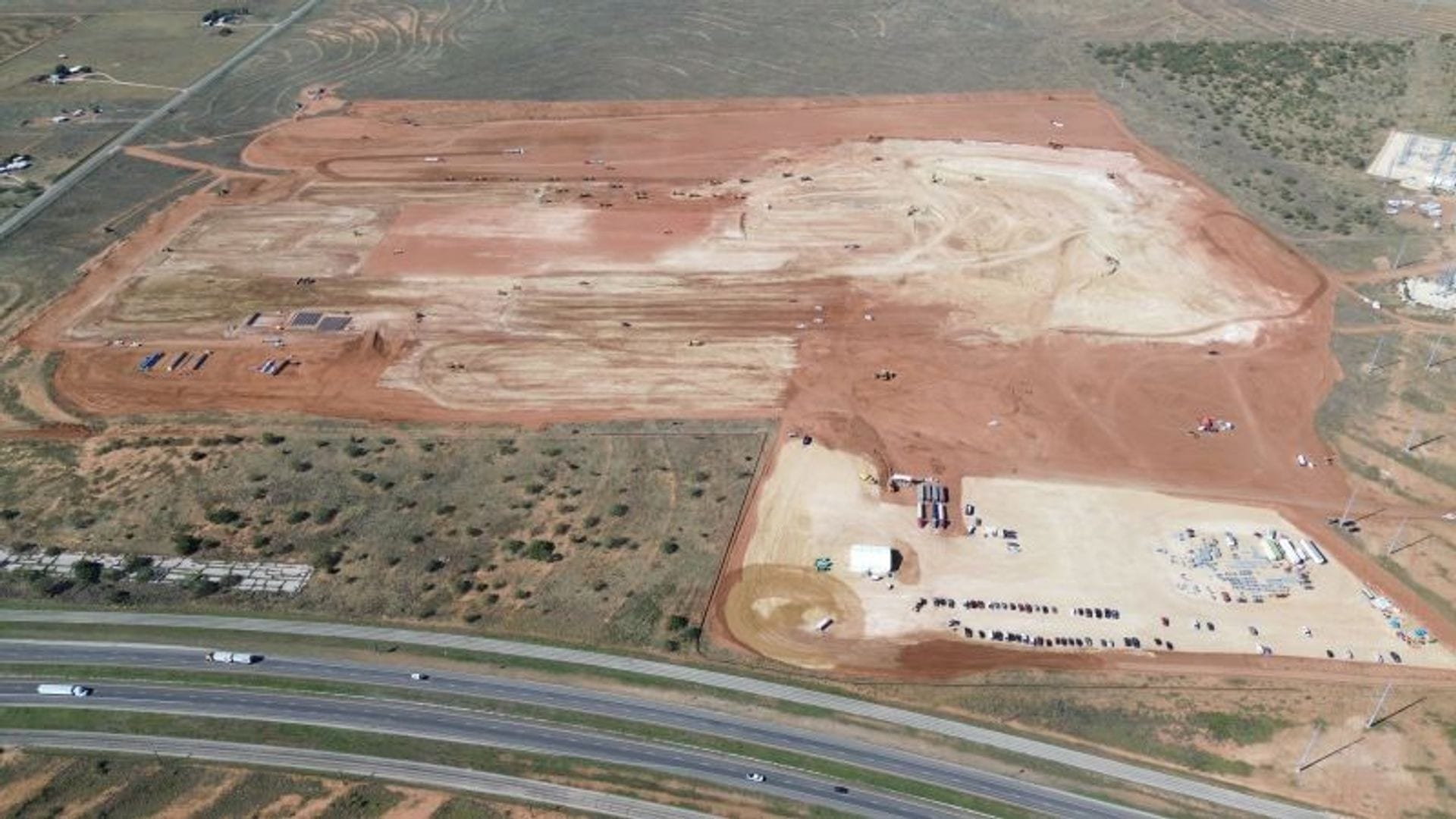
To investors, Zuckerberg calls the AI push a success that is "accelerating every major part of our core business" 3. To the Internal Revenue Service, Meta describes the same data centers as "pilot models," giant experiments that could fail, and claims the Nvidia+0.29% — Nvidia, up 0.29 percent today chips inside them as experimental supplies under the research and experimentation credit, a rebate Congress wrote in 1981 for companies solving technical unknowns 3. Andre Shevchuck, a tax partner at advisory firm BPM, called the reading "kind of wild and out there" 3.
The credit now beats Apple's and Alphabet's combined
Meta's research credits cut its tax bill by $3.9 billion in 2025, up from $2.0 billion in 2024 and $700 million in 2023 45. No other public company claims more: Apple+0.61% — Apple, up 0.61 percent today took $1.05 billion and Alphabet+0.57% — Alphabet, up 0.57 percent today about $2.09 billion in 2025, and Meta's figure beats the two combined 4. The federal bill shows it: $2.8 billion paid in 2025 against $9.6 billion in 2024, on roughly the same profit 1.
Meta's 2025 research credit beats Apple's and Alphabet's combined
Data
| Value | |
|---|---|
| Meta | $3.9B |
| Alphabet | $2.09B |
| Apple | $1.05B |
| Merck | $0.26B |
The credit now outruns the cash
Chief financial officer Susan Li read the line that carried Meta's July 29 earnings call: "Free cash flow was $784 million" 7. A $3.9 billion annual credit is about $975 million a quarter, roughly a quarter more than that figure 45. The June quarter's $30.12 billion of capital spending absorbed about 95 percent of its $31.86 billion of operating cash flow 7, and the 2026 guide of $130 billion to $145 billion leaves $79 billion to $94 billion of spending for the second half 7. The credits scale with the spending. The cash does not.
Meta's capex has swallowed its cash engine in eight quarters
- Operating cash flow
- Capital expenditures
- Free cash flow
Data
| Operating cash flow | Capital expenditures | Free cash flow | |
|---|---|---|---|
| Q3 '24 | $24.72B | $8.26B | $16.47B |
| Q4 '24 | $27.99B | $14.43B | $13.56B |
| Q1 '25 | $24.03B | $12.94B | $11.09B |
| Q2 '25 | $25.56B | $16.54B | $9.02B |
| Q3 '25 | $30B | $18.83B | $11.17B |
| Q4 '25 | $36.21B | $21.38B | $14.83B |
| Q1 '26 | $32.23B | $19B | $13.23B |
| Q2 '26 | $31.86B | $30.12B | $1.75B |
The fine print prices the credits as uncertain
Meta's filings concede the exposure: "uncertainties with our research tax credits" mean the IRS could overturn the savings 3. Gross unrecognized tax benefits, savings claimed but not booked because they might not hold, reached $18.74 billion on June 30, up 45 percent, with research credits listed first among the risks 4. Congress' Joint Committee on Taxation projects the credit will cost the Treasury $32.1 billion in corporate revenue this fiscal year; by the Times' math, Meta's share tops 10 percent 4. EY, Meta's auditor, helped set up the strategy and pitches it to other AI companies 49. Sector-wide, corporate tax payments are down 25 percent this year, about $96 billion 8, and Warren's letters ask for data centers to be stripped of bonus depreciation, the first-year deduction on capital spending; Microsoft, which claimed nearly $12 billion of it last year, sits in the same letter pile 6.
The company's defense, and where it stops
Meta spokesperson Andy Stone points to $200 billion of research and development spending over five years, $57 billion of it last year, and says the company uses "the tax incentives Congress established" for domestic investment 45. Kyle Pomerleau of the American Enterprise Institute adds that the government is "a silent partner" in these investments: if AI pays off, the Treasury shares the upside 8. Both are fair. Neither resolves the filing that concedes the credits may not hold, and the $112.32 billion of debt now stacked against $90.26 billion of cash and securities makes a retroactive IRS bill heavier than it would once have been 7.
Three dates to watch
The answers to the October 12 letters are the first tell 1. Meta's third-quarter report, due this month, updates the uncertain-tax-benefit line 4; a quarter where capex outruns roughly $32 billion of operating cash flow would turn free cash flow negative for the first time in this eight-quarter run 710. The IRS has pushed back before when companies claimed the credit on off-the-shelf equipment 4.
Deepdive
AI-generated from this story and its cited sources. Not investment advice.