Microsoft's $0.042 decision model runs on Alibaba's free Qwen, and Redmond plans to replace it
Microsoft-Decision-1 launched October 9 at $0.042 per million input tokens on Alibaba's Qwen3.5-9B weights that cost Redmond nothing. The company behind the base is named in a US intelligence advisory, and Microsoft has already said it will swap the base out.
 Vincent Jiang · 3 min read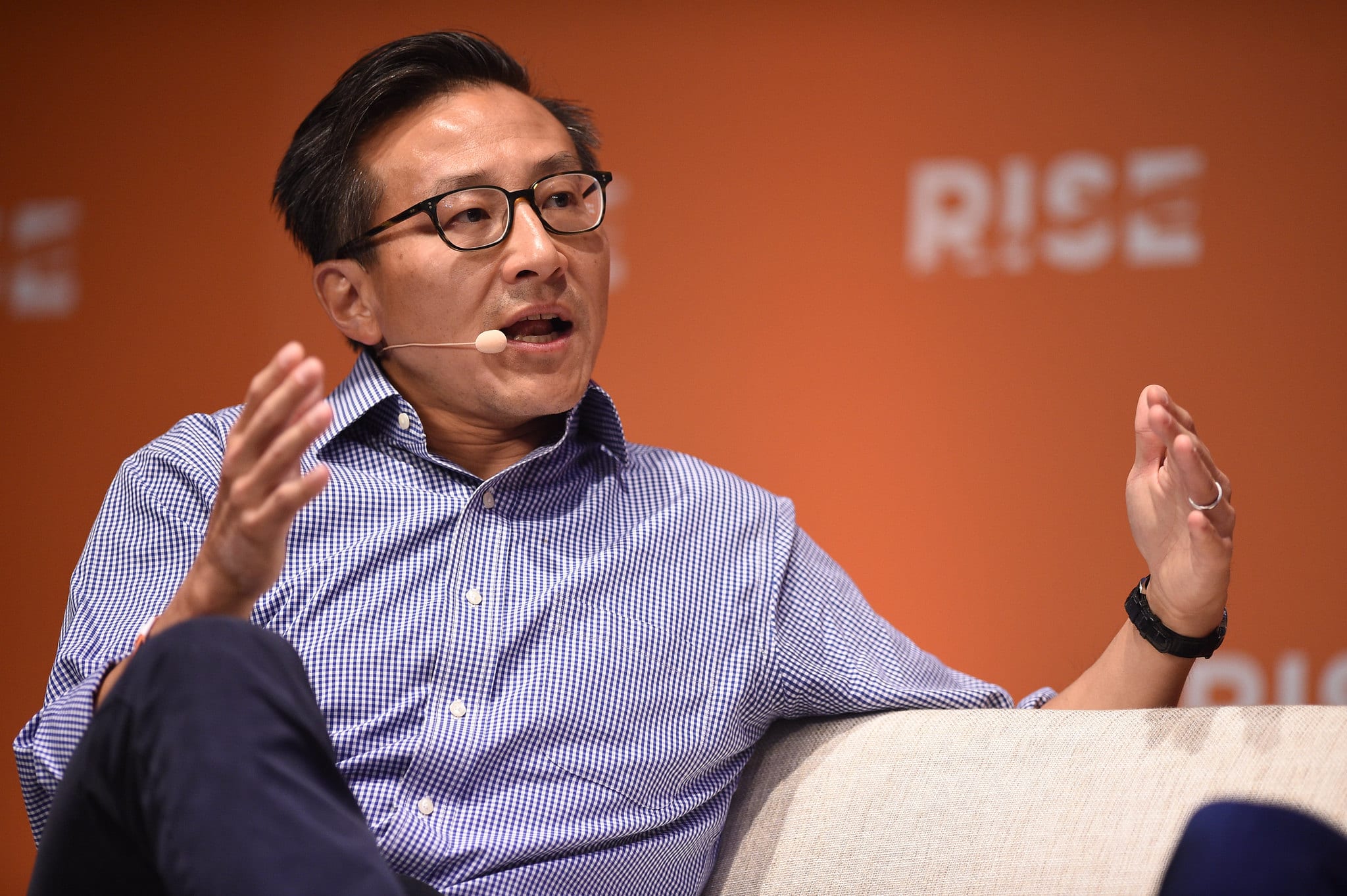
Alibaba's free weights, wearing a Redmond badge
Microsoft's+2.33% — Microsoft, up 2.33 percent today cheapest new AI model is a Chinese lab's open weights wearing a Redmond badge. Microsoft-Decision-1 went into general availability on October 9: a model that returns a probability for each fixed option instead of writing text, built for routing customer inquiries and grading what AI agents propose to do 1. Underneath sits Alibaba's+5.24% — Alibaba, up 5.24 percent today Qwen3.5-9B, a 9-billion-parameter open-weight model, retrained on public and synthetic data to score options in a single inference pass 12. More than 100 decision models now compete for attention after Jev's arrival three weeks ago, and two of the most prominent, Microsoft's and H2O.ai's, are Qwen underneath 3.
The price undercuts the American incumbent
Decision-1 costs $0.042 per million input tokens, output free, more than 20x cheaper than OpenAI's$1.18T — OpenAI, private, latest valuation $1.18T GPT-6 Sol in text classification and less than half the input price of OpenAI's Luna decisions endpoint 123. Microsoft claims the best accuracy in its own 36-benchmark comparison, 83.5% across 147,137 questions, and a calibration score of 92.2 that trails Jev's 93.7 12. The headline speed claim, roughly 35x GPT-6 Sol, is measured against a general-purpose model; against GPT-6 Luna Decisions, a decision model, the same published figures give about 3.5x 1.
Microsoft's published 85 ms met a third party's 459 ms measurement
Data
| Value | |
|---|---|
| Decision-1 (Microsoft) | 85 ms |
| Decision-1 (JevBench) | 459 ms |
| Jev 1.13.0 | 240 ms |
| Quyet-1.0-Large | 380 ms |
| GPT-6 Sol | 3,010 ms |
Redmond pre-announced the expiry date
Microsoft says it will "soon" rebase Decision-1 on its own MAI models and OpenAI's, for reasons not disclosed 32. The base that makes the price possible costs Redmond nothing and now carries a stated end date. What Alibaba holds instead is ubiquity, and a security file. On September 9 the NSA, FBI and CISA jointly named Alibaba among six Chinese firms conducting industrial-scale distillation of US frontier models since late 2024, accusing it of distilling Claude and GPT-5 in late 2025 to improve the Qwen family 45. Anthropic's$350B — Anthropic, private, latest valuation $350B September report attributes more than 151 million distillation activities to Alibaba between May and July 2026; the six companies did not respond to requests for comment, and the allegations remain contested 6.
Alibaba's capex tripled to $18.2B while operating income fell 62.5% in FY2026
- Operating income
- Capex
Data
| Operating income | Capex | |
|---|---|---|
| FY2021 | $13.69B | $6.27B |
| FY2022 | $10.99B | $8.41B |
| FY2023 | $14.61B | $4.9B |
| FY2024 | $15.7B | $4.39B |
| FY2025 | $19.42B | $11.51B |
| FY2026 | $7.27B | $18.21B |
The spending behind Qwen shows up in the accounts: Alibaba's capex reached $18.2B in the fiscal year ended March 2026, up 58%, while company-wide operating income fell 62.5% to $7.3B 7. Chairman Joe Tsai puts the AI build at about $25 billion of e-commerce free cash flow a year, with infrastructure capex doubling three years running 8.
Ubiquity is Alibaba's best argument
Free weights seed the ecosystem that buys the cloud, and the demand is visible. Ecosia dropped Mistral this week over quality problems and overloaded servers and is now weighing Qwen, GLM and Kimi for its search AI 9. Tsai pitched open source to a Turin audience last week as Europe's only path to AI sovereignty 8. But open weights cut both ways, as Tsai himself explained: anyone can take the recipe, retrain it and stop depending on the original developer, which is exactly what Microsoft has pre-announced 8.
What decides it
The open question is whether Qwen's ubiquity converts into Alibaba Cloud revenue before Microsoft's rebase or a US policy action ends the free run. Alibaba's next quarterly results, and whatever date Microsoft sets for the rebase, will tell. Free gets adopted. It does not get paid.
Deepdive
AI-generated from this story and its cited sources. Not investment advice.