China Is Closing the AI Gap. Profits Are the Harder Test.
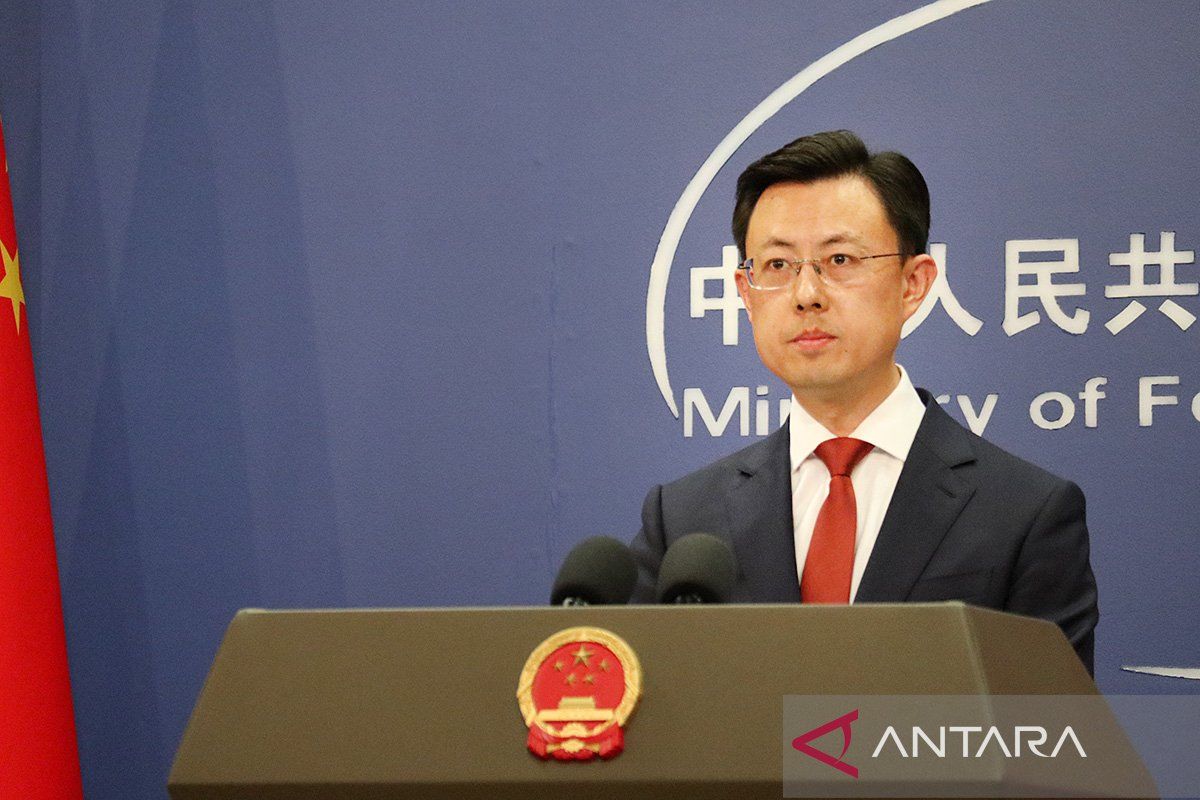
Wang Tao announced Huawei's next AI computing system on September 17, with a design connecting as many as 4,096 processors. [Huawei's announcement](https://www.huawei.com/en/news/2026/9/hc-wang-keynote)
 Vincent JiangSeptember 17, 2026 · 9 min read
Stanford estimates that U.S. private AI investment reached $285.9 billion in 2025, against China's $12.4 billion, although those figures miss much of China's government support. Stanford AI Index 2026 1
China is challenging that advantage, but technical progress does not determine who earns the return. A Chinese model can attract the developer while an American cloud provider collects the bill. A Chinese cloud business can make money while its sister AI laboratory loses it.
On the evidence, the U.S. retains an uneven lead in frontier capability and substantial commercial advantages. China has become a serious competitor across more of the industry. The question for investors is how much of that progress becomes bargaining power, durable earnings and useful work.
The frontier advantage is real, but task dependent
Artificial Analysis's September 17 leaderboard gives Claude Fable 5.1 and GPT-6 Astra scores of 53 in their highest configurations, compared with 45 for Qwen3.8 Max and GLM-5.3. Its benchmark cost also complicates the idea that American models are expensive and Chinese models are cheap: Astra at low reasoning scores 46 for $0.82 per task, while Qwen3.8 Max scores 45 for $5.41. GLM-5.3-Flash occupies a much cheaper position, scoring 42 at $0.25. Artificial Analysis leaderboard 2
These results describe particular workloads. The index is primarily text based and English language, so it cannot settle leadership across speech, vision, languages or robotics. Benchmark scope 3
They nevertheless establish that China's stronger models are credible alternatives, while American providers still compete aggressively on both capability and price.
A narrower evaluation exposes why the remaining gap can matter. In a July assessment by Britain's AI Security Institute and the U.S. CAISI, Kimi K3 completed a simulated corporate-network attack once in ten attempts. The strongest previously tested models completed it six or seven times. The exercise had no active defenders, and American models were tested with system safeguards disabled to measure maximum capability. It is a limited cyber test, but it shows how similar-looking chat systems can differ substantially on sustained tasks. Joint assessment 4
For a customer, the relevant calculation includes failed attempts, human review and integration. A lower inference bill helps only if the work still gets finished. For a frontier laboratory, however, improving difficult tasks can justify a premium even after simpler capabilities become widely available.
China is becoming part of the developer's default toolkit
China's distribution progress is easier to observe than its industry-wide profitability.
OpenRouter reported in June that Chinese models had overtaken American models in token share on its platform earlier that month. Its analysis covered more than 450 trillion tokens from January 1 through June 14; DeepSeek's share rose from 9% in January to 18% in June. These are platform usage figures, not global market share or spending. Cheap services can attract much more volume without collecting proportionately more money. OpenRouter's analysis 5
Hugging Face's August report supplies a different signal: 151,448 community models derived from Qwen, 2.6 times Meta's total derivative footprint. That measures developers building on a model family, not paying customers. It still matters because modifications, deployment tools and accumulated familiarity can make a family easier for the next developer to choose. Hugging Face's platform analysis 6
The commercial mechanism is straightforward. Downloadable model weights let other businesses adapt and host the model, subject to its license. Those businesses can supply the customer relationships, local knowledge and implementation work that the original laboratory lacks. Successful distribution therefore need not require the laboratory to build a global enterprise sales organization first.
Openness has limits. Z.ai's smaller GLM-5.3-Flash uses an MIT license, while GLM-5.3 has custom conditions, including a security review for certain large model-service businesses. A downloadable model does not automatically confer unrestricted commercial rights. Flash model card 7 and GLM-5.3 license 8
The strategic consequence is still significant: credible alternatives give customers more negotiating power. Chinese laboratories do not have to dominate every benchmark to make it harder for an American supplier to charge a premium for routine work.
The model's nationality does not determine who gets paid
AWS already offers Qwen models through Bedrock, and its contractual page identifies AWS as the seller of Qwen's serverless offering. A customer can choose Chinese model technology and buy an American cloud service in the same transaction. AWS's model terms 9
That transaction separates three things often bundled together in national comparisons: who develops the model, who operates it and who owns the customer relationship. The operator can earn revenue from computing, support and integration even when it did not create the underlying model. Lower model costs may strengthen that business by making more applications economical.
Alibaba shows the same distinction inside one company. Its unaudited June-quarter results report RMB48.4 billion in AI Cloud and Compute Services revenue, up 45%, and RMB5.6 billion in adjusted EBITA. That segment includes conventional cloud services and its chip business; specifically AI-related products contributed RMB12.4 billion of revenue. Its separate AI Labs and Applications segment generated RMB3.3 billion in revenue and an adjusted EBITA loss of RMB13.9 billion. Alibaba's August 20 results 10
- Revenue
- Adjusted EBITA
Data
| Revenue | Adjusted EBITA | |
|---|---|---|
| AI Cloud and Compute Services | RMB48.4B | RMB5.6B |
| AI Labs and Applications | RMB3.3B | -RMB13.9B |
Alibaba's figures establish both real infrastructure monetization and expensive model development and operation. They do not establish that its strategy has failed. Funding models may help sell cloud capacity and build future distribution, but investors still need evidence that the eventual return exceeds the subsidy.
America has a substantial distribution advantage of its own. Microsoft reported more than 30 million paid Microsoft 365 Copilot seats in July. Payment is stronger commercial evidence than a download, although it does not prove active use, renewal or customer productivity. Existing software relationships give Microsoft access to budgets that a standalone model laboratory must fight to reach. Microsoft's fiscal fourth-quarter release 11
Huawei is building a system, and delivery remains the test
Wang's Atlas 960E announcement addresses a harder dependency: the machinery needed to train and run the models.
Huawei is combining processors, memory and optical connections into a larger computing system. Connecting chips efficiently matters because processors waiting for data are expensive idle equipment. However, Huawei schedules its next Ascend 960DT chips for the first quarter of 2027 and 960PR for the third. Today's specifications are company claims and a delivery plan, not evidence of an installed fleet operating at the advertised economics. Huawei's September 17 keynote 12
The useful comparison requires completed training runs, inference throughput, power consumption and reliability under comparable workloads. A large processor count cannot reveal manufacturing yield, utilization or the engineering effort required to move existing software.
The American advantage also depends on international cooperation. Nvidia's May announcement described Vera Rubin entering its production ramp, with shipments planned for the fall. It named 150 ecosystem partners in Taiwan and more than 350 factories across 30 countries. U.S. companies lead a commercial and technical network whose manufacturing extends well beyond U.S. borders. Nvidia's production announcement 13
Export policy complicates the comparison further. Washington made H200 and similar chip exports eligible for case-by-case licensing in January. Nvidia subsequently disclosed small licensed H200 shipments, representing less than 1% of quarterly data-center revenue, while saying Chinese restrictions prevented it from selling everything covered by the licenses. Both governments influence access. BIS's January policy 14 and Nvidia's July-quarter filing 15
China gains strategic resilience if domestic equipment becomes good enough for important workloads, even before it matches the best imported system. Commercial competitiveness demands another step: customers must find the domestic alternative economical after electricity, maintenance and software migration.
China's industrial base gives it places to deploy AI
China deploys factory automation on a substantially larger scale. The International Federation of Robotics reported 295,000 industrial robot installations in China during 2024, against 34,200 in the United States. Those are matched-year figures for industrial robots, many of which do not use generative AI. They establish deployment scale, not AI intelligence or national productivity. IFR's September 2025 release 16
That base points to more opportunities to apply improvements in perception, planning and control inside existing production systems. Manufacturers already have equipment, operating data and measurable problems. A system that reduces defects or machine downtime can produce value without winning a general chatbot comparison.
Capturing that value requires work at the factory. Someone must connect the model to equipment, handle unusual conditions, establish safe operating limits and accept responsibility when the process fails. The supplier with those relationships may earn more than the laboratory providing the model.
Computing infrastructure faces similarly local constraints. The International Energy Agency identifies shortages in high-bandwidth memory, energy equipment and grid connections, with memory tightness expected through at least the end of 2027. National electricity production does not tell an operator when a particular site will receive dependable power. IEA's April 2026 assessment 17
This favors operators that can connect the entire process: computing, data, equipment, customers and accountability. Each missing connection can absorb the savings promised by a cheaper model.
The strongest American argument is that the frontier compounds
The strongest case for a durable U.S. lead is that better models could accelerate the research that produces their successors. If superior systems materially improve coding, experimentation and chip design, the advantage could grow faster than competitors can copy the last generation. Capital, infrastructure and existing customer relationships would then reinforce technical leadership.
That is a serious possibility. It remains a conditional thesis. A benchmark advantage does not by itself demonstrate a self-sustaining lead in research productivity, and some of the improvements may spread through publications, software and downloadable models.
America's funding capacity also carries obligations. Amazon reported $16.6 billion of AWS operating income in the June quarter, alongside negative $7.6 billion of company-wide free cash flow over the preceding twelve months. The periods and business scopes differ, so these figures cannot be netted together. They show why a profitable cloud franchise still needs scrutiny when investment spending accelerates. Amazon's July 30 earnings release 18
China's strongest response is that broad access to capable AI can benefit manufacturers, developers and consumers even when model suppliers earn thin margins. That is economically plausible. But national benefits and shareholder returns can diverge: the factory using inexpensive AI may be the better business than the company funding it.
Watch what survives the next renewal
The next evidence should come from operating results. Huawei's 2027 chip schedule creates a delivery test, followed by tests of useful output, reliability and cost. Alibaba's coming quarters can show whether model and application losses moderate as paying demand develops. Enterprise buyers can show whether deployed systems earn renewals after initial enthusiasm fades.
For both countries, the most useful disclosure would connect accepted work to its full cost: computing, human review, integration and failures. That would help distinguish a model people enjoy trying from a system a business depends on.
Watch the customer who renews after measuring the savings.
How this brief was made
01Gathered & sourced368 channels · 1,492 articles▾
Agents swept 368 channels and ingested 1,492 articles, then de-duplicated and ranked them for signal.
02Verified & cross-validated18 claims · 14 data feeds▾
Every one of 18 load-bearing claims was checked against primary sources, with 14 live data feeds reconciling the figures and charts.
- 1Stanford HAI. Single-source annual dataset. AI Index 2026
- 2Artificial Analysis. Single-source independent benchmark measurement. Live leaderboard
- 3Artificial Analysis, "Benchmark scope"
- 4UK AISI / U.S. CAISI. Joint preliminary independent evaluation. Kimi K3 cyber assessment, July 2026
- 5OpenRouter. Single-source platform measurement. June 30 analysis
- 6Hugging Face. Single-source ecosystem measurement. August 14 report
- 7Z.ai. Primary license documents. GLM-5.3-Flash model card
- 8Hugging Face, "GLM-5.3 license"
- 9Amazon / AWS. Primary product terms and company-reported financials. Bedrock third-party terms
- 10Alibaba. Company-reported, unaudited interim results. August 20 SEC exhibit, June quarter
- 11Microsoft. Company-reported commercial metric. July 29 FY2026 Q4 earnings release
- 12Huawei. Company-reported specifications and roadmap. September 17 keynote
- 13Nvidia. Company-reported roadmap and SEC filing. May 31 Vera Rubin production announcement
- 14U.S. Bureau of Industry and Security. Primary policy announcement. January 13 export-license policy
- 15SEC EDGAR, "Nvidia's July-quarter filing"
- 16International Federation of Robotics. Single-source matched-year industry statistics. September 25, 2025 release
- 17International Energy Agency. Institutional assessment and forecast. April 16, 2026 report executive summary
- 18Amazon, "Amazon's July 30 earnings release"
03Reviewed & edited1 human editor▾
One editor read the draft against the evidence, tuned the framing, and signed off before it shipped.
Become a contributor
Reporting on the business of AI and want it read? We take pitches from outside contributors who bring primary sources and a number worth arguing about.
Deepdive
AI-generated from this story and its cited sources. Not investment advice.