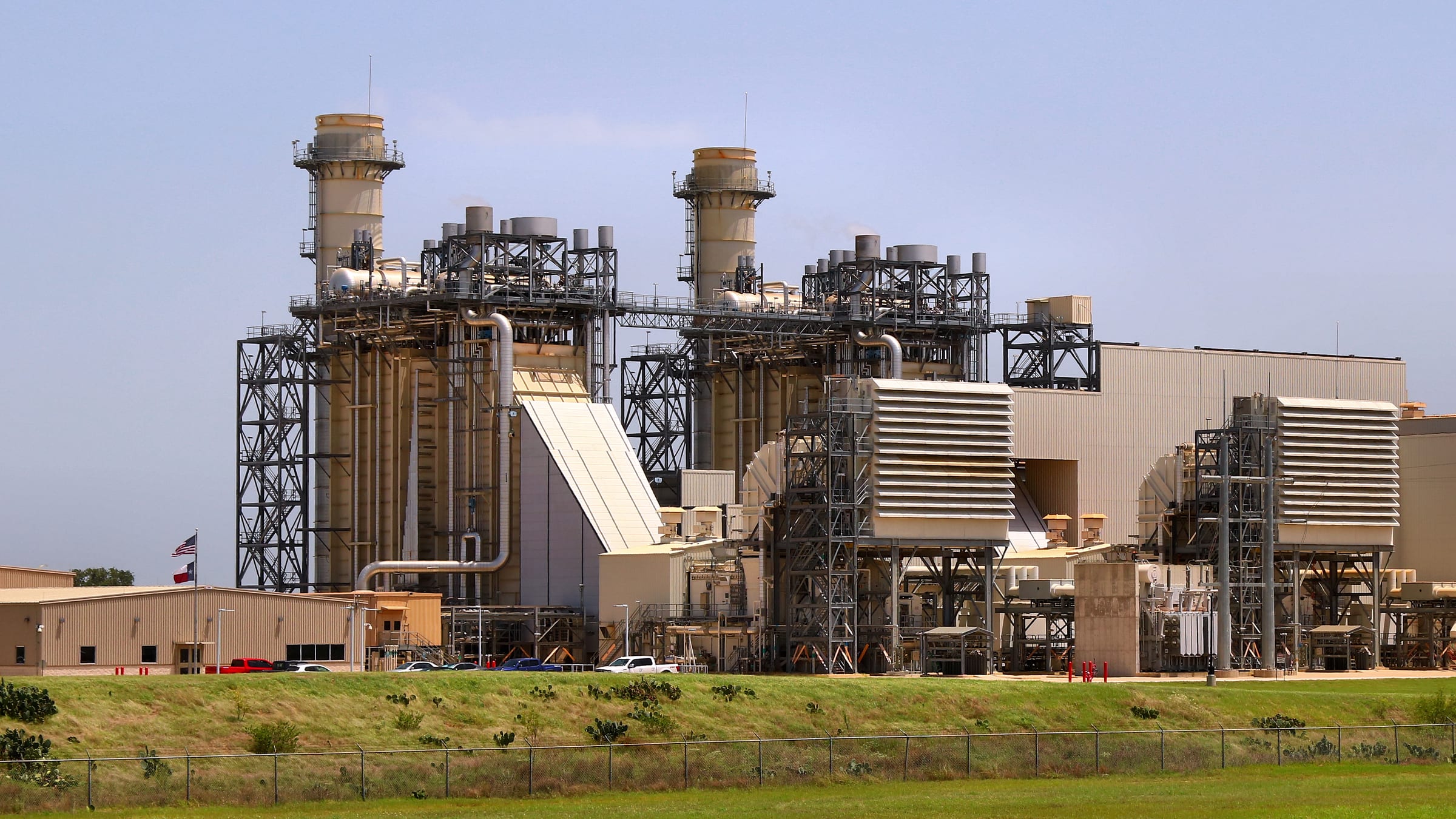
North Carolina kills Duke's $584M gas plant over AI demand it can't verify
North Carolina regulators denied Duke Energy's $584 million gas turbine because its data-center demand forecast was "insufficiently reliable." The test they applied instead is a voluntary White House pledge, and the fight over who pays for AI power has moved from township zoning into utility rate cases.
 Vincent Jiang · 4 min read
North Carolina regulators denied Duke Energy's $584 million gas turbine on 18 September 2026, and the stated reason was the customer list. The Utilities Commission ruled the 255-megawatt unit's projected load growth rests on "anticipated data center customer additions" that are "insufficiently reliable for the Commission to act," and staff testimony called the price "staggering" 12.
The small end of a $103 billion plan
The turbine sits at the small end of the largest capital plan at any regulated U.S. utility: $103 billion over five years, raised 18 percent in February, backed by 4.5 gigawatts of signed data-center contracts and 9 gigawatts more in the pipeline 3. What stopped it was not climate law but a promise. The Environmental Defense Fund's Will Scott calls the unit "a 30-year mortgage on a half-billion-dollar plant" 2.
A voluntary pledge became the underwriting test
The White House Ratepayer Protection Pledge, launched 4 March 2026, has signatories pay "the full cost of their energy and infrastructure, no matter what," on separate rates paid "whether they use the electricity or not" 4. Duke is among more than 200 utilities that signed it 2.
The order, backed by the commission's three Republican appointees, said the record "does not adequately establish" how much of the plant serves data centers, so Duke cannot show it would keep its own pledge 12. No environmental or consumer group contested the case 2. Congress points the same way: the House passed the Ratepayer Protection Act 417 to 3 on 16 September 2026, directing state commissions to consider making data centers above 100 megawatts pay their own way 5.
Duke's answer is the contract
Duke points to its Customer Protection Plus framework, which puts connection costs, upfront security, termination charges and curtailment on the new customer 6. CEO Harry Sideris says he is focused on making sure data centers "not only pay their fair share but also yield savings for our existing customers" 6.
The attorney general wants those contracts in daylight
Jeff Jackson, the state attorney general, has asked the commission for a separate rate class for data centers, for Duke's contract templates to be made public, and for demand forecasts refreshed every 90 days instead of every six months, with new gas plants paused while projections are rechecked 6. "These data centers are upending our energy system," he said 6.
The staff wanted it built anyway
The commission's own public staff had recommended approval, fearing a breach of the 22 percent planning reserve margin by 2031. "We are banking on a plan of perfection, and that has me very nervous," staff engineer Dustin Metz testified 1. The denial came without prejudice: Duke can refile after the commission rules on its full resource plan, due late this year 2.
Michigan files $6.4 billion and its summary omits data centers
On 24 September 2026, DTE filed a 20-year plan in Michigan: two gas plants totaling 2.1 gigawatts at an estimated $6.4 billion, including a 700-megawatt, $2.5 billion unit in Milan Township, where officials are still drafting the local gas-plant ordinance 78.
The utility's 35-page public summary made no mention of artificial-intelligence data centers, which a spokesperson called "one part of a much broader picture of customer growth." DTE serves an under-construction Oracle and OpenAI campus and a proposed Google site totaling 2.4 gigawatts 7.
The turbine Carolina killed is the small end of the gas queue
- Estimate
Data
| Value | |
|---|---|
| DTE two-plant program, MI (estimate) | $6.4B |
| DTE Milan Township unit, MI (estimate) | $2.5B |
| Duke Smith CT, NC (estimate) | $0.58B |
The Sierra Club's Bryan Smigielski will ask the Michigan Public Service Commission to require modeling that leaves data centers out entirely. Oracle, he notes, is rated BBB-, just above junk 9. DTE has pledged tech companies will cover their own costs, and says it may temporarily pause rate hikes if they come online as planned 7.
Two rulings will decide who signs
North Carolina rules on Duke's full plan late this year; Michigan's review runs about a year before the Public Service Commission 17. Developers had 380 gigawatts of gas proposed or under construction nationwide as of August 2026 2. The question is no longer whether the plants get built, but who signs for them if the servers never arrive.
How this brief was made
01Gathered & sourced350 channels · 1,059 articles▾
Agents swept 350 channels and ingested 1,059 articles, then de-duplicated and ranked them for signal.
02Verified & cross-validated9 claims · 19 data feeds▾
Every one of 9 load-bearing claims was checked against primary sources, with 19 live data feeds reconciling the figures and charts.
- 1Utility Dive, "North Carolina regulators deny Duke Energy gas turbine request over 'staggering' cost, uncertain need," 22 September 2026
- 2Canary Media, "Duke Energy wants to build a new gas plant. Regulators said not so fast," 21 September 2026
- 3Reuters via Stockopedia, "Duke Energy raises five-year capital expenditure plan to $103 billion as more US data centers sign on," 10 February 2026
- 4The White House, "Ratepayer Protection Pledge," 4 March 2026
- 5House Energy and Commerce Committee, "Ratepayer Protection Act Passes House with Strong Bipartisan Support," 16 September 2026
- 6The North State Journal, "Jackson seeks separate Duke Energy rate class for data centers," September 2026
- 7MLive, "DTE plans $6.4B in new natural gas power plants as data centers increase demand," 24 September 2026
- 8The Sun Times News, "DTE Proposal Takes Shape in Milan Township," 23 September 2026
- 9Michigan Public, "DTE's proposed long term plan has hidden risks due to data centers, environmental group says," 24 September 2026
03Reviewed & edited2 human editors▾
2 editors read the draft against the evidence, tuned the framing, and signed off before it shipped.
Become a contributor
Reporting on the business of AI and want it read? We take pitches from outside contributors who bring primary sources and a number worth arguing about.
Deepdive
AI-generated from this story and its cited sources. Not investment advice.