OpenEvidence Is Turning Hospital Data and Pharma Ad Money Into Its Own Drug Pipeline
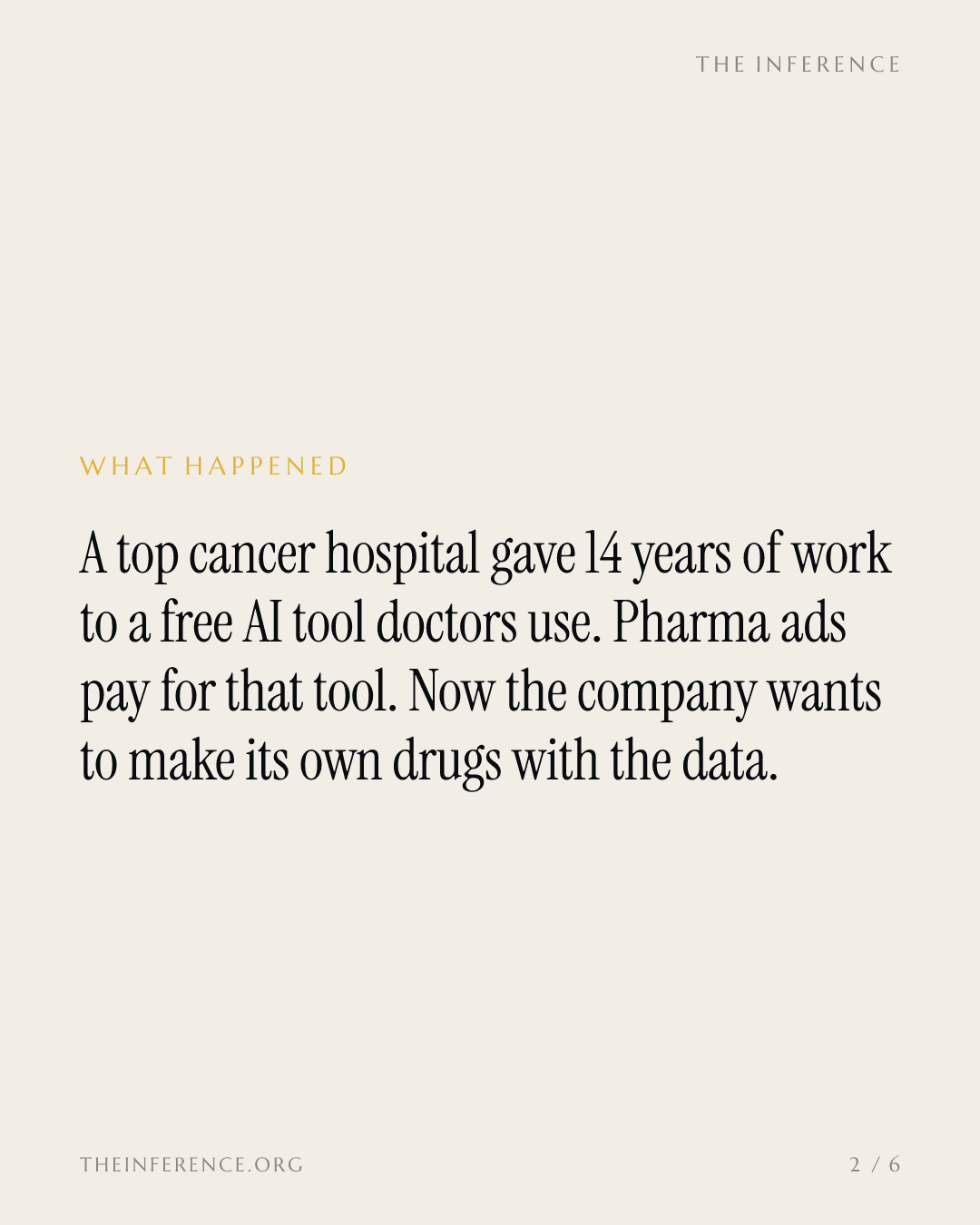
Memorial Sloan Kettering spent 14 years building the only FDA-recognized knowledge base of cancer gene variants. In 48 hours it flowed into a $15 billion, ad-funded medical AI whose founder now plans to develop drugs from it.
 Vincent Jiang · 3 min read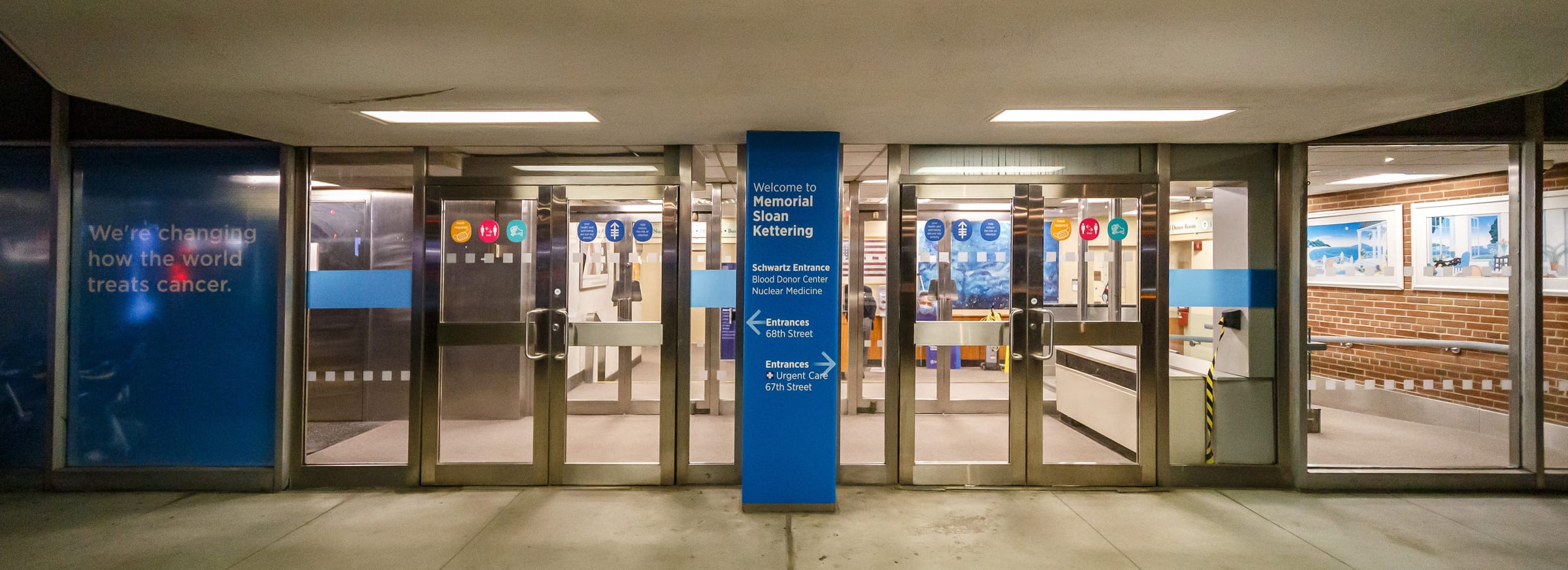
Two hospitals in 48 hours
OpenEvidence collected two academic medical centers in 48 hours. On 15 September, Penn Medicine put the AI in front of more than 10,000 clinicians across seven hospitals, extending it through the Botswana-UPenn Partnership 1. A day later, Memorial Sloan Kettering went further: OncoKB, the precision oncology knowledge base built over 14 years, now answers inside OpenEvidence for every clinician on the platform, while OpenEvidence embeds in MSK's Epic charts 2. It is the only somatic cancer variant knowledge base with partial FDA recognition, held since October 2021 34.
The distributor's price moved in the same news cycle: Forbes disclosed a previously unreported $250 million round led by Byers Capital and Andreessen Horowitz at a $15 billion valuation 3, nineteen months after a $1 billion valuation 5.
OpenEvidence's valuation has risen fifteenfold in nineteen months
Data
| Post-money valuation | |
|---|---|
| Feb 2025 | $1B |
| Jul 2025 | $3.5B |
| Oct 2025 | $6B |
| Jan 2026 | $12B |
| Sep 2026 | $15B |
Pharma pays at the prescribing moment
The tool is free to every verified US clinician, and 1.12 million of them used it as of September, posting more than 40 million queries in August 6. The cash is advertising, much of it pharmaceutical, placed between a doctor's question and the cited answer 7. An analysis by Nelson Advisors estimates specialist impressions at $70 to more than $1,000 per thousand, against $5 to $15 on consumer platforms, on roughly $300 million of run-rate revenue at margins near 90% 8. Nadler told NBC News in May that the ad model may not be the one the company keeps 7. What no source shows: whether the ads change what doctors prescribe, and what MSK charged for its crown jewels.
The database becomes a drug pipeline
MSK calls the deal "a distribution mechanism" for its expertise 3. Nadler's plans run the other way: OncoKB, paired with the NCCN guidelines OpenEvidence already licenses 6, feeds a proprietary therapy pipeline, a first drug in trials before year-end and three to five more next year, starting with rare cancers where community practices can locate trial patients cheaply 3. "We are not going to compete with Lilly or Pfizer to do 10,000 patient nation-scale trials," he said 3.
MSK traded reach; OpenEvidence keeps the pipeline
Hospitals supply the knowledge, pharma advertisers supply the cash, OpenEvidence keeps the pipeline. One check on the moat: OncoKB stays free for academic use and is licensed commercially without exclusivity, so MSK parted with reach, not ownership 4. What compounds is the middle position: more than half of US hematologist-oncologists already route their hardest questions through one company 2, and their patients' treatment decisions pass through the same ad-funded layer. Nothing in either announcement flows back to MSK beyond distribution. Next readings: the first trial, promised before year-end, and further cancer-center deals Nadler said were weeks away 6.
How this brief was made
01Gathered & sourced362 channels · 1,178 articles▾
Agents swept 362 channels and ingested 1,178 articles, then de-duplicated and ranked them for signal.
02Verified & cross-validated8 claims · 15 data feeds▾
Every one of 8 load-bearing claims was checked against primary sources, with 15 live data feeds reconciling the figures and charts.
- 1Business Wire via Yahoo Finance, "OpenEvidence and Penn Medicine Partner to Advance Medical Intelligence for Global Health," 15 September 2026
- 2Memorial Sloan Kettering Cancer Center, "MSK and OpenEvidence Partner to Advance Precision Oncology at the Point of Care," 16 September 2026
- 3Forbes, "A Premier Cancer Hospital Makes Its Data Available To Doctors Nationwide Through OpenEvidence," 16 September 2026, updated 18 September 2026
- 4Unite.AI, "MSK and OpenEvidence Announce Two-Way Oncology AI Integration," 16 September 2026
- 5Wikipedia, "OpenEvidence" (funding round history), accessed 19 September 2026
- 6FierceHealthcare, "OpenEvidence deepens oncology push to build specialized AI agents, launches new AI model family," 3 September 2026
- 7NBC News, "OpenEvidence is free for now. Its CEO has a plan for who will pay," 13 May 2026
- 8healthcare.digital (Nelson Advisors), "OpenEvidence's Capital Architecture, Clinical Decision Infrastructure and Strategic Outlook Toward 2027," 2026
03Reviewed & edited2 human editors▾
2 editors read the draft against the evidence, tuned the framing, and signed off before it shipped.
Become a contributor
Reporting on the business of AI and want it read? We take pitches from outside contributors who bring primary sources and a number worth arguing about.
Deepdive
AI-generated from this story and its cited sources. Not investment advice.