This AI Startup Raised $15 Million amid Employer Cuts to Weight-Loss Drug Coverage, but Its Proof Is Shaky.
Ilant Health pitches obesity care to employers. Its headline result sets its one-year 15% weight loss against a drug-free program's five-year 5.8%. At one year, that same program reported 12.4%.
 Vincent Jiang · 3 min read
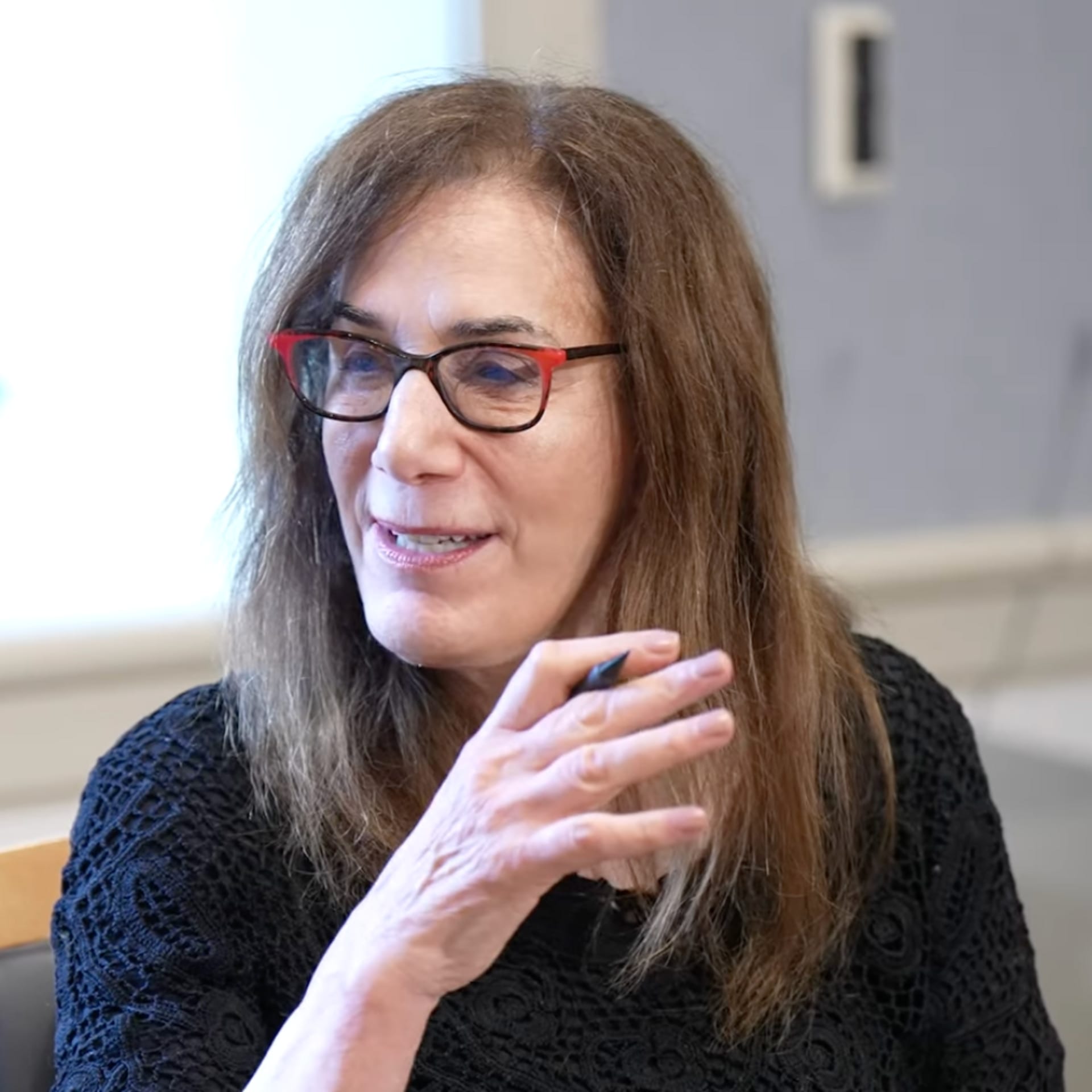
Elina Onitskansky says she referred herself for a bariatric procedure after doctors failed to offer the medical help she needed.1
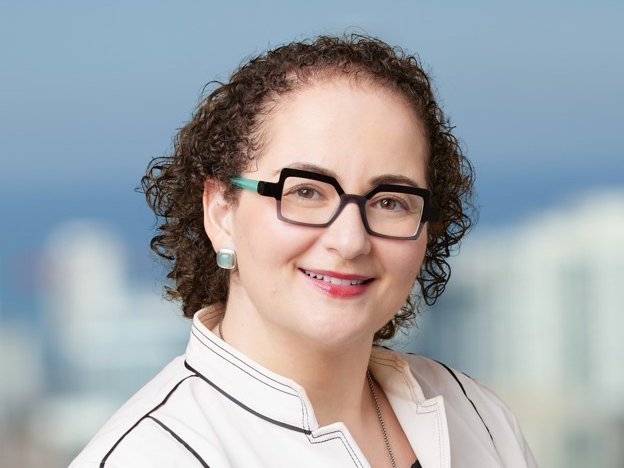
On June 2, 2026, her company, Ilant Health, announced a $15 million Series A led by Cornucopian Capital, bringing total funding above $22 million.2 It sells AI-supported obesity care. Its precision pitch starts with a sloppy comparison.
The 15% claim, checked
Ilant reports 15% average weight loss. Its homepage identifies that as a one-year result.4 The funding release places it above a 5.8% “real-world” benchmark.2 Click the citation: a 2018 Kaiser Permanente study measuring five-year outcomes from a nonsurgical, nonpharmacologic program involving meal replacements and behavioral support. The same paper reports 12.4% average loss at one year.5
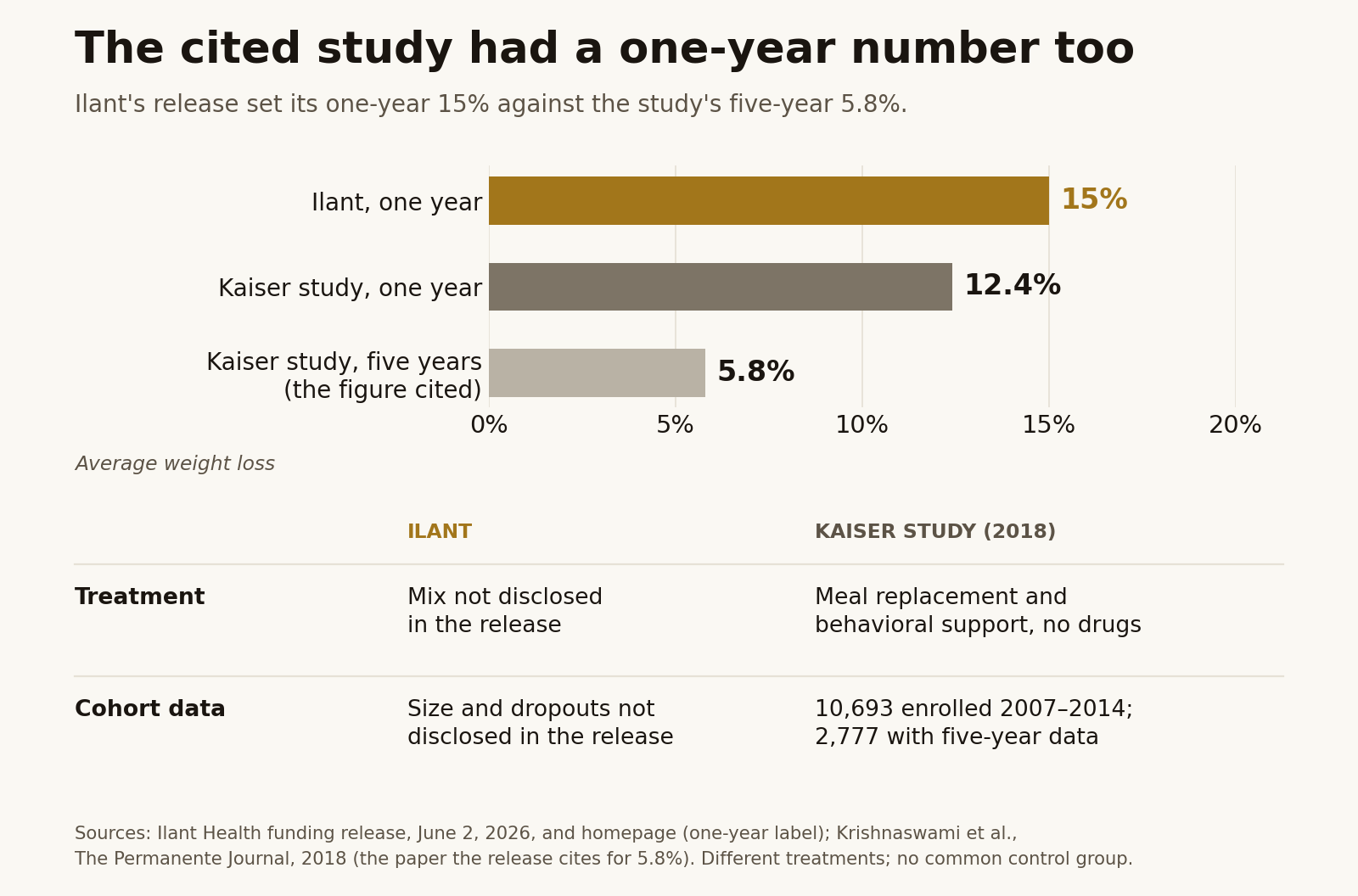
Different treatments. Different follow-up periods. No common control group. The release does not disclose Ilant's cohort size, treatment mix or handling of dropouts. That comparison cannot establish Ilant's superiority, much less isolate what its AI contributed. Real-world research shows why retention and dose matter when comparing weight loss.21
Employers want savings. Patients need care.
This matters because the company sits between people seeking treatment and institutions trying to spend less. Its health-plan pitch explicitly prioritizes expensive members and near-term financial returns.7 That can fund useful care. It also creates pressure to make the savings look better than the evidence permits.
The pressure is real. Business Group on Health's August 25, 2026 survey reported obesity GLP-1 coverage falling from 72% of surveyed employers in 2025 to 60% in 2026. This is a large-employer survey, not a national coverage rate.8
Data
| Value | |
|---|---|
| 2025 | 72% |
| 2026 | 60% |
A smaller drug bill is not a health outcome.
Patients on Reddit−28.69% — Reddit, down 28.69 percent today discuss changing jobs to get coverage.11 These are unverified anecdotes, but they show what the employer's savings calculation can leave out.
ICER's December 2025 assessment found these medicines cost-effective while warning about their budget impact.22 Both can be true: treatment can be worth paying for without paying for itself. Withdrawal studies also show substantial weight regain after stopping semaglutide or tirzepatide.19,20 “Fewer prescriptions” needs a clinical explanation before it becomes a victory.
Who is vouching for Ilant
The founders understand the buyer. Onitskansky previously worked at Molina Healthcare+2.79% — Molina Healthcare, up 2.79 percent today and McKinsey; Jessica Muse joined as an early investor, cofounder and COO.3 In July, Onitskansky coauthored a commentary piece with Bryan Sivak, whose fund Evidenced joined the Series A.12 By August, Cornucopian's Aryeh Ganz was predicting a billion-dollar company.13 These are commercially interested voices. Their confidence is not clinical validation.
The best case for Ilant, and its limits
The strongest defense is that Ilant addresses a real delivery failure. Its Amtrak webinar described coordinated clinical support and performance guarantees16; its Galway Holdings partnership includes distribution through EPIC Insurance Brokers' employer clients.15 Those relationships could matter more than the algorithm. SELECT demonstrated cardiovascular benefit from semaglutide in adults with cardiovascular disease and overweight or obesity, without diabetes.17 The FDA recognized that benefit in 2024.18 Keeping appropriate patients in effective care creates real value.
But neither drug efficacy nor employer adoption validates Ilant's incremental results. Even manufacturer access is shared: Eli Eli Lilly's+3.15% — Eli Lilly, up 3.15 percent today March 2026 launch listed 18 program administrators, counting the names, including Ilant.14 A place on that list is distribution access, not exclusivity.
What would prove it
The commercial test is whether Ilant can preserve better care if drug discounts and competitors narrow its room to charge. The clinical test is whether savings survive scrutiny of who enrolled, who stayed, who stopped and who paid.
For the next announcement, publish comparable cohorts and medical plus pharmacy spending after program fees, with dropouts included. Onitskansky's original problem was being failed by the care system. The next evidence should show whether patients are escaping that failure.
Get Health by email, free
AI in medicine, pharma and biotech. In our daily email, every weekday.