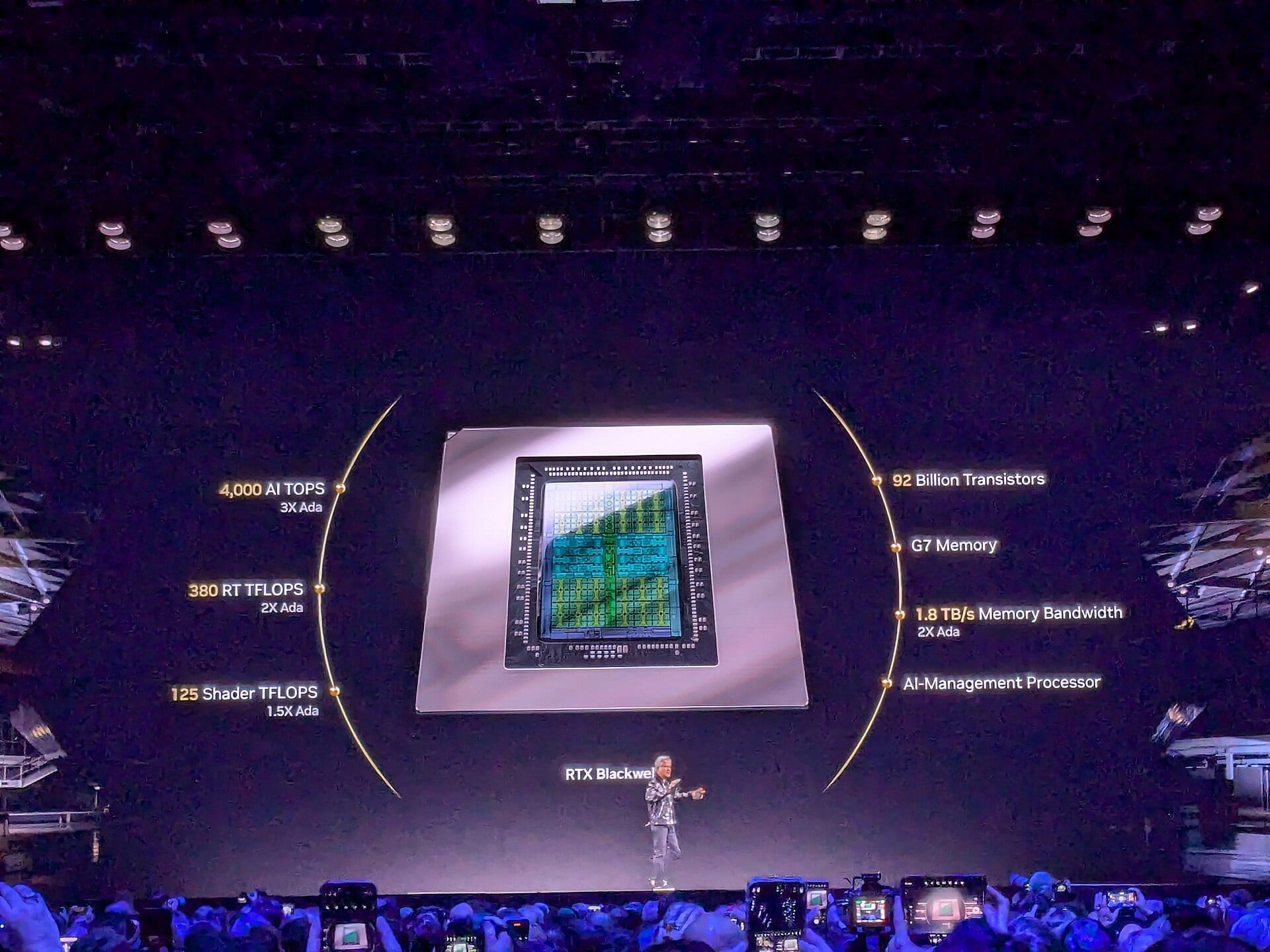
Report: Groq's next LPU stacks DRAM, dropping its SRAM-only design
ZDNet Korea, citing industry insiders, says Groq's next inference chip will stack DRAM in 3D to chase memory capacity. That reframes what Nvidia licensed for $20 billion, while a Delaware suit fights over that price.
 Vincent Jiang · 2 min read

The SRAM-only bet hits a capacity wall
Groq$3.5B — Groq, private, latest valuation $3.5B built the Language Processing Unit, its AI inference chip, on one rule: SRAM only, no DRAM, no HBM. On October 20, ZDNet Korea quoted a semiconductor insider on the next generation: "Groq plans to introduce 3D packaging to its next-generation chips 1. It involves stacking DRAM rather than existing SRAM." 1 The reported package, called 3DS, stacks DRAM layers on through-silicon vias and keeps standard DRAM interfaces, chasing capacity where HBM chases speed. 2
Bandwidth was never the problem. Each Groq 3 LPU holds 500 MB of on-chip SRAM moving 150 TB/s, about seven times the 22 TB/s a single Rubin GPU draws from its HBM4, plus 1.20 PFLOPs of FP8 compute. 1, 3, 4 Capacity is: a full 256-chip LPX rack totals 128 GB of SRAM, less than one Rubin GPU's 288 GB, so a trillion-parameter model's weights must be spread across racks just to be held. 1, 3, 4
A 256-chip Groq rack holds less memory than one Rubin GPU
Data
| Value | |
|---|---|
| Groq 3 LPU chip (SRAM) | 0.5 GB |
| Groq LPX rack, 256 chips (SRAM) | 128 GB |
| Nvidia Rubin GPU (HBM4) | 288 GB |
A $20 billion license, not an acquisition
Those racks entered full production in August inside Nvidia's+2.34% — Nvidia, up 2.34 percent today Vera Rubin platform and deliver roughly 3,400 tokens per second beside NVL72 servers. 1, 6 Several writeups of the DRAM report call Groq "Nvidia-acquired." 1, 2, 8 The record says otherwise: December 2025 brought a non-exclusive IP license plus hires worth about $20 billion, and Groq kept operating independently, GroqCloud included. 5, 6
A new exhibit for the Delaware fight
Two former engineers, Joshua Rubin and Benjamin Serebrin, sued Groq's board on October 2 in Delaware's Court of Chancery, alleging it skipped a stockholder vote Delaware law requires and ran no process to maximize value 6. Their complaint counts $17 billion for the license and $3 billion in restricted stock for the 150 to 200 engineers who moved 6. Groq calls the suit meritless and says it remains standalone. 6
Neither Groq nor Nvidia has confirmed the DRAM plan, and one report hints the SRAM and DRAM lines may survive as separate products. 1, 3 If the next chip replaces the architecture that license covers, both sides in Delaware get a fresh exhibit on what was actually sold and what it was worth. Cerebras, the other SRAM maximalist, is reported to be making the same turn to vertical DRAM for its CS-6. 7
Watch three things: confirmation, the next LPU's per-chip capacity, and the rack configuration. 3 The tell is gigabytes per chip: clear a trillion-parameter model on a single rack and the DRAM detour worked.
The daily newsletter