SpaceX catches an orbital Starship for the first time as analysts count a $227 billion funding gap
The first recovery of an orbital rocket's upper stage is the hardware half of cheap launches. The money half, a roughly $227 billion funding gap against $89.9 billion of cash and securities, decides the stock.
 Vincent Jiangthree-minute read
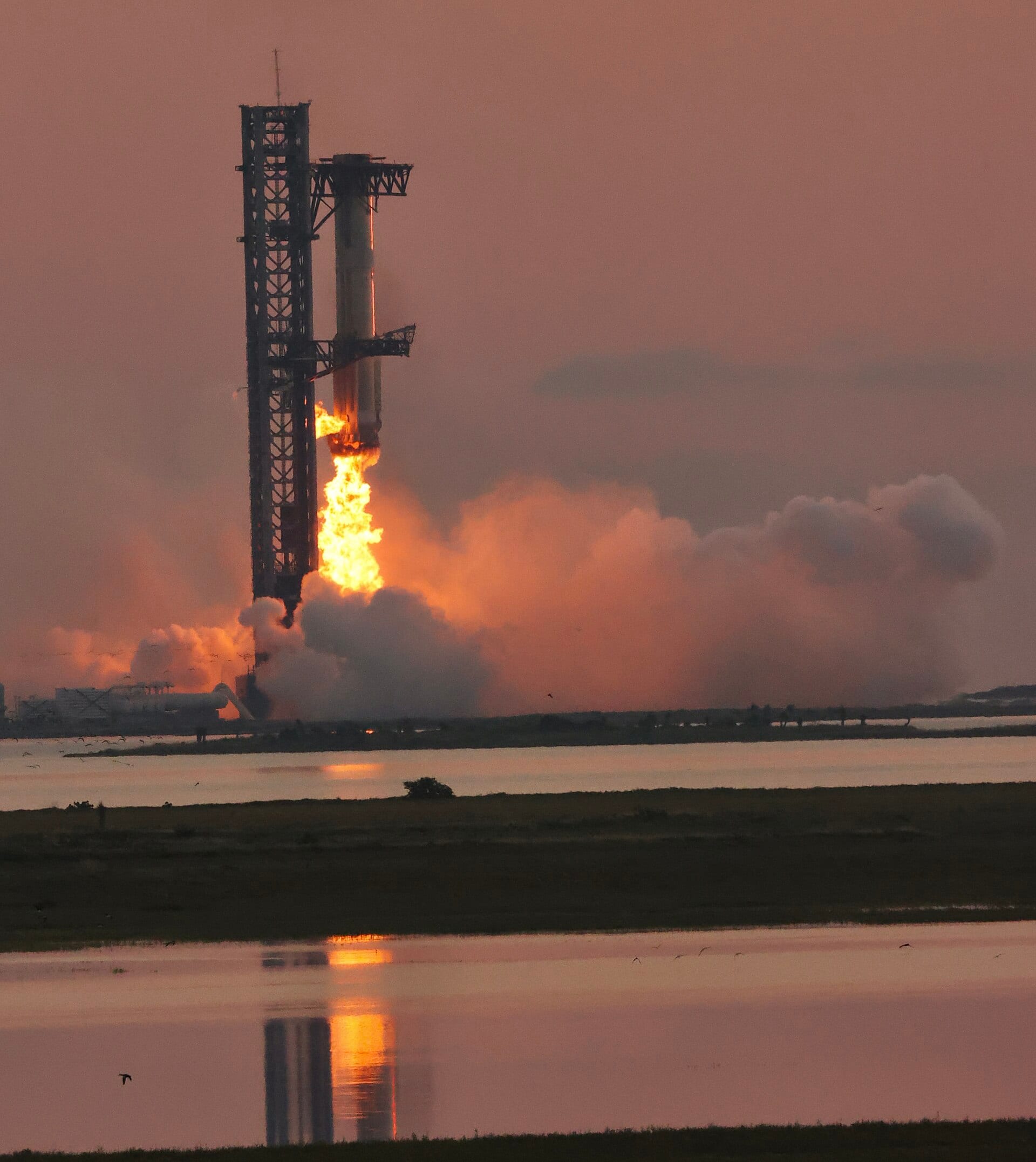
At 4:20 pm EST on Saturday, November 14, Ship 42 dropped out of the sky over Starbase, Texas, and settled between the mechanical arms of the tower that launched it, 22.5 hours and 14 orbits after liftoff 12. No company had ever returned an orbital rocket's upper stage to its pad 2. The ship had deployed 26 Starlink V3 satellites, a version too large for a Falcon 9 to carry 1. "That was the Holy Grail of spaceflight, plummeting through fire to be snatched out of the air by steel," SpaceX−2.57% — SpaceX, down 2.57 percent today spokesman Dan Huot said 3.
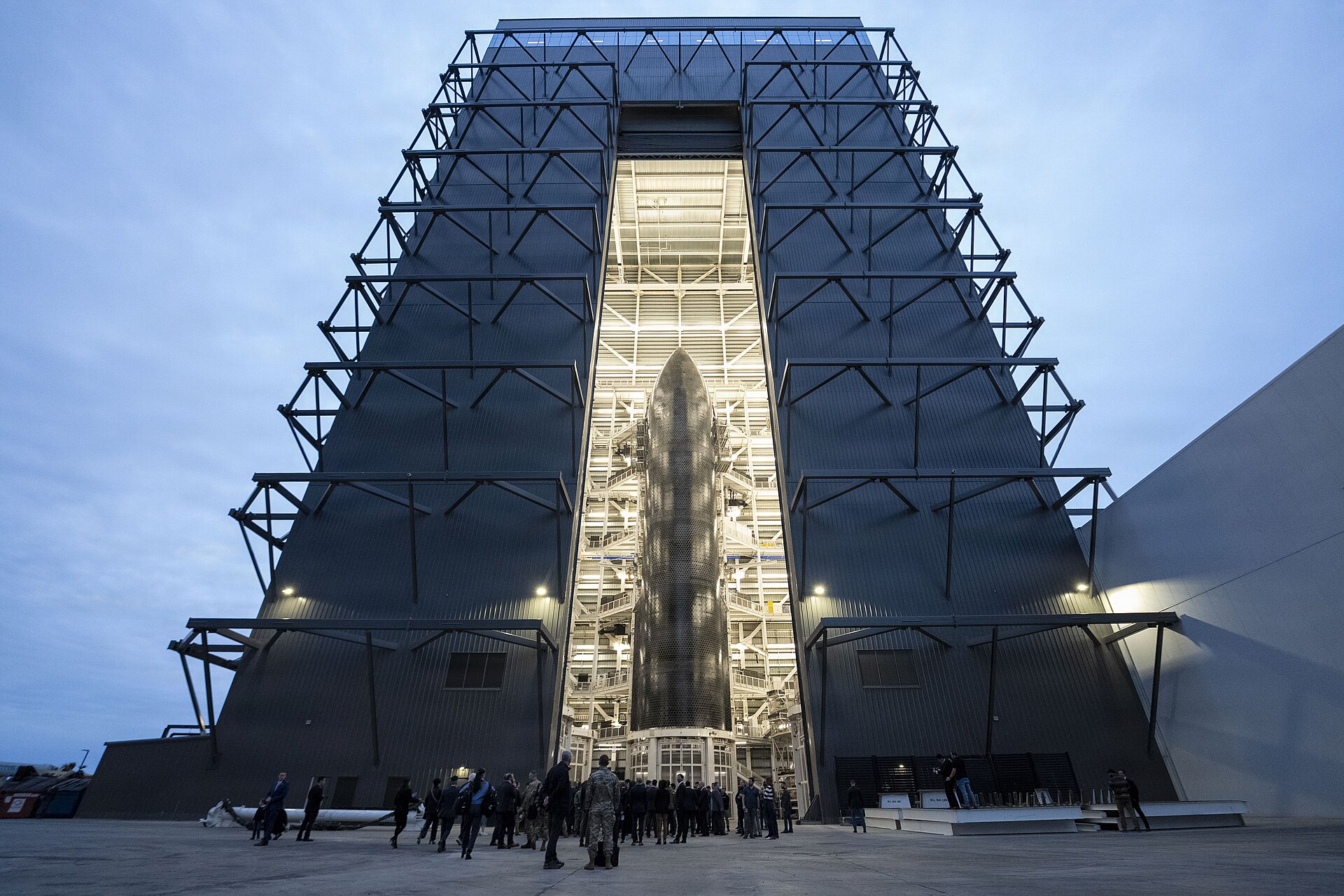
The flight's other half failed. The Super Heavy booster aborted its catch on Friday after onboard systems flagged a fuel problem, and it broke up over the Gulf of Mexico 45. The last trade before the catch was Friday's $139.11 close, 3% above the $135 June IPO price, and the stock slipped to $136.25 after hours on the booster loss 5. Monday's open is the first vote on the catch itself.
The savings land in Starlink, not in the Space segment
Starship flies inside the Space segment, the launch business, and Space spends: $1.77 billion of third-quarter revenue against a $7 million operating loss, a year after a $259 million profit, with $1.61 billion of segment capex, 91% of segment revenue 5.
The payday from a reflying ship is meant to land one segment over, in Connectivity, which is mostly Starlink: $2.37 billion of operating income on $5.25 billion of revenue, a 45% margin, and $2.37 billion of the company's entire $2.79 billion of operating income 56. SpaceX is also its own biggest customer, with 75% of the mass it put in orbit last quarter its own payloads 5.
The bill the catch is meant to shrink is mostly AI compute
Company-wide, the quarter brought $14.58 billion of revenue, up 161%, against $19.6 billion of capex, $16.4 billion of it for the Super Intelligence compute business 67. Chief financial officer Bret Johnsen guided the fourth quarter to $35 billion to $40 billion of capex 89, and on November 12 SpaceX added plans for more than $74 billion of data centers in Texas and Arizona 9. Analysts expect $261.9 billion of negative free cash flow from 2026 through 2028, leaving roughly $227 billion still to fund against $89.9 billion of cash and securities 69.
Capex has outrun revenue in five of the last six quarters
Even 161% revenue growth has not caught up with the build
- Revenue
- Capex
Data
| Revenue | Capex | |
|---|---|---|
| Q1 '25 | $4.07B | $4.14B |
| Q2 '25 | $4.07B | $2.83B |
| Q3 '25 | $5.58B | $6.88B |
| Q4 '25 | — | — |
| Q1 '26 | $4.69B | $10.11B |
| Q2 '26 | $7.81B | $18.37B |
| Q3 '26 | $14.58B | $19.59B |
Every reported quarter has burned cash, and the burn is deepening
Data
| Free cash flow | |
|---|---|
| Q1 '25 | -$3.41B |
| Q2 '25 | -$3.2B |
| Q3 '25 | -$3.11B |
| Q4 '25 | — |
| Q1 '26 | -$9.06B |
| Q2 '26 | -$15.95B |
| Q3 '26 | -$9.96B |
The bull case was priced before the catch
Morgan Stanley's+0.55% — Morgan Stanley, up 0.55 percent today Adam Jonas restated a $300 target on November 13, 116% above the close, calling a successful catch one of SpaceX's most significant potential catalysts 9. The 40 covering analysts average $256, with targets from $70 to $800 910. Jonas's own October note, written near $159, said shares would test $100 only after a clear AI slowdown, a severe Starship setback or a material dilutive event 9. A Tesla−2.61% — Tesla, down 2.61 percent today merger, possible as soon as December, would change who pays the bill 2.
Nothing is saved until a ship flies again
No Starship ship has ever flown twice, and the two booster reflights came months apart 11. SpaceX targets a first second-stage reflight in early 2027 8 but has named no date for Ship 42 5. Musk blamed the booster loss on a propellant shortage and said it "does not change our timeline to reach high volume, fully reusable Starship flights" 2. Until a caught ship flies again, the catch proves the hardware, not the savings.
Get Robotics & Defense by email, free
Robots, self-driving vehicles, drones and AI in defense. In our daily email, every weekday.

Reader comments
0 comments