Tech Stocks Rallied After the Fed Hike. The Bond Market Explains Why.
The rate increase was expected. The next day's relief came with cheaper oil and lower Treasury yields, alongside announced price increases in AI computing. That supports a rebound without making higher rates harmless.
 Vincent JiangSeptember 17, 2026 · 5 min read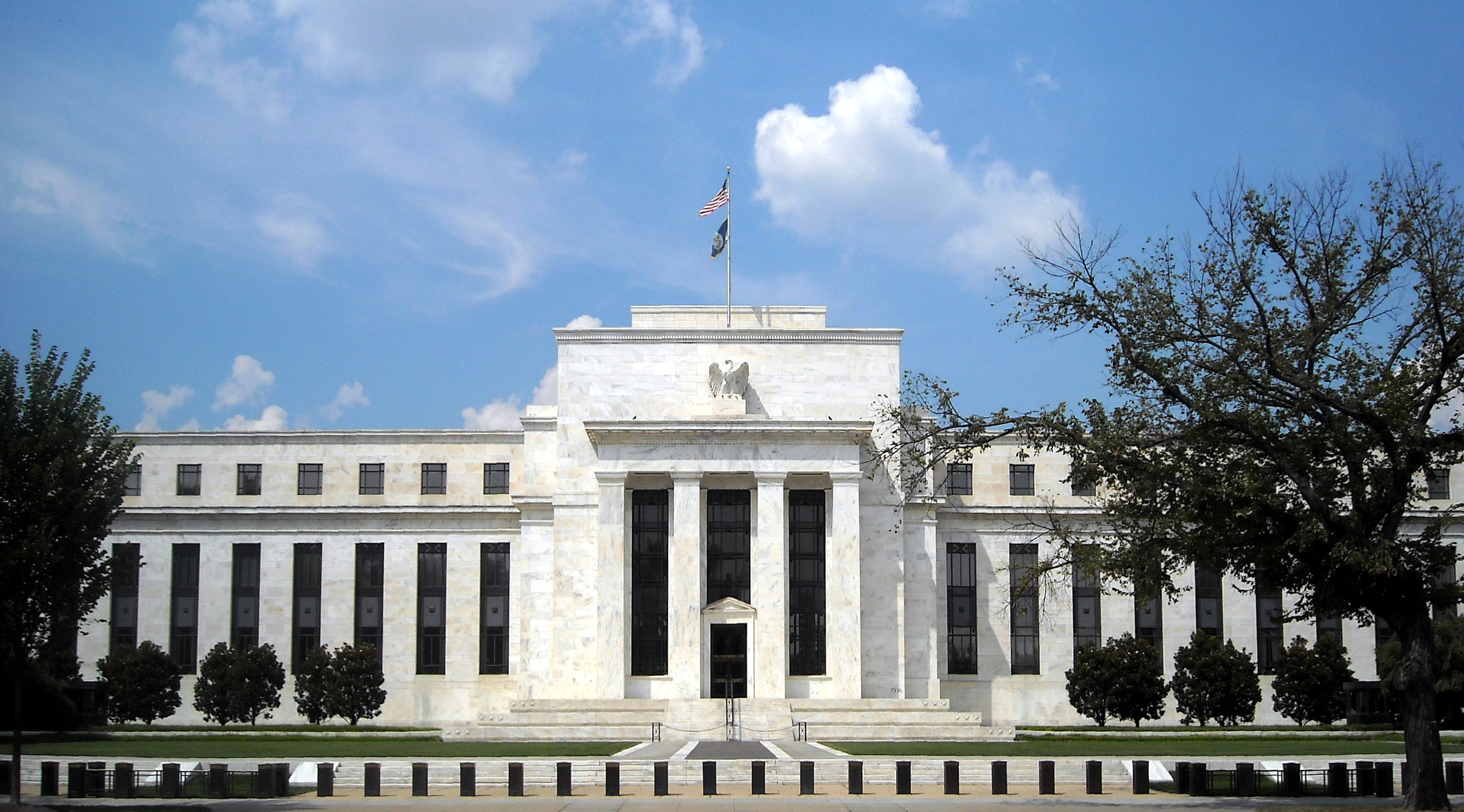
Warsh raised rates. The rally came later.
Kevin Warsh delivered a rate increase on Wednesday. By Thursday's close, investors had pushed the Nasdaq Composite up 1.7%.13
That looks contradictory until the sequence is put back together. On September 16, the Federal Reserve raised its target range from 3.50%-3.75% to 3.75%-4.00%. The Nasdaq ended that session almost unchanged, down 0.01%, while the S&P 500 fell 0.45%. Thursday was the rebound.12
The distinction matters. Stocks were responding to a new combination of information: a hike investors anticipated, easing pressure from oil and bonds, and company developments that did not wait for the Fed. A higher policy rate was one input into that calculation.
An expected hike needs less repricing
The quarter-point increase was widely expected before it arrived. Investors could reduce exposure, demand lower valuations or adjust their forecasts in advance. An expected cost increase does not require a second, equally large repricing when the announcement confirms it.4
That does not mean the whole policy outlook was reassuring. The Fed's September projections put the median year-end policy rate at 4.1%, with the same level projected for the end of 2027. June's corresponding forecasts were 3.8% and 3.6%. The projections became tighter, not friendlier.5
- June projection
- September projection
Data
| June projection | September projection | |
|---|---|---|
| Year-end 2026 | 3.8% | 4.1% |
| Year-end 2027 | 3.6% | 4.1% |
The market can therefore digest a hawkish Fed and still rise the following day if other conditions improve. Calling the rebound a bet on imminent rate cuts misses what the Fed actually published.
The rate that eased was outside the Fed's meeting room
On Thursday, the 10-year Treasury yield fell to 4.93% from 5.01% late Wednesday. Brent crude settled at $104.82 a barrel, down 1%.6
The Fed targets an overnight lending rate. Investors valuing years of future corporate cash flows also watch longer-term yields, which reflect the expected path of short-term rates and compensation for holding longer-duration bonds. Those market rates can move differently from the policy rate.715
Lower Treasury yields can support stock valuations by reducing the return investors demand relative to safer bonds. Growth stocks can be particularly sensitive when much of their expected value lies years ahead. Thursday's move provided relief through that channel, even though the Fed had just tightened. The benefit can disappear if earnings expectations weaken or investors demand more compensation for owning risky shares.
Oil supplied another part of the explanation. Energy Secretary Chris Wright said Saudi Arabia's disrupted East-West pipeline would be restored soon, easing a supply concern. Cheaper oil can reduce inflation pressure and preserve customers' spending power, although a one-day decline cannot establish a lasting improvement.9
Some investors also interpreted the hike as evidence that the Fed would defend price stability. That is a plausible confidence effect, not proof that the hike itself caused the rally.8
AI companies are changing their own prices
Interest rates affect what investors will pay for a dollar of future cash flow. Company performance determines how many dollars might arrive. Both sides of that calculation can change at once.
On September 17, Nebius said it would raise on-demand rental prices for selected Nvidia GPUs by 17%-21% from October 1. Customers making longer commitments can receive discounts, so the announcement is not a comparable increase across all contracted revenue.10
Higher rental prices can improve expected cash generation if customers accept them and capacity stays busy. That creates a company-specific reason for optimism alongside the macroeconomic rebound. The price increase and the Fed hike apply to different financial bases; comparing their percentages directly would be misleading.
Broadcom illustrates another distinction. It reported approximately $13.7 billion of quarterly free cash flow on September 2. That is company-wide cash generation after capital expenditure, not a projection of future AI profits. Businesses already generating substantial cash have more ways to fund investment than businesses dependent on continual borrowing.1114
Neither example proves the entire AI buildout will earn adequate returns. They explain why investors can distinguish growing cash flows from rising financing costs rather than applying one verdict to every technology company.
A green index does not repair a balance sheet
Thursday's advance extended beyond technology, including gains in homebuilders and precious-metals miners. But CoreWeave declined after announcing new financing. A broad rebound can coexist with investors marking down a company facing its own funding demands.12
The stronger bearish argument is about time. A company can sell more computing capacity while spending even faster on equipment, power and construction. Fixed-rate borrowing may shelter existing projects, but new debt, refinancing and fresh equity still carry costs. Strong demand does not determine how much value remains for shareholders.
Nor does a Treasury yield just below 5% restore the economics of cheap money. Expensive shares remain exposed if expected profits disappoint, or if inflation forces another upward repricing of borrowing costs.
Warsh acknowledged that the Fed cannot directly control individual prices such as oil. Its objective is to stop those increases spreading through the economy. A renewed energy shock could therefore hurt stocks through both weaker spending and tighter policy.13
Watch whether the relief survives the next bill
The next test is whether lower oil and bond yields persist while companies turn demand into cash after capital spending. For cloud providers, watch realized rental prices, utilization and financing needs. For chip suppliers, watch whether customers keep ordering and paying.
Warsh has delivered the hike. The next earnings reports will show which companies can keep growing without asking shareholders to finance the difference.
How this brief was made
01Gathered & sourced328 channels · 2,167 articles▾
Agents swept 328 channels and ingested 2,167 articles, then de-duplicated and ranked them for signal.
02Verified & cross-validated15 claims · 13 data feeds▾
Every one of 15 load-bearing claims was checked against primary sources, with 13 live data feeds reconciling the figures and charts.
- 1Federal Reserve, "FOMC policy statement", September 16, 2026
- 2Associated Press, "How major U.S. stock indexes fared Wednesday", September 16, 2026, final closing recap
- 3Associated Press, "How major U.S. stock indexes fared Thursday", September 17, 2026, final closing recap
- 4El País, "The Federal Reserve raises rates unanimously despite Trump's opposition", September 16, 2026
- 5Federal Reserve, "Summary of Economic Projections", September 16, 2026
- 6Associated Press, "U.S. stocks rally after oil prices and bond yields ease", September 17, 2026, completed-session update
- 7Federal Reserve, "About the Federal Open Market Committee", accessed September 17, 2026
- 8Reuters, "Fed builds credibility, but hawkish turn leaves investors edgy", September 17, 2026, updated 9:55 a.m. EDT
- 9Yahoo Finance, "Stocks rise as oil slips and investors weigh Fed inflation credibility", September 17, 2026, intraday reporting
- 10Reuters, "Nebius raises selected AI cloud prices again", September 17, 2026
- 11Broadcom investor relations, "Third-quarter fiscal 2026 financial results", September 2, 2026
- 12Reuters, "Tech leads Wall Street higher as oil and Treasury yields ease", September 17, 2026, 4:01 p.m. EDT closing flash
- 13Federal Reserve, "Chairman Warsh's press-conference transcript", September 16, 2026
- 14Seoul Economic Daily, "Broadcom revenue jumps as investors assess its outlook", September 3, 2026
- 15Federal Reserve staff research, "Three-factor nominal term structure model", accessed September 17, 2026
03Reviewed & edited2 human editors▾
2 editors read the draft against the evidence, tuned the framing, and signed off before it shipped.
Become a contributor
Reporting on the business of AI and want it read? We take pitches from outside contributors who bring primary sources and a number worth arguing about.
Deepdive
AI-generated from this story and its cited sources. Not investment advice.