Tesla passes Waymo on Texas robotaxi permits, 1,302 to 1,297, and the registry counts no riders
The Texas registry counts permitted vehicles, not paying riders, and NHTSA is weighing a defect petition on the same Model Y and Cybercab types. Shareholders are paying 168 times forward earnings for autonomy.
 Vincent Jiangthree-minute read
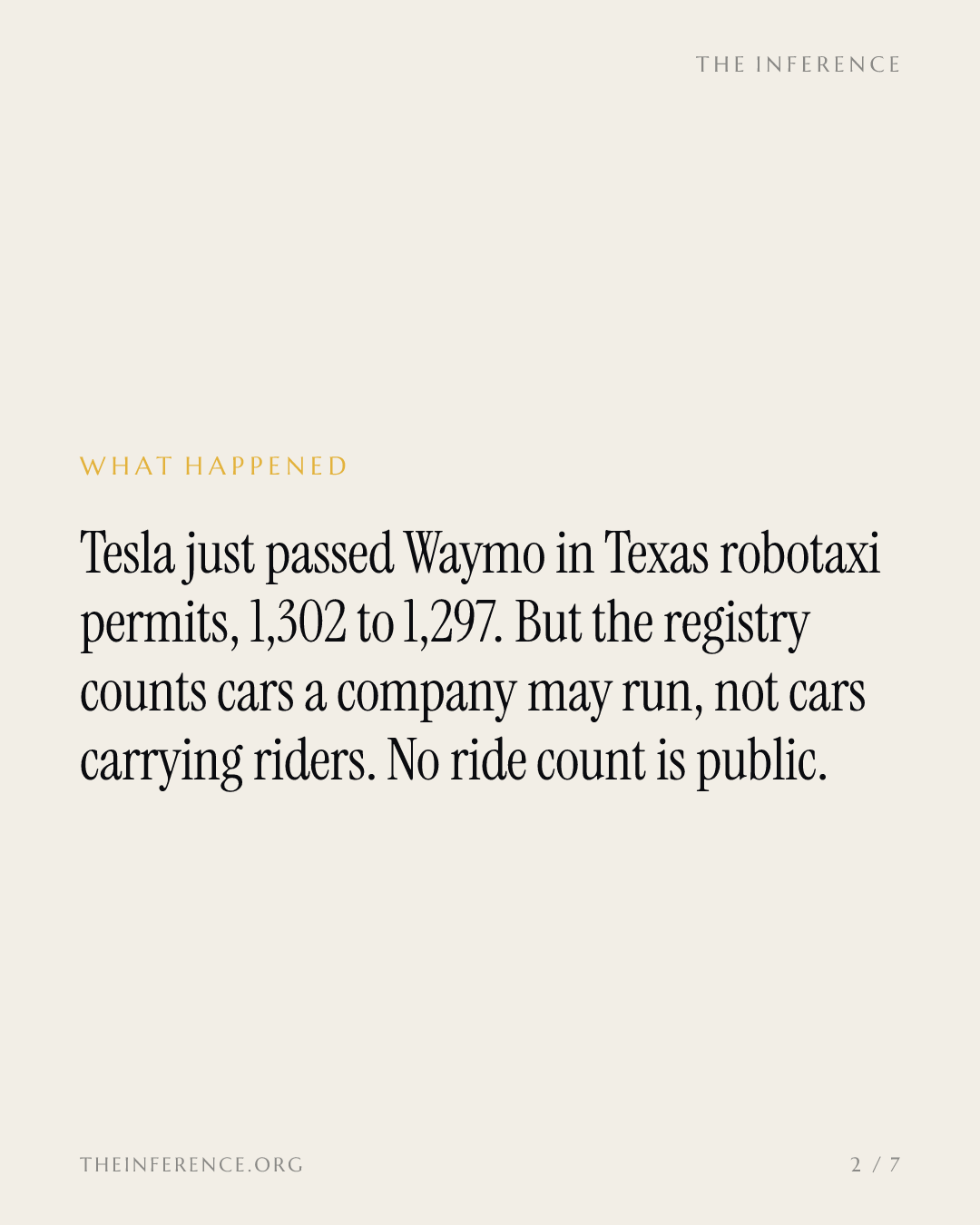
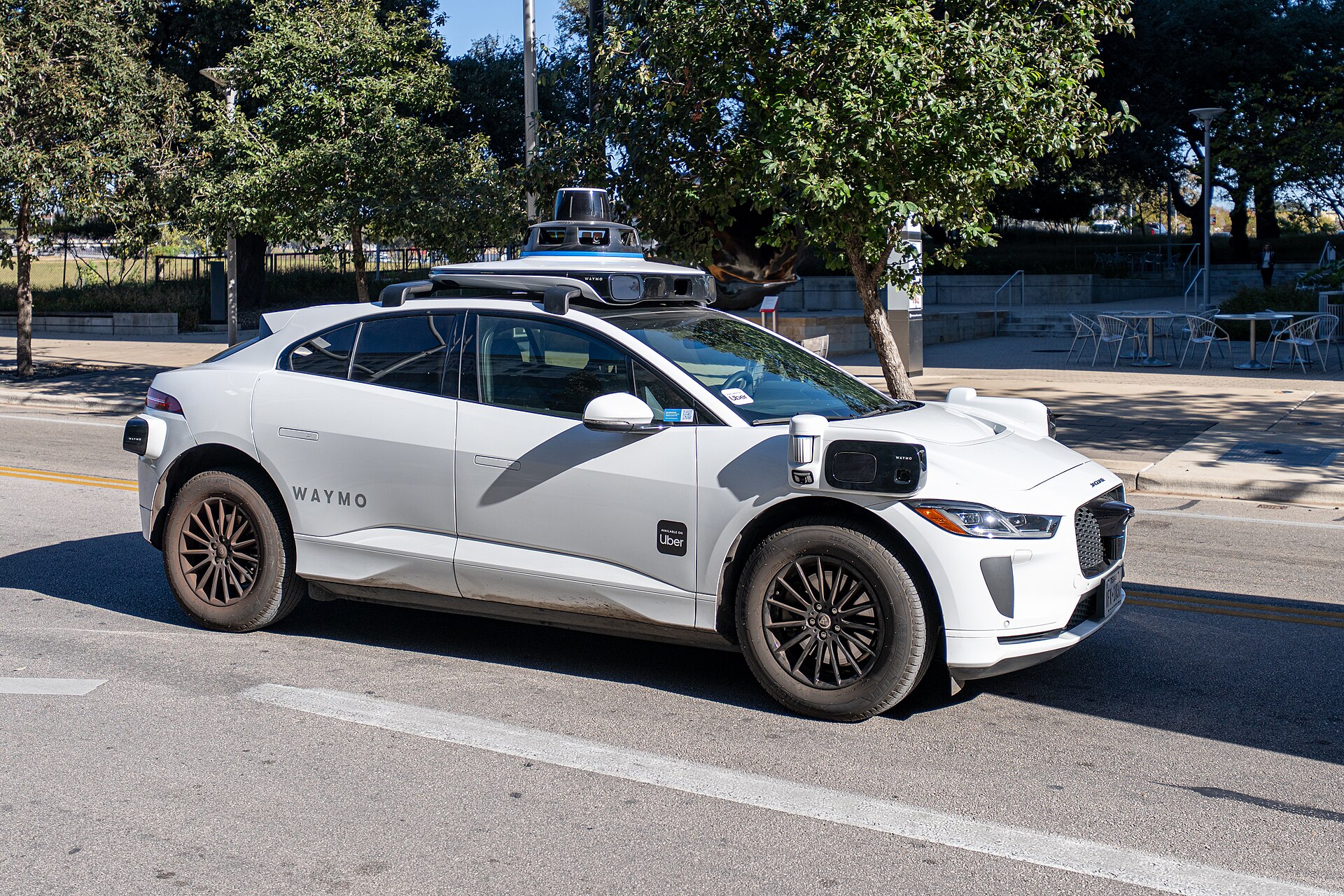
Two robotaxi rivals have been racing all year in Texas, and the state's own registry says the race flipped. As of November 10, Tesla−0.25% — Tesla, down 0.25 percent today Robotaxi LLC holds 1,302 registered vehicles on the Texas Department of Motor Vehicles automated vehicle list, five more than Waymo's 1,297 1. The registry has been public only since late May 2026, when Tesla listed 42 vehicles against Waymo's several hundred, so November 10 is the first reading that shows Tesla ahead 1. The stakes are plain: autonomy is the reason Tesla stock trades at 168 times forward earnings, per our November 10 report on the robotaxi map 4.
The lead is permission, not passengers
The complication lives inside the number. The Texas list counts vehicles a company is permitted to run, not cars carrying riders. Teslarati, the outlet that reported the flip, says so directly: the registry does not report how many vehicles actively carry riders, which cities they serve, or trip volume, so the lead signals capacity and regulatory positioning more than ride volume 1. Neither the registry 1 nor our November 10 report 4 carries a rides per vehicle per day figure, and Tesla publishes no daily ride count and no robotaxi revenue 4.
Thirty times in five months
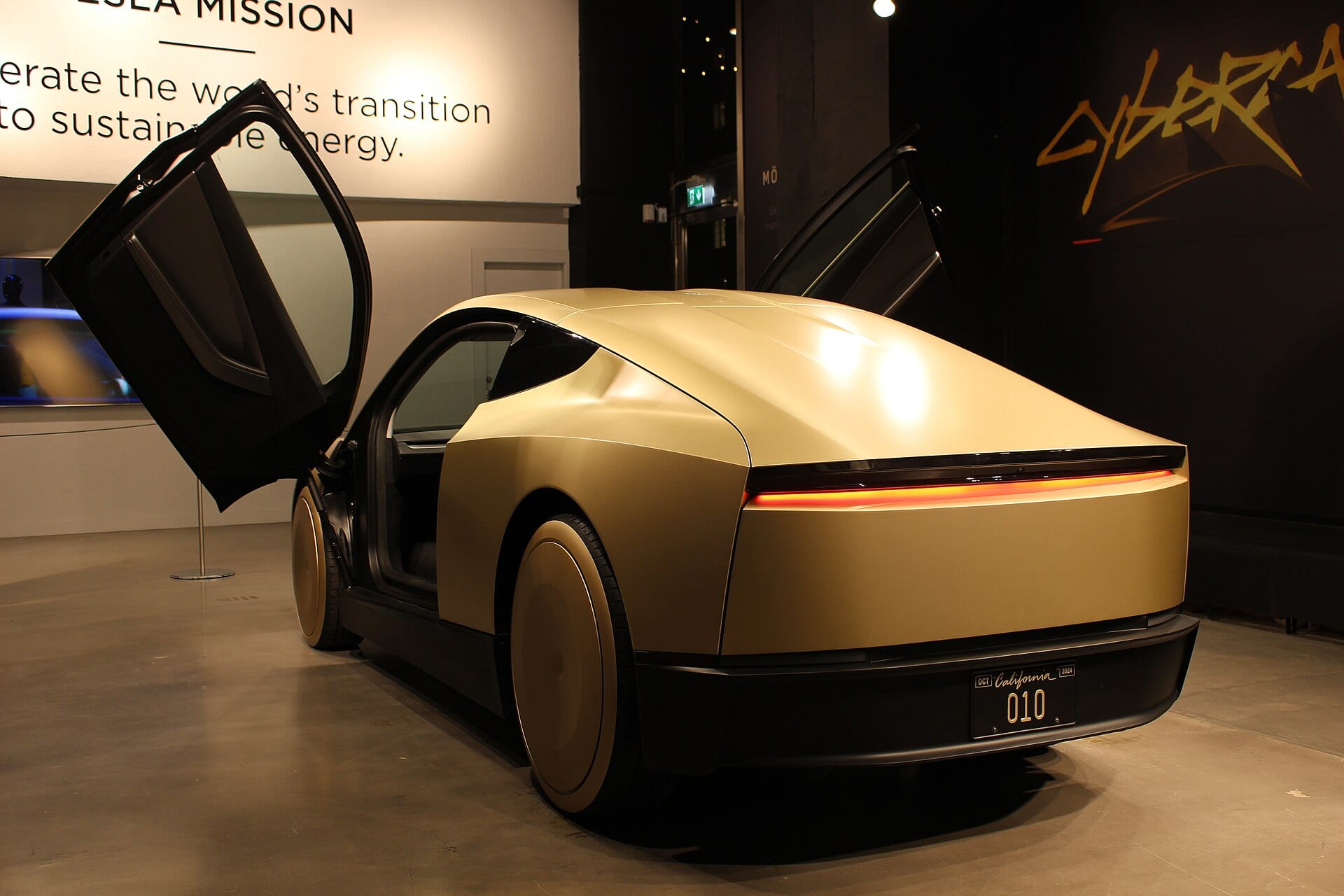
The growth rate is the real story. Tesla's authorized Texas fleet has multiplied more than thirty times since late May, through repeated Model Y additions and a steady Cybercab build 1. On November 10 alone, Tesla added 20 Model Ys, pushing the fleet to 1,302, according to the Texas Autonomous Vehicle Tracker 1. The mix matters: 729 of the entries are converted Model Ys and 573 are purpose-built Cybercabs 1. Waymo's roster runs on Jaguar I-PACEs and Zeekr-based Ojai minivans 1.
Tesla's Texas permits ran from 42 to 1,302 and passed Waymo's 1,297
Data
| Tesla Robotaxi, registered vehicles | |
|---|---|
| Late May 2026 | 42 |
| 27 Oct 2026 | 970 |
| 10 Nov 2026 | 1,302 |
The feds have a file on the same cars
The same two vehicle types now sit in front of the National Highway Traffic Safety Administration (NHTSA), the US auto-safety regulator. On September 23, 2026, NHTSA's Office of Defects Investigation received a defect petition covering roughly 1,000 model year 2026 Tesla robotaxis, Model Y and Cybercab, alleging their automated driving system exceeds posted speed limits in active school zones 2. The petition cites video of several incidents; NHTSA has not decided whether to grant or deny a full investigation 3.
The Cybercab is separately under investigation over its missing side mirrors, pedals and steering wheel, and NHTSA has an open probe into Tesla's Full Self-Driving system for traffic violations like running red lights 2.
Waymo's record is longer, not cleaner
Waymo is not clean here either: NHTSA and the National Transportation Safety Board have both probed Waymo over failures to fully slow or stop for school buses 3, and a Waymo car struck a child near a California elementary school 2. Texas logs incident reports too: operators reported 249 robotaxi incidents in Austin to NHTSA since October 2023, including 165 from Waymo and 26 from Tesla, with at least 14 alleged minor injuries across operators 5.
Waymo accounts for two thirds of Austin's 249 robotaxi incident reports
- Waymo16566.3%
- Other operators5823.3%
- Tesla2610.4%
Data
| Slice | Value | Share |
|---|---|---|
| Waymo | 165 | 66.3% |
| Other operators | 58 | 23.3% |
| Tesla | 26 | 10.4% |
What a permit can and cannot underwrite
The strongest bull case says the trajectory is the story: 42 vehicles to 1,302 in five months, service expanding past Austin into San Antonio and Dallas, with Cybercab production ramping 1. That direction of travel is genuine, and the registry is the state's own book. But a staged car in a lot registers the same as a car earning fares, and at 168 times forward earnings shareholders are paying for fares, not permissions 4.
The number that would settle it
The bear read has a check to pass too: shorts betting the autonomy ramp is slow are up against a fleet that passed Waymo's in Texas and is still compounding 1. What would move the read either way is a per-vehicle ride count from either company, and NHTSA's decision on whether to grant or deny the school-zone investigation 3. Until the fares are counted, the registry measures what each company may run, not what it earns.
Get Robotics & Defense by email, free
Robots, self-driving vehicles, drones and AI in defense. In our daily email, every weekday.