The 10-year broke 5%. The AI giants did not blink.
The 10-year Treasury broke 5% before the Fed's first hike in three years, and again after it. The AI buildout did not blink: information-processing investment now outruns homebuilding, and six companies' bonds compete with Washington's for the same buyers.
 Vincent Jiang · 4 min read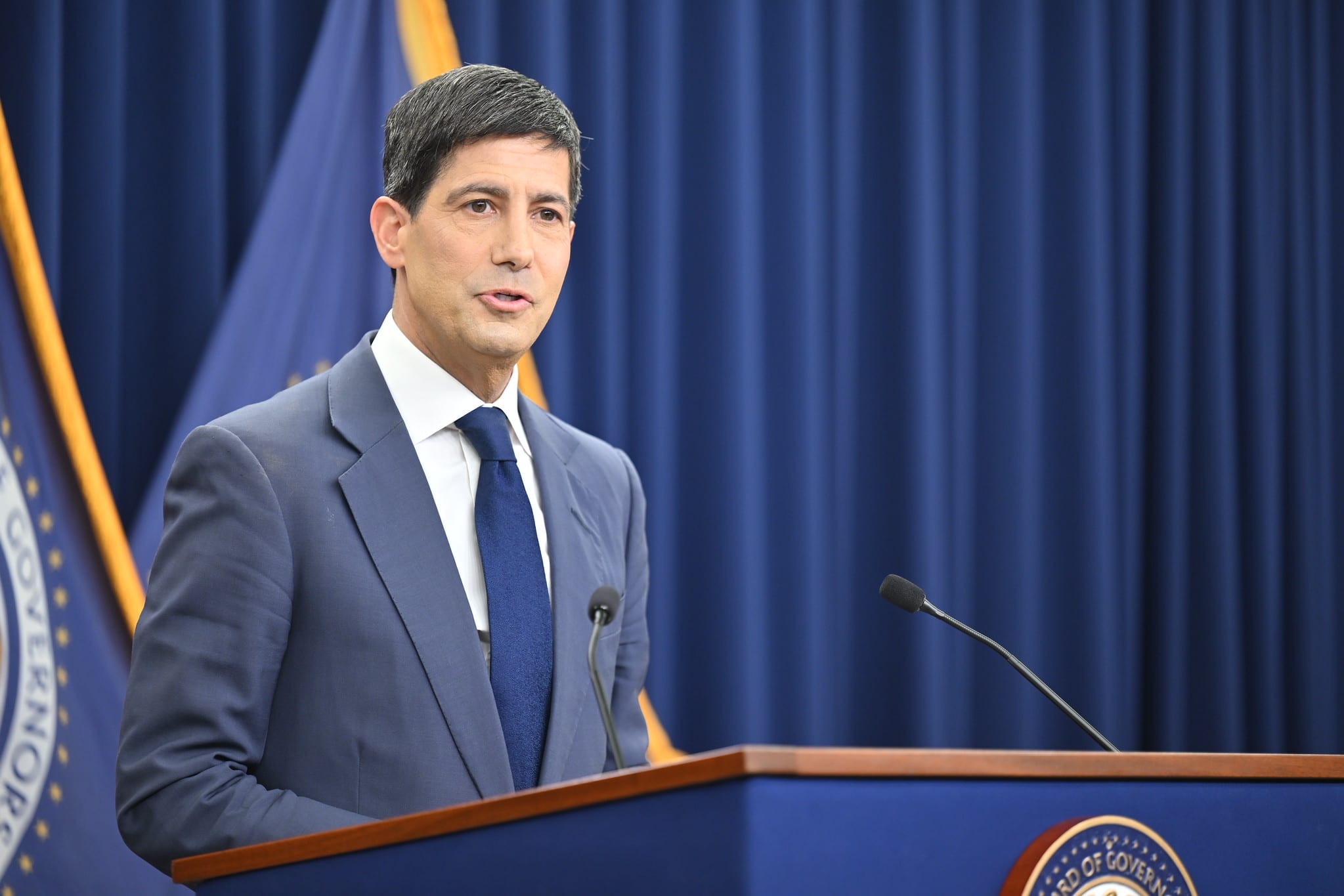
Five percent, straight into your mortgage
The 10-year Treasury yield touched 5% on 14 September, its first time at that level since 2023 and only the second since 2007 1. Two days later the Federal Reserve raised rates for the first time in three years, a quarter point to a 3.75% to 4% range, and the 10-year pushed straight back above 5%, to 5.016% 2. It settled at 4.96% on 22 September 3.
Nothing in that move stayed on a trading floor. The average 30-year mortgage hit 7.12% in the week to 18 September, its highest since May 2024, and homebuilders are absorbing it: D.R. Horton is down 23% over the past year, Lennar 43% 21.
Old drivers, new claimant
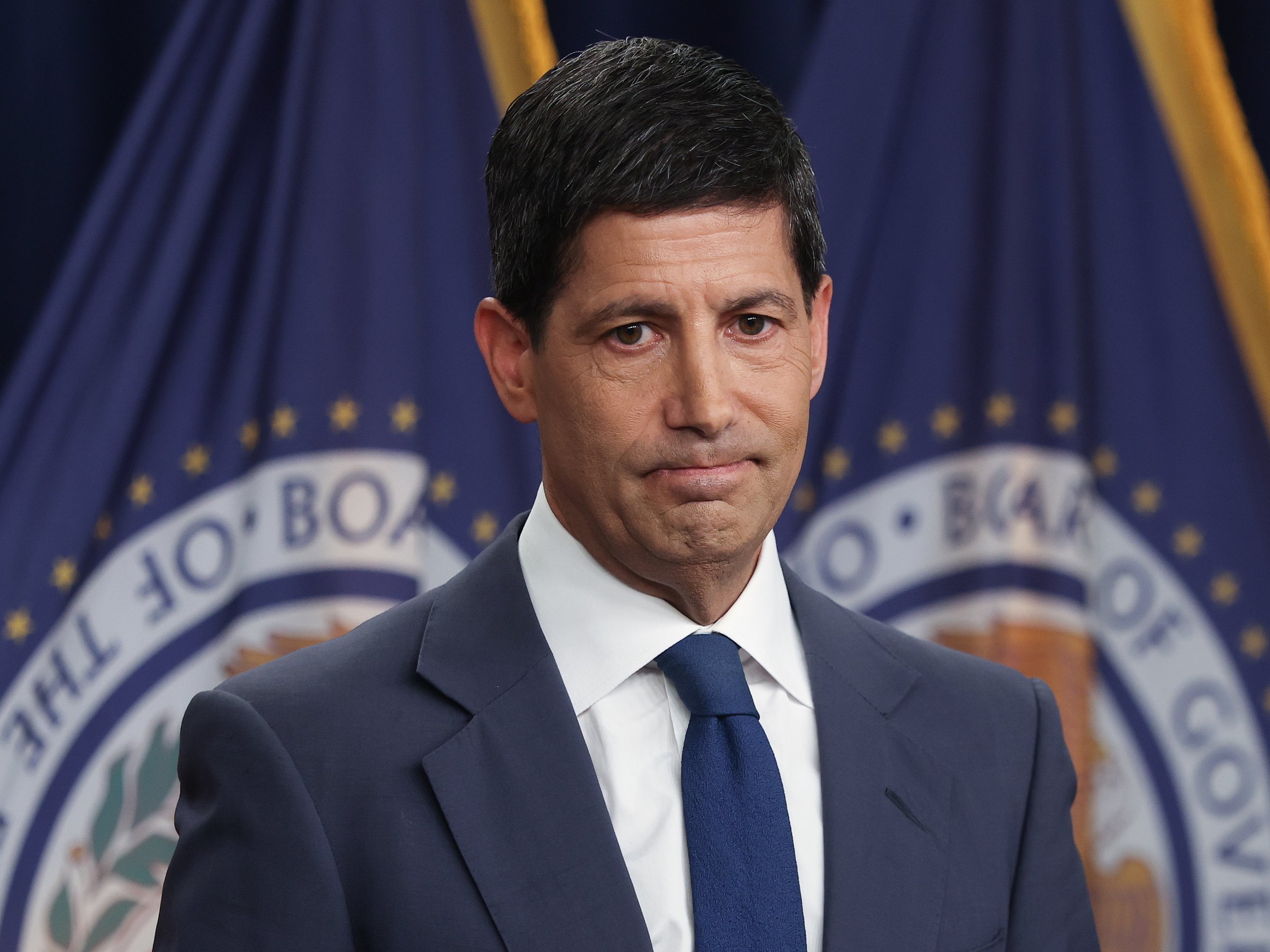
Chair Kevin Warsh tied the hike to inflation that is "too high and has been for too long" 2. The proximate drivers are old ones. Oil spiked after the US-Iran war began in late February, and the 10-year is up more than a percentage point since the war started 2.
Washington supplies the rest: heavy Treasury issuance against a growing deficit, a federal debt load that crossed $40 trillion for the first time weeks ago, and investors demanding a higher term premium to hold long-dated paper 1.
No source isolates how much of the 5% print belongs to the AI boom, and the honest answer is that it is a share, not the whole. But the newest claimant on the market's savings is not Washington 4.
The boom the rate tool cannot reach
Real US investment in information processing equipment, data centers included, ran at $752 billion in the second quarter, above residential investment at $748 billion, per Bureau of Economic Analysis data flagged by San Francisco Fed vice president Adam Shapiro 6. Residential investment is down 18% from its early-2021 peak; the tech series is up 51% over the same span 6.
Housing obeys rates and is shrinking; AI investment, Shapiro notes, "has been less sensitive to interest rates," even as issuers lean harder on debt 6. Treasury Secretary Scott Bessent went further, calling the issuance "almost yield-agnostic": the companies "don't really care what they're paying" 6.
So are the AI companies fighting the Fed? Not deliberately: their spending keeps demand hot while the Fed tries to cool it, and their bonds now compete with Treasuries for the same buyers 4.
Six borrowers, 68 cents on Washington's long dollar
JPMorgan strategist Michael Cembalest counts about $320 billion of debt issued this year by Oracle, Microsoft, Amazon, Alphabet, Meta and Nvidia, vehicle structures included 4. The long-duration piece, roughly $303 billion, equals 68% of new long-duration Treasury borrowing in 2026 4.
Goldman Sachs data show hyperscaler gross issuance heading for a record $420 billion next year, up 60% 5. S&P Global expects capex of $870 billion this year and more than $1.3 trillion in 2027 across the six biggest spenders, with operating cash flow collectively negative in both years 6. The four largest capex lines nearly tripled in eight quarters 78910.
Big-four AI capex nearly tripled in eight quarters
Data
| Big-four hyperscaler capex | |
|---|---|
| Q3 '24 | $57.5B |
| Q4 '24 | $70.6B |
| Q1 '25 | $71.1B |
| Q2 '25 | $87.4B |
| Q3 '25 | $96.4B |
| Q4 '25 | $117.6B |
| Q1 '26 | $128.8B |
| Q2 '26 | $163.9B |
Picky buyers, not scared ones
AI-linked investment-grade spreads sit near 115 basis points, against 78 for the broader market, and Alphabet had to pay a large concession to complete its August sale 5. Traditional paper still gets mobbed: Aon's $13.5 billion financing this month drew $65 billion of orders 5. BlackRock's Russell Brownback calls the widening supply-and-demand rather than credit fear, with some double-A AI names now pricing near triple-B levels 5.
Thornburg's Lon Erickson: "Investors are only able to digest so much, so fast" 5. Ned Davis Research's Joe Kalish adds that one quarter-point hike "is probably not going to derail the financing effort" 11. The market's complaint is volume, not solvency.
December, then the 2027 test
The Fed's own projections imply a second hike this year, and December is the base case at Goldman Sachs Asset Management, contingent on inflation prints and the path of oil 2.
The decisive date is 2027, "the real stress test" for Goldman credit trader Jeffrey Papai, when record supply meets a market short of natural buyers 4. Oracle is the concentrated exposure: $55.7 billion of fiscal 2026 capex against roughly $32 billion of operating cash flow, with about $40 billion more of debt and equity planned for fiscal 2027 4. D.A. Davidson's Gil Luria calls the debt-heavy periphery, Oracle included, "more existential" at these rates 11.
Kevin Warsh sets the price of money. Six borrowers now set the quantity.
How this brief was made
01Gathered & sourced184 channels · 1,323 articles▾
Agents swept 184 channels and ingested 1,323 articles, then de-duplicated and ranked them for signal.
02Verified & cross-validated11 claims · 15 data feeds▾
Every one of 11 load-bearing claims was checked against primary sources, with 15 live data feeds reconciling the figures and charts.
- 124/7 Wall St., "10-Year Treasury Yield Just Passed 5%, Here's What Happened To The Market When The Same Thing Happened In 2007", 14 September 2026
- 2CNBC (via MSN), "10-year Treasury yield climbs back to 5% after Fed hikes rates, Warsh highlights inflation risks", 16 September 2026
- 324/7 Wall St., "10-Year Treasury Yield Pulls Back to 4.96% After Touching 5%", 22 September 2026
- 424/7 Wall St., "AI Companies' Debt Now Equals 68% of New Long-Term U.S. Treasury Borrowing This Year, JPMorgan Finds", 10 September 2026
- 5Reuters (via MSN), "Corporate bond buyers get picky with flood of AI debt", 22 September 2026
- 6Fortune (via MSN), "US economy hits pivotal milestone: Spending on data centers and other information-processing hardware now exceeds housing investment", 20 September 2026
- 7Sharadar quarterly fundamentals, from Microsoft's SEC filings, retrieved 23 September 2026
- 8Sharadar quarterly fundamentals, from Alphabet's SEC filings, retrieved 23 September 2026
- 9Sharadar quarterly fundamentals, from Meta's SEC filings, retrieved 23 September 2026
- 10Sharadar quarterly fundamentals, from Amazon's SEC filings, retrieved 23 September 2026
- 11CNBC, "If AI is a bubble, could rising yields pop it?", 18 August 2026
03Reviewed & edited2 human editors▾
2 editors read the draft against the evidence, tuned the framing, and signed off before it shipped.
Become a contributor
Reporting on the business of AI and want it read? We take pitches from outside contributors who bring primary sources and a number worth arguing about.
Deepdive
AI-generated from this story and its cited sources. Not investment advice.