Twilio lands its first eight-figure voice-AI deal, then says 99% of the market is untapped
The company says voice AI is 1% of its minutes and the money is ahead, but the largest insider seller is a director tied to Sachem Head, not the CEO. Whose money moves: anyone holding a stock priced 49.7% above its own fair-value estimate.
 Vincent Jiangtwo-minute read
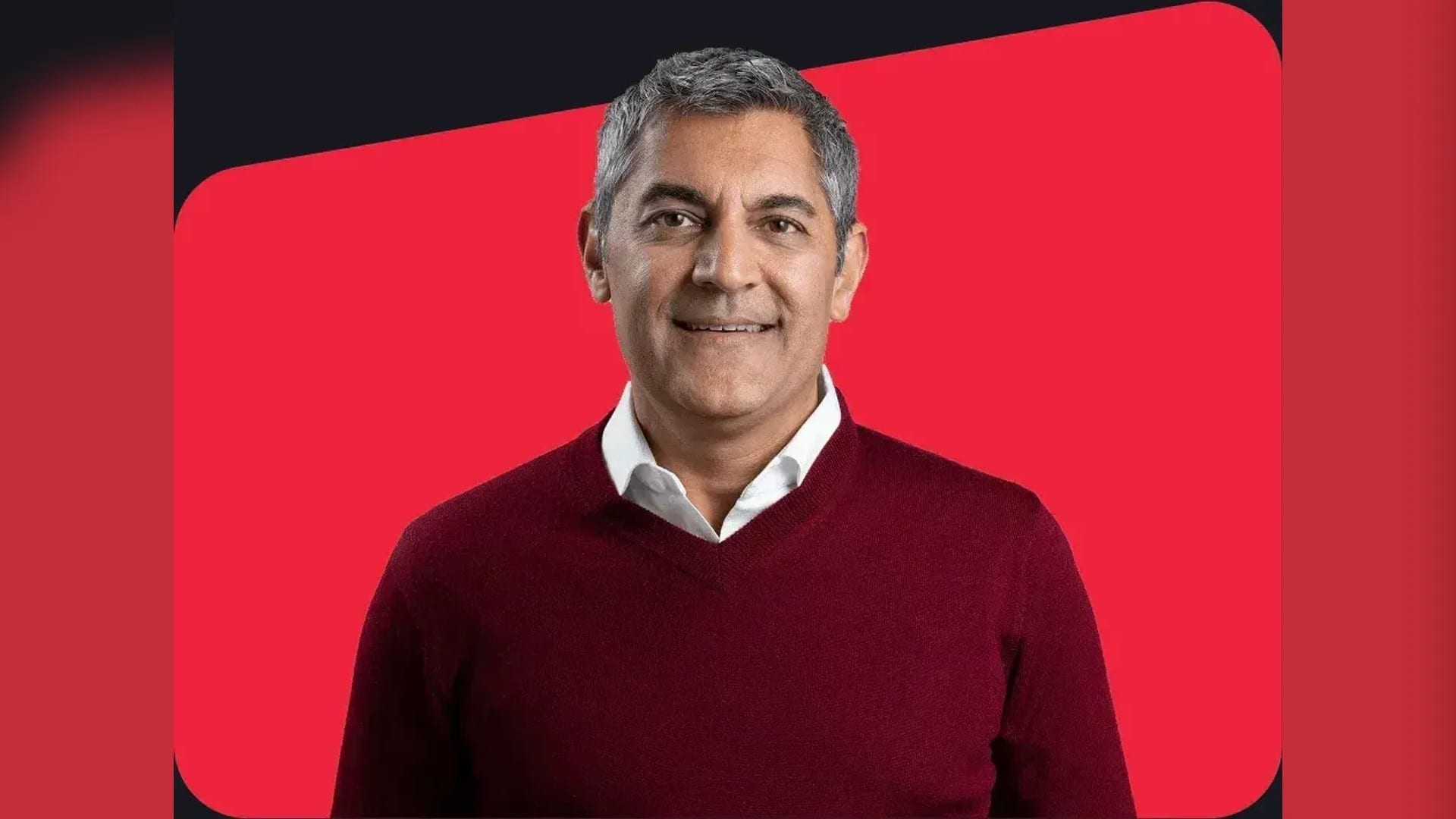
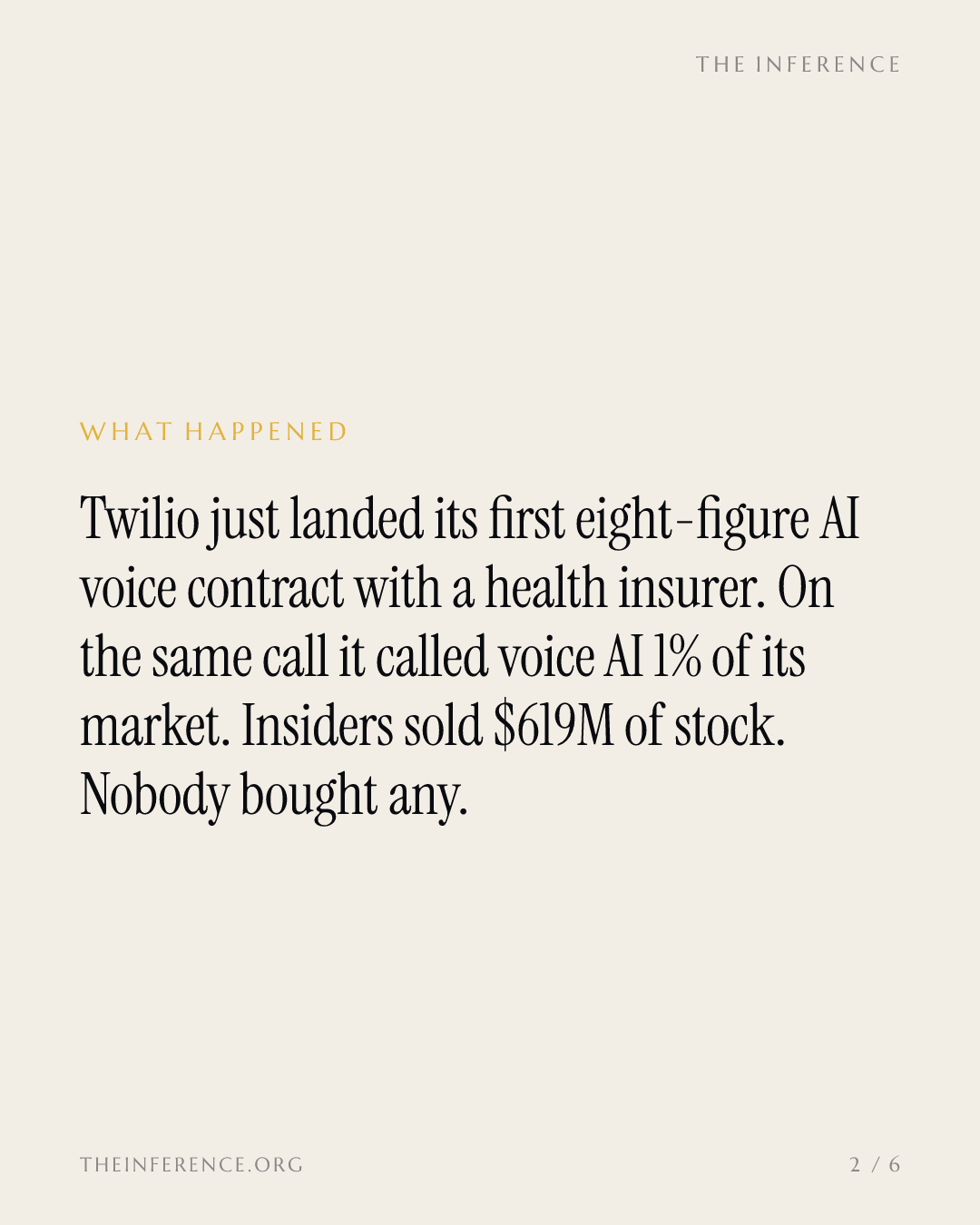
Twilio+2.08% — Twilio, up 2.08 percent today says a health insurer signed its first eight-figure Conversations contract, an AI voice agent built on the company's Conversation Relay and Conversation Intelligence software, disclosed by CEO Khozema Shipchandler on the third-quarter 2026 earnings call 1. On the same call he put voice AI at roughly 1% of the voice minutes available on Twilio's network, and voice revenue grew more than 20% in the quarter 1.
The 1% pitch is a land-grab argument, not a measurement
Shipchandler's framing: "We are in the very early stages of an AI supercycle," with the remaining 99% of voice minutes treated as headroom 1. Note what the disclosure does not carry: no measurement period, market definition or method behind the 1% figure, and no revenue split for the add-ons the CFO credited 1. That makes it a vendor's land-grab argument, and the counterargument is standing: our November 8 piece reported OpenAI's voice agents dialling out at $0.05 a minute over Twilio's pipes, the disintermediation case in which the model vendors keep the AI money and Twilio collects a toll 5.
The deal says enterprises sign Twilio directly
The eight-figure insurer contract and Chapter's seven-figure move of its contact center onto Twilio Flex+2.51% — Flex, up 2.51 percent today, fully live in weeks, point the other way: enterprises signing Twilio for the platform, not just the dial tone 1.
Twilio priced the quarter accordingly, and the tape answered. Revenue was $1.56 billion, up 20%, with GAAP operating income of $149 million, free cash flow of $370 million and 114% net expansion, meaning existing customers spent 14% more than a year earlier 2. The stock rose 3.7% to $214.21 on November 10 as investors reassessed a raised outlook that guides Q4 revenue to $1.595–1.605 billion and full-year organic growth to 15%, with at least 10% pencilled for 2027 24.
Twilio insiders sold, none bought, in the six months to November 2026
57 insider sales, zero purchases, led by one holder selling $307.7 million
Data
| Value | |
|---|---|
| Andrew Stafman | 307.7 |
| Khozema Shipchandler | 26.4 |
| Aidan Viggiano | 7.2 |
| Erika Rottenberg | 1.3 |
The executives selling the 1% story are selling the stock
Insiders sold $619.0 million of stock over twelve months with zero buying, and the six-month record shows 57 sales and no purchases 34. The largest seller is not the CEO: director Andrew Stafman, whose shares sit behind Sachem Head Capital Management, sold about 500,000 shares for $123.5 million in August alone, cutting his holdings by 79% 6.
One contract is not a repeatability case
Neither cited customer discloses agent counts, contract terms or a before-and-after productivity figure, so the eight-figure deal proves a commercial win, not a template 1. The February Q4 print is the test: repeat eight-figure platform signings mean the disintermediation dip was the buy; penetration still pinned at 1% means the guide-down was the first crack 1. Read more below.
Get Platforms by email, free
The cloud, data and developer software AI is built on. In our daily email, every weekday.