Uber's Q3 report must reconcile 22% bookings growth with 12% revenue growth
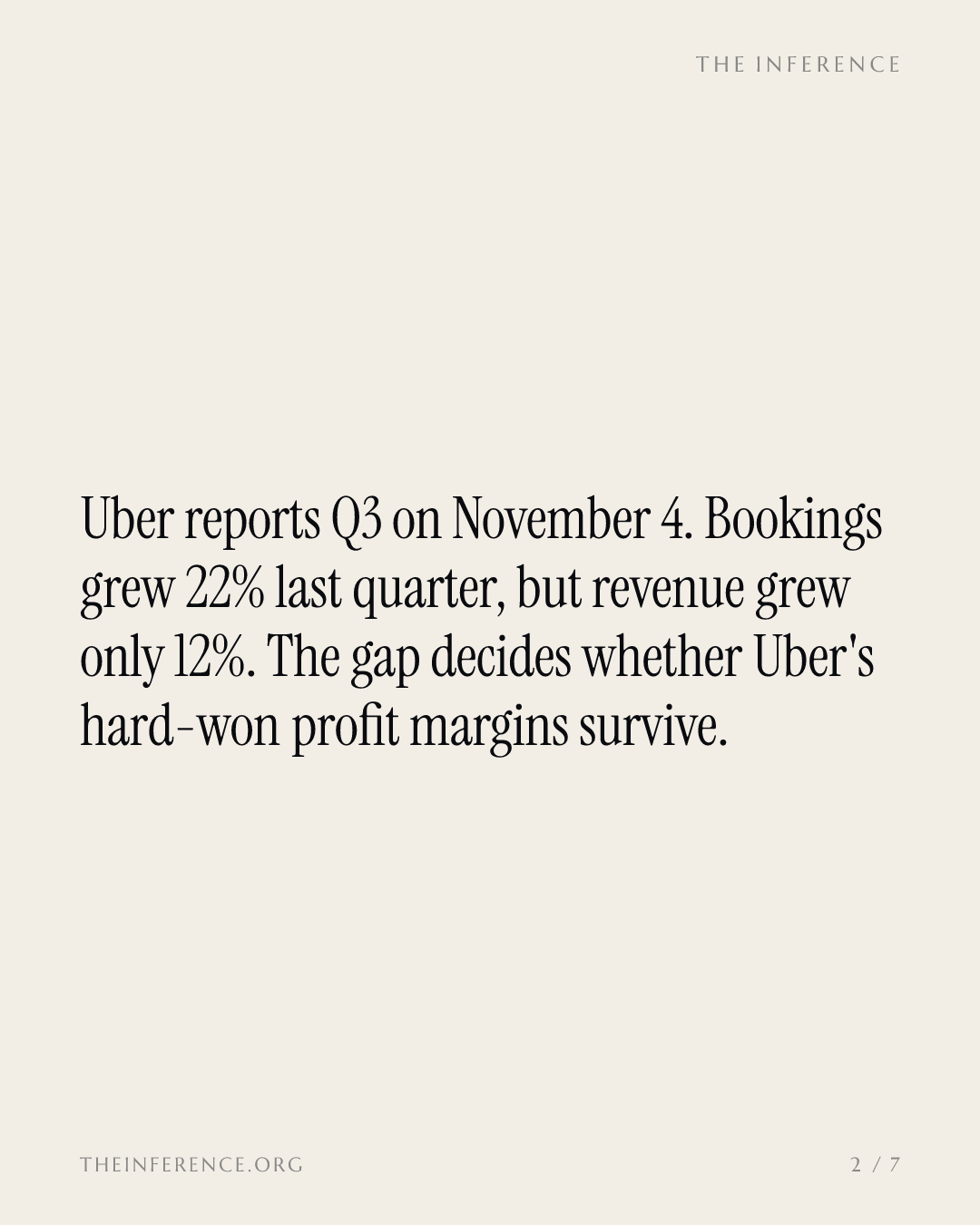
Uber's gross bookings grew 22% while revenue grew 12.2%, and two costs the company has not sized, a $10 billion robotaxi program and spreading driver-pay floors, sit between the lines. The November 4 report is the vote on whether the 12.1% margin lead survives.
 Vincent Jiang · 3 min read
Bookings and revenue are telling two stories
Uber+2.29% — Uber, up 2.29 percent today reports third-quarter results on November 4 with one ratio in question: the take rate, the share of each booking it keeps as revenue 1. It guards an operating margin of 12.1% of sales over the past twelve months, and the market doubts it holds, paying 15.2 times earnings for Uber against 32.0 for the cargo carrier JB Hunt 2. Second-quarter gross bookings grew 22% in constant currency to $58.02 billion; revenue grew 12.2% to $14.19 billion 3.
The gap is new. First-quarter bookings grew 25% against 14.5% revenue growth, and Mobility, Uber's ride-hailing segment, turned 22% bookings growth into 1% revenue growth in the second 453. Management attributes most of the drop to a UK business-model change it says exists on paper only 2. Third-quarter guidance of $58.25 billion to $60.25 billion in bookings leaves the lines apart 3.
The margin lead is the whole bull case
What bulls own is the climb: an operating loss equal to 1.6% of sales three years ago became a 12.1% margin over the past twelve months, and free cash flow passed $10 billion on a trailing basis for the first time 2. Revenue grew 16.7% over the past year against 5.3% at JB Hunt, yet Uber stock fell 23.6% while JB Hunt rose 68.4% 2.
Uber's operating margin climbed from 1.7% to the low teens over ten quarters
Data
| Operating margin | |
|---|---|
| Q1 '24 | 1.7% |
| Q2 '24 | 7.4% |
| Q3 '24 | 9.5% |
| Q4 '24 | 6.4% |
| Q1 '25 | 10.6% |
| Q2 '25 | 11.5% |
| Q3 '25 | 8.3% |
| Q4 '25 | 12.3% |
| Q1 '26 | 14.6% |
| Q2 '26 | 13.3% |
Uber's bookings growth outran revenue growth by more than ten points in both 2026 quarters
- Gross bookings growth
- Revenue growth
- Estimate
Data
| Gross bookings growth | Revenue growth | |
|---|---|---|
| Q1 2026 | 25% | 14.5% |
| Q2 2026 | 24% | 12.2% |
| Q3 2026 guided (estimate) | 20% (18–22%) | — |
The $10 billion robotaxi bill has no price tag
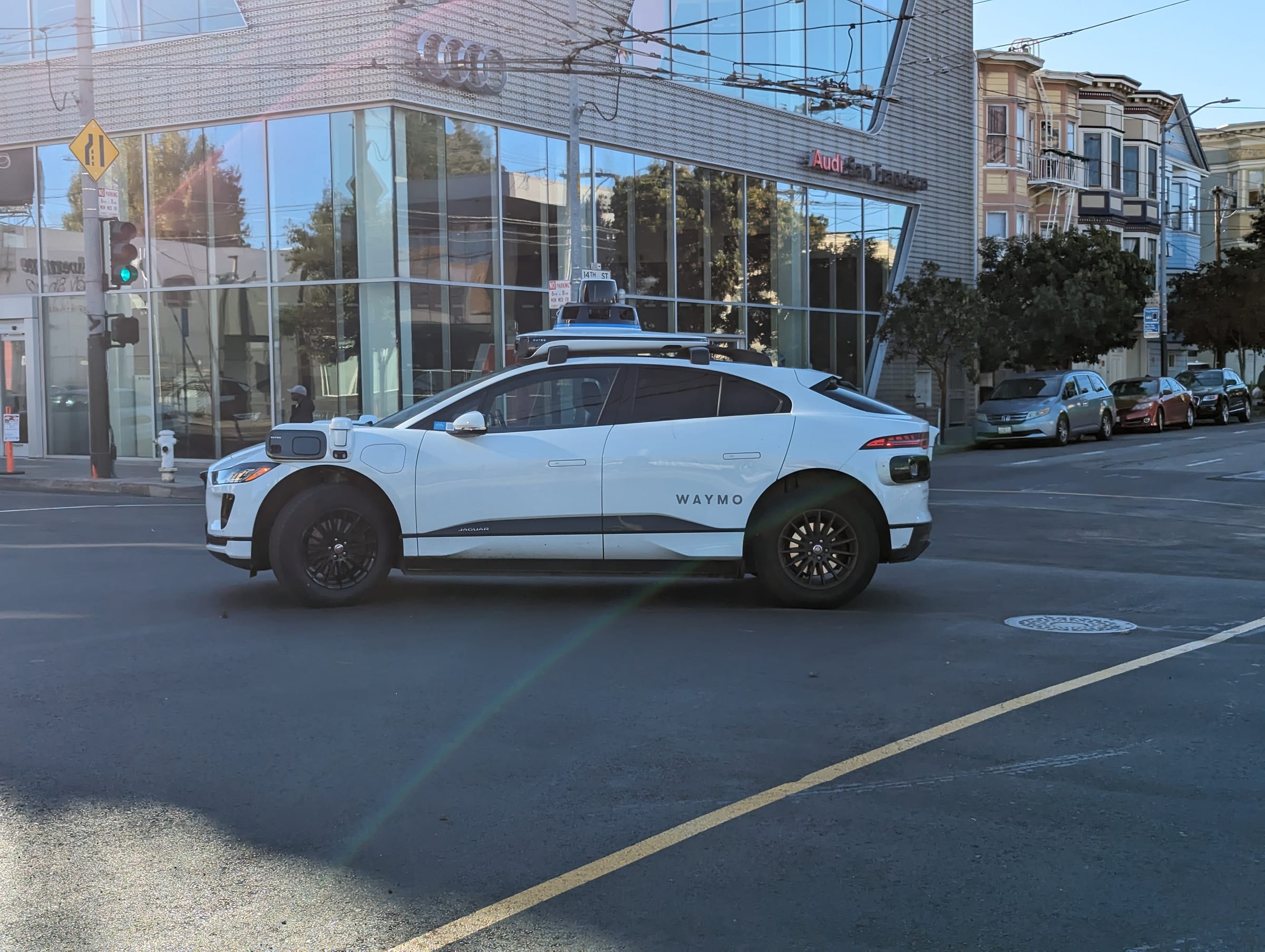
Robotaxis are under 0.5% of Uber's trips, and the cost of changing that is not yet in the numbers 2. The commitment runs about $10 billion: $7.5 billion to procure vehicles and potentially over $2.5 billion in equity in the electric-vehicle makers Lucid and Rivian and other companies, per the Financial Times 6. Management will size the profit impact only as deployment gets closer 2.
The unit carrying the bet is thinning. Sarfraz Maredia, global head of autonomous mobility and delivery, leaves November 16 after more than 12 years, the third senior departure this year after partnership chief Guy Peterson and legal head Lando Juarez 7. September's cuts took about 3,300 jobs, 10% of Uber's staff globally 7.
Driver-pay floors are the second unsized bill
The other bill arrives through drivers. Len Sherman of Columbia Business School analyzed 1.8 million trip offers collected from March 2025 to March 2026 by GigU, a third-party app that helps drivers evaluate potential trips: after costs, drivers in six of 16 US cities earned less than the $7.25 federal minimum, from $19.30 per active hour in Orlando to $46 in Los Angeles 8.
Uber calls the analysis flawed, says it overweights declined trips and omits tips, and puts pay per engaged hour more than 25% higher 8. Its January blog post put its average take at 21% of each fare in the third quarter of 2025 9. The best-paying cities, Boston and Los Angeles among them, carry local minimum-pay laws 8.
The tell is revenue growth against bookings growth
On November 4 the arithmetic is simple: if the UK change is on paper, revenue growth snaps back toward bookings growth; if it does not, the take rate leaks further just as Alphabet's+0.44% — Alphabet, up 0.44 percent today Waymo is expected to end its Uber partnership in Atlanta and Austin in 2028 and as pay floors spread beyond the cities that already have them 68. At 15.2 times earnings against JB Hunt's 32.0, the market is already pricing that doubt 2.
Deepdive
AI-generated from this story and its cited sources. Not investment advice.