Vishay's filing calls the Kaynes venture captive back-end manufacturing for Vishay
Kaynes Semicon says the Vishay deal takes it towards 100% capacity booking of a fourfold build to 8 or 9 billion devices a year. Vishay's term sheet shows most of that booking is its own orders, with a veto on outside customers, an open build cost and a $56.4 million check that repays Kaynes Semicon's loan from its parent.
 Vincent Jiangfive-minute read
Drafted with AI from the documents listed under Sources, then edited and fact-checked by Vincent Jiang. How we work
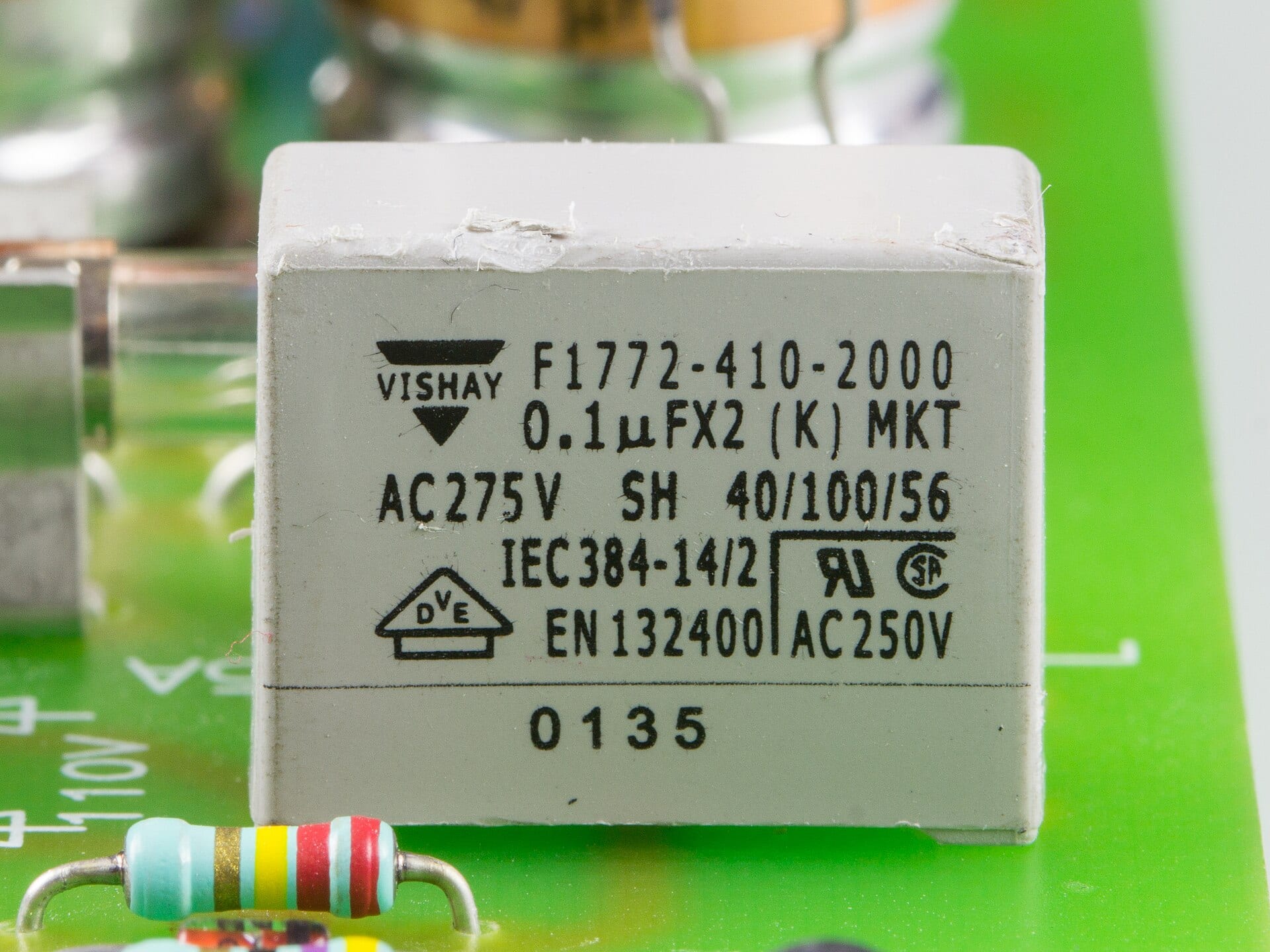
Kaynes Semicon, the chip assembly arm of Kaynes Technology, an electronics maker listed in Mumbai, said on November 26 and 27, 2026, that it would lift annual outsourced semiconductor assembly and test (OSAT) capacity, the back-end work of packaging and testing finished chips, from 2.3 billion devices to 8 or 9 billion within five years 13. Unit 1 is producing and Unit 2 is due for production delivery in the first quarter of 2027 2.
Its statement said the deal with Vishay Intertechnology+3.28% — Vishay Intertechnology, up 3.28 percent today (NYSE: VSH), a Pennsylvania maker of diodes, MOSFETs (power transistors), resistors and capacitors, "takes Kaynes Semicon towards 100% capacity booking" and leaves it "positioned to achieve" it 2. ICICI Direct, a Mumbai brokerage, rated the news "Impact: Positive" 1.
Vishay's filing calls the line captive
Vishay filed an 8-K, a current report that US issuers file with the Securities and Exchange Commission, on November 12, 2026, two weeks before Kaynes spoke 4. It describes the venture as "captive semiconductor back-end manufacturing capabilities for Vishay" that "may also provide services to third-party customers" 4. The term sheet gives Vishay the right to approve "customers outside the Vishay group," along with auditors, IT systems, vendors and equipment 4.
Vishay is expected to take 75 to 90% of output, and Kaynes says "the balance capacity also committed" 12. Any customer for the remaining 10 to 25% needs Vishay's approval 4.
Vishay buys Kaynes Semicon at a discount
Vishay pays $56.4 million for 49% of "an existing subsidiary of Kaynes Technology," which ET Now identifies as Kaynes Semicon; Kaynes keeps 51%, and future funding is expected in those proportions 45. The price values Kaynes Semicon at about $115 million 64. Macquarie, as reported by NDTV Profit, says that figure would be "around 70% below" its own estimate if the money went into Kaynes Semicon directly, which the 8-K says it does 64. Vishay buys cheap and Kaynes holders sell cheap.
The proceeds repay Kaynes Semicon's loan from its parent, so the cash ends up at the parent, Kaynes Technology 5. The definitive agreement is two to three months away, and incremental capex is "yet to be firmed up" pending support from India Semiconductor Mission (ISM) 2.0, Delhi's second chip subsidy program 51. No filing gives a build cost.
Kaynes Technology missed its quarter and restated its accounts
Kaynes Technology's September quarter missed consensus by 8% on revenue and 37% on net profit, and the shares fell 20% to a low of Rs 2,744 5. Its new auditor restated past accounts, and Macquarie cut its target 26% to Rs 2,800, writing that a 90% Vishay share suggests "other customer agreements may be smaller than previously indicated" 6. At Rs 2,725 the stock is down 32.1% this year 7.
Vishay's record demand is real and the price is small for it
Vishay's case rests on record September-quarter revenue of $978.9 million, the highest in its history, up 23.8% year on year, with a book-to-bill (orders divided by shipments) of 1.29 and 6.6 months of backlog 810. The stake is 5.8% of that quarter's revenue 48.
Vishay's revenue has risen seven quarters running to a record $978.9 million
Data
| Revenue | |
|---|---|
| Q4 '23 | $785.24M |
| Q1 '24 | $746.28M |
| Q2 '24 | $741.24M |
| Q3 '24 | $735.35M |
| Q4 '24 | $714.72M |
| Q1 '25 | $715.24M |
| Q2 '25 | $762.25M |
| Q3 '25 | $790.64M |
| Q4 '25 | $800.92M |
| Q1 '26 | $839.24M |
| Q2 '26 | $888.58M |
| Q3 '26 | $978.94M |
The balance sheet is not the constraint: cash was $1.14 billion at October 3, 2026, against $750 million of 2030 convertible notes, after a July share sale raised $830.25 million net 9. The $56.4 million is about 5% of that cash 97. At $23.04 the shares sit $7.12 below the $30.16 conversion price on notes that must be repaid in cash 97.
Free cash has been negative in five of the last eight quarters
Free cash is the volatile part: negative in five of the last eight quarters 10. The 10-Q, Vishay's quarterly report, guides 2026 capex to $350 to $400 million "due to extended lead times on equipment deliveries and installation," and says the fourth quarter turns free-cash-negative as a receivables securitization program unwinds 9. Nine-month capex of $253.4 million implies $97 to $147 million in the fourth quarter, two to three times Q3's $47.5 million, and Q3's $98 million of free cash rode that dip 910.
Vishay's Q3 capex fell to $0.047B from $0.111B in Q1 2026, lifting free cash before the guided catch-up
Capex dipped to $0.047B in Q3 2026; the 10-Q guides a fourth-quarter catch-up
- Operating cash flow
- Capital expenditure
Data
| Operating cash flow | Capital expenditure | |
|---|---|---|
| Q4 '24 | $0.07B | $0.14B |
| Q1 '25 | $0.02B | $0.06B |
| Q2 '25 | -$0.01B | $0.06B |
| Q3 '25 | $0.03B | $0.05B |
| Q4 '25 | $0.15B | $0.09B |
| Q1 '26 | $0.06B | $0.11B |
| Q2 '26 | $0.11B | $0.1B |
| Q3 '26 | $0.15B | $0.05B |
The subsidy decides who pays for the build
India's cabinet approved ISM 2.0 on July 15, 2026, with an outlay of Rs 1,27,500 crore (a crore is 10 million rupees; about $13.7 billion), and advanced packaging is one of its six pillars 117. Vishay and Kaynes plan a joint application 4. A grant would make Delhi a third payer; capex firmed first would leave Kaynes funding 51% of an open-ended bill, with no qualified institutional placement, a share sale to institutions, for at least 12 months 5.
The break point is a build cost nobody has totaled
Vishay gains captive capacity, a veto over outside customers, 49% of the funding and, per ICICI Direct, an expected extension into resistors, capacitors and inductors, three segments that produced $511 million of its $979 million third-quarter revenue 19. Kaynes holders give up most of the plant to one buyer, carry 51% of uncapped capex and have no equity placement for at least 12 months 5. The break point is a build cost firmed before the ISM 2.0 grant 5.
The definitive agreement, two to three months out, is the first document to check, and Vishay's fourth-quarter cash flow, already flagged negative, is the second 59. Until one lands, Vishay holds an option priced at 5% of its cash, and Kaynes holds a bill nobody has totaled 59.
Sources
- 1ICICI Direct Research, 'Kaynes Semicon eyes 4x OSAT capacity to 8-9B units via Vishay JV', 27 November 2026
- 2Communications Today, 'Kaynes Semicon, Vishay partner to boost India's semiconductor manufacturing', collected 27 November 2026
- 3The Economic Times, 'Kaynes Semicon plans fourfold capacity expansion through Vishay joint venture', 26 November 2026
- 4Vishay Intertechnology, SEC Form 8-K (Item 8.01, Kaynes term sheet), filed 12 November 2026
- 5ET Now via MSN, 'Kaynes Technology shares slump 20% after it reports Q2 results, here's why', November 2026
- 6NDTV Profit via MSN, 'Kaynes Technology's Q2 miss triggers 26% target cut, but is the Vishay deal a bigger concern?', 18 November 2026
- 7MarketScreener, Vishay Intertechnology and Kaynes Technology quote pages (VSH $23.04, KAYNES Rs 2,725 and -32.1% year to date, USD/INR 92.98), 27 November 2026
- 8Vishay Intertechnology, SEC Form 8-K with Q3 2026 press release (Exhibit 99.1), filed 4 November 2026
- 9Vishay Intertechnology, SEC Form 10-Q for the quarter ended 3 October 2026, filed 4 November 2026
- 10The Inference company series: Vishay Intertechnology quarterly figures from SEC filings, retrieved 27 November 2026
- 11Moneycontrol, 'ISM 2.0 begins: Which states are leading India's semiconductor race?', 16 July 2026
- 12Vishay Intertechnology, quarterly figures from its SEC filings, retrieved 27 November 2026
Get Chips by email, free
How AI demand is reshaping chipmakers, memory and the fabs behind them. In our daily email, every weekday.
Reader comments
0 comments