Zuckerberg says Meta caught OpenAI and Anthropic; Muse keeps 73% of new users, then fades by day nine
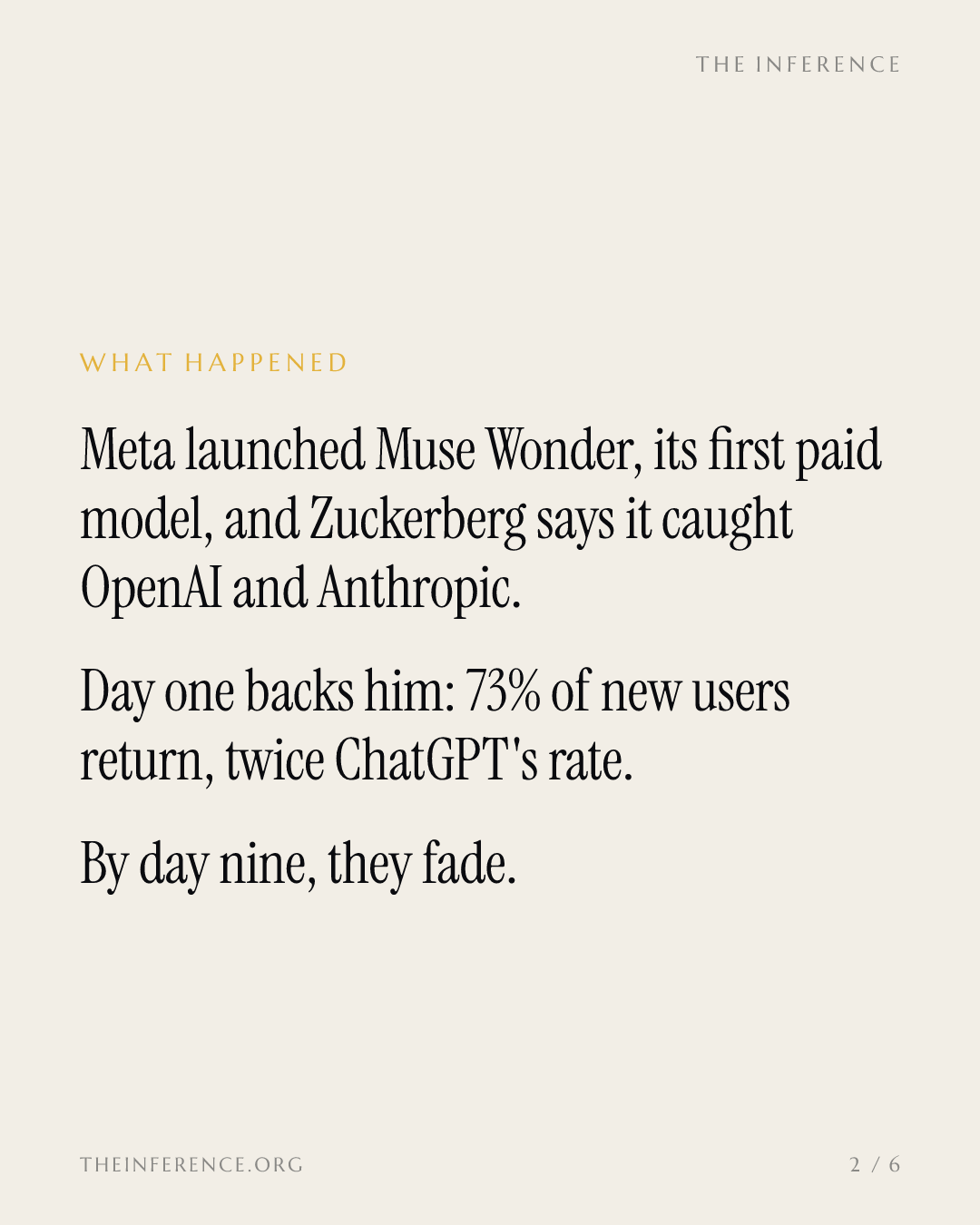
Meta launched Muse Wonder, its first closed and paid frontier model, on Monday, and chief executive Mark Zuckerberg says Meta has caught OpenAI and Anthropic. Usage data published the same day show Muse bringing new users back at nearly twice ChatGPT's rate, then losing them by day nine as websites block its agents: the split META holders now have to price.
 Richard Tang · 3 min read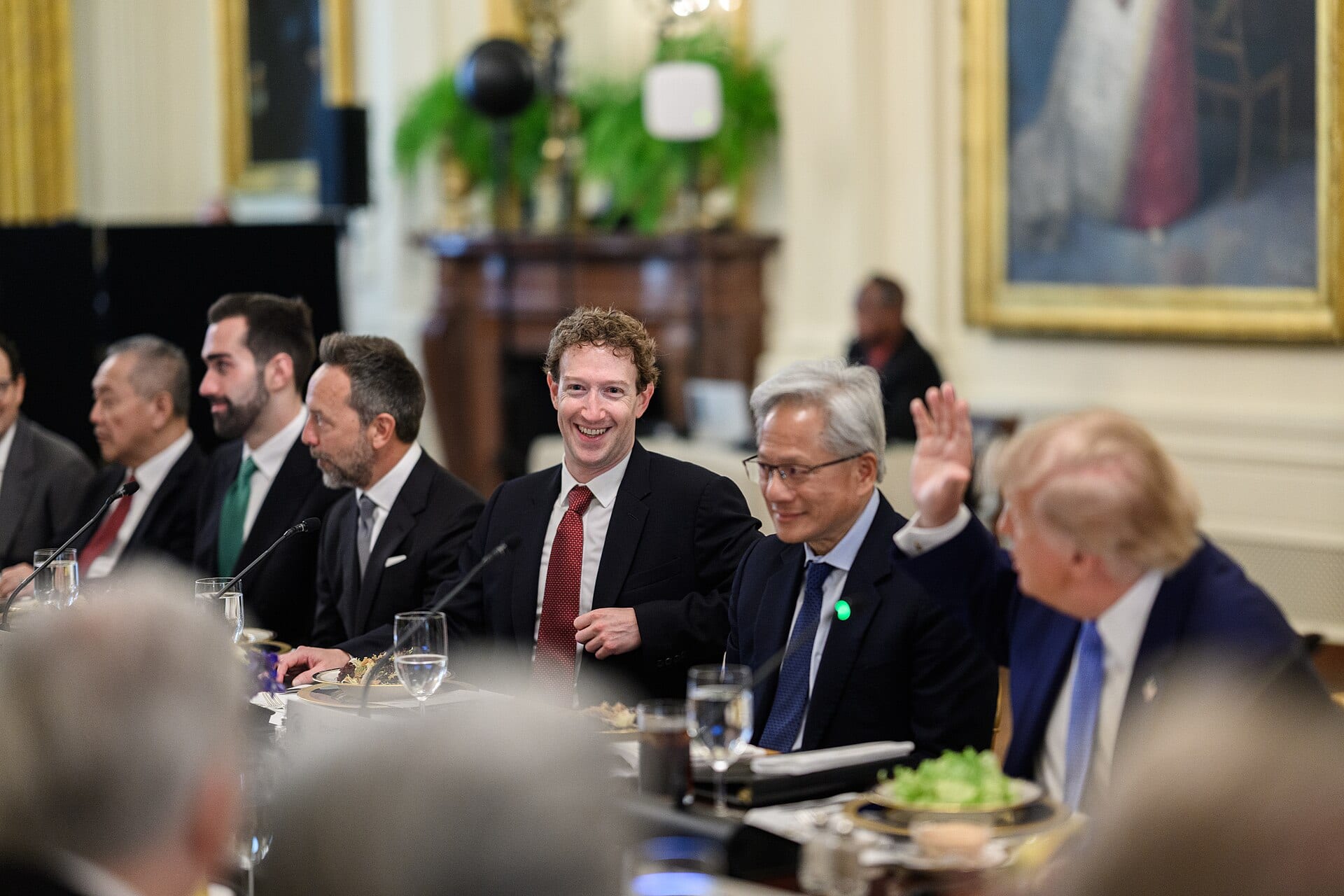
Meta+3.16% — Meta, up 3.16 percent today put Muse Wonder on sale on Monday, its first closed and paid frontier model, and chief executive Mark Zuckerberg told the Financial Times that Meta has caught OpenAI$1.18T — OpenAI, private, latest valuation $1.18T and Anthropic$350B — Anthropic, private, latest valuation $350B at the AI frontier 1. The usage data published the same day suggest the constraint has moved: the model looks competitive, and the websites refusing the agent now look like the limit.
Muse, the agent app Meta released in September, sends autonomous bots to order groceries and book travel 1. Sensor Tower, an app-analytics firm, finds 73% of new Muse users return the day after install, nearly twice the rate of OpenAI's ChatGPT 2. ChatGPT then passes Muse between day eight and day nine 2. Meta shares rose more than 3% on the day 1.
Meta claims the model gap has closed
Wonder and its larger sibling Wonder Full are closed and paid, a first for Meta 1. Basic usage costs 20 cents per million tokens 1; the top tier, Wonder Full, is $200 a month 1. Meta says Wonder beats OpenAI's GPT-6 Astra and Anthropic's Claude Opus 5.5 on some technical benchmarks 1 and built it for multi-step jobs like disputing an insurance claim 3.
An errand runner needs persistence more than benchmarks: memory that holds what a user said last week, and the discipline to finish a long task rather than drift into compounded errors. Wonder ships both, in features Meta calls Active Memory and Active Focus 4, with memory the company says keeps what matters to a user "over days, weeks, months and beyond" 5. Both models are meant to power the Muse agent 5.
The day-nine fade points at the closed doors
Amazon−1.08% — Amazon, down 1.08 percent today has blocked Muse agents from shopping, and more websites now treat agents as bots or security risks 1 2. The split in the data likely measures exactly that: day one counts people who want to delegate; day nine counts what the agent can still finish when a destination refuses it. Similarweb, a traffic-analytics firm, put Muse at 2.182 million daily active users on October 5, still rising through the month 2.
Two weeks in, Muse keeps a fraction of the users the habit apps keep, and slightly fewer than ChatGPT 6.
Two weeks in, Muse keeps users at a fraction of the habit apps
Data
| Value | |
|---|---|
| 67% | |
| YouTube | 59% |
| 54% | |
| TikTok / Snapchat | 37% |
| Muse (Meta) | 22% |
The remaining doors: checkout and trust
The passage through commerce is being built outside Meta: Muse gained checkout through Shopify's+4.40% — Shopify, up 4.40 percent today Shop Pay while Amazon sat out 7. Trust is the second door, and Zuckerberg's answer is a promised Muse Confidential virtual machine, a coming version of the agent whose data and conversations Meta says would be inaccessible even to Meta 1. New installs are probably covering the day-nine losses, which is why the daily count still climbs.
The short case sits in the filings
The Inference reported on October 12 that Muse's daily-user growth fell 62% in three weeks even as the total climbed 8. In the same window, Meta insiders filed 172 share sales without a single buy 8. A falling growth rate alongside a rising user count is the quiet version of the same fade the retention curve shows.
A range this wide prices an open question
Deutsche Bank analyst Benjamin Black models Muse at anywhere between $2.4 billion and $36 billion of revenue by 2030 2. The top end would be about 8% of Meta's revenue 2. A range that wide suggests analysts cannot yet price the middle of the chain, because the two ends assume different answers to whether agents get passage through commerce, and that answer sits with the sites doing the blocking.
Both columns are live with Meta's September-quarter report weeks away. The day-one rate stands behind a stock up almost 10% since Muse launched in early September 1; the day-nine fade and a one-way insider sell column stand against it 8. What settles the question shows up before earnings: whether blocked destinations reopen to agents, and whether the next cohort still fades at day nine.
Deepdive
AI-generated from this story and its cited sources. Not investment advice.