$15 Billion for a Free Tool: OpenEvidence Bets Its Doctors' Reach on Hospitals and Cancer Trials
OpenEvidence confirmed $250 million at a $15 billion valuation, a quarter under the $20 billion it had reportedly shopped, while three health systems switched the free tool on and its first cancer candidate heads into trials before year-end. Doctors still pay nothing; the valuation rests on what their traffic can be sold as.
 Vincent Jiang · 3 min read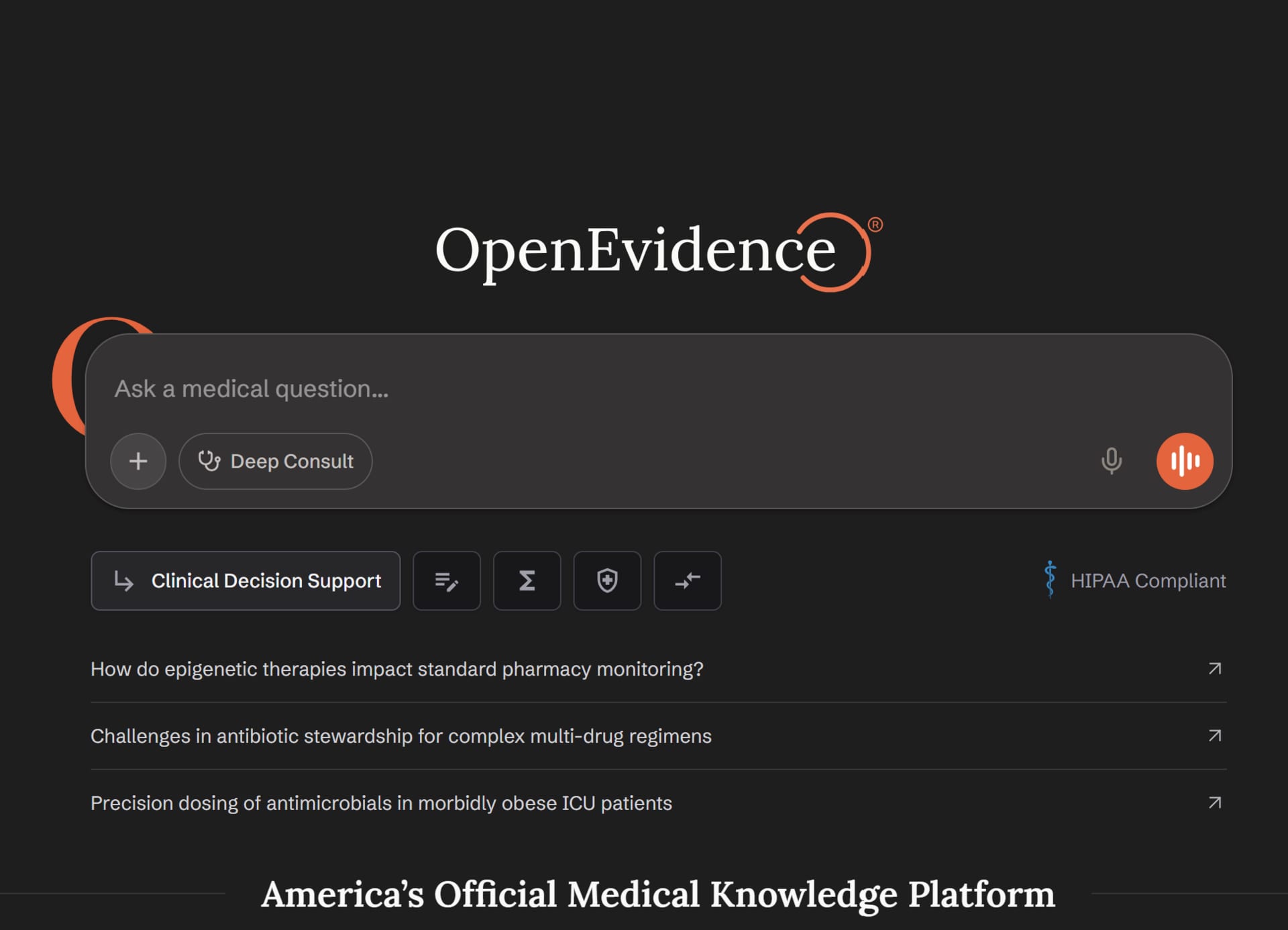
Three health systems in four weeks
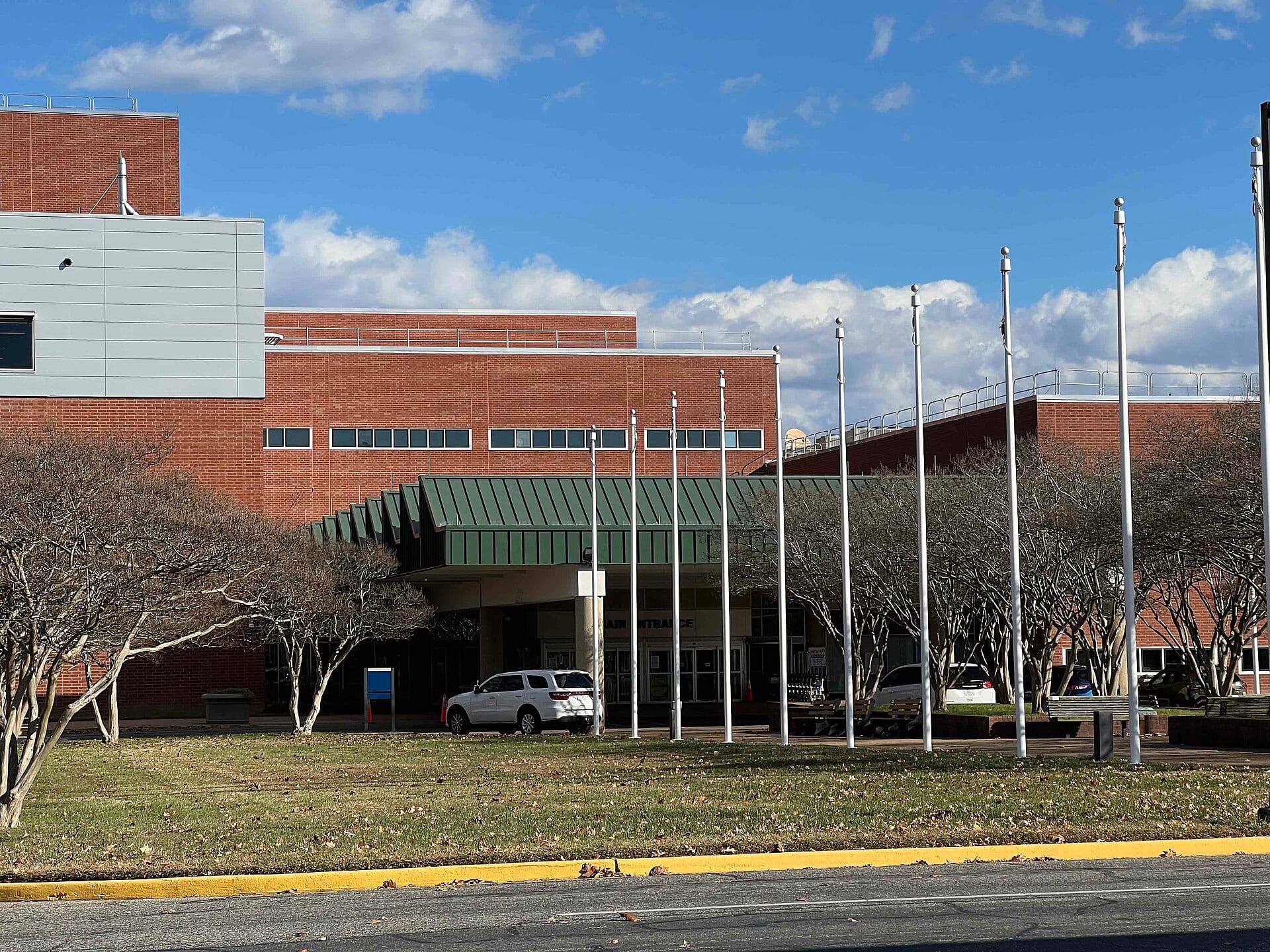
AdventHealth, a not-for-profit with more than 110,000 team members, switched OpenEvidence on for physicians, nurses, pharmacists and therapists across more than 2,000 care sites on 1 October, wired into its electronic health record 1. Penn Medicine put the same tool in front of more than 10,000 clinicians across seven hospitals in late September 2. Memorial Sloan Kettering, named mid-month after a 3 September tease as a "nationally leading cancer center," loaded its OncoKB precision-oncology database onto the platform and embedded OpenEvidence inside its own Epic system 3.
None of the three announcements disclosed terms. The tool stays free for verified U.S. clinicians 1; 60 percent of practicing physicians use it by the company's count 4, more than two-thirds of U.S. doctors by CNBC's tally 5. What the deployments buy, on the evidence, is placement inside the chart, where the query and the patient both live.
The fifth round closed under its own ask
The fifth round, confirmed by Forbes on 30 September, is $250 million at a $15 billion valuation 6, led by Byers Capital and Andreessen Horowitz in early September, with hospital systems joining the cap table 53. In July, The Information reported OpenEvidence had explored $200 million at $20 billion and walked; the mark that closed sits 25 percent lower 7.
Backers include Google, which Nadler calls the company's largest investor 8, alongside Nvidia, Thrive, DST, GV, Kleiner Perkins and Sequoia 5. One person familiar with the company says it could be open to selling itself, computing access included; acquirer interest could not be verified 5.
The fifth round closed at $15B, a quarter under the $20B OpenEvidence shopped in July
- Estimate
Data
| Value | |
|---|---|
| Series B, Jul 2025 | $3.5B |
| Series C, Oct 2025 | $6B |
| Series D, Jan 2026 | $12B |
| Shopped ask, Jul 2026 (estimate) | $20B |
| Closed round, Sep 2026 | $15B |
Doctors never paid for OpenEvidence. The question this round answers is who does.
The pivot makes pharma the customer
Nadler told Forbes the first OpenEvidence cancer candidate enters trials before year-end, with three to five more in 2027, starting with rare cancers, "the stuff that they are not doing, and maybe can't do" 7. The reach behind that bet is the asset: 1.12 million verified U.S. clinicians as of September 3, 42 million consultations in August 9, and 1.5 million verified queries a day by Nadler's count 8. Anthropic is extending the same free model abroad, credits, engineers and funding behind a rollout across 100 countries 9.
One in three trials halts mainly for lack of patients, and fewer than one in ten eligible cancer patients ever finds one 8. A search box that reaches most American doctors knows where the rare patients are before the trial does.
The channel already has an owner
Doximity (NYSE: DOCS), the listed incumbent selling pharma access to physicians, printed $156.6 million for its June quarter, up 7 percent, and raised full-year guidance to as much as $681 million 10. Scribe active users grew tenfold in July, and the stock jumped as much as 105 percent in premarket on the print 10.
Management's own projection puts pharma-advertising growth at or below 5 percent 10, and OpenEvidence has made an AI doctor dialer more widely available, which Fierce Healthcare calls a direct move on Doximity's core business 3, a fight already in the courts as covered here on 29 September. Abridge reportedly took the partnered route instead, Lilly-backed at $5.3 billion 7.
Enrollment is the product
The dated test is the first candidate dosing before year-end. If the reach fills rare-cancer trials, pharma stops buying ads and starts buying enrollment. If it does not, $15 billion is an advertising multiple on a free product, and July's $20 billion ask was the top.
Deepdive
AI-generated from this story and its cited sources. Not investment advice.