A compounded Zepbound recall hands Eli Lilly its exhibit as a fifth of US GLP-1 users take copies
Apothecary Pharma could not guarantee the safety of 22 lots of compounded tirzepatide. With roughly a fifth of U.S. GLP-1 users on compounded copies, the October 29 and November 4 earnings prints will price what the copycat channel costs Lilly and Novo.
 Vincent Jiang · 3 min read
The recall the duopoly can quote in court
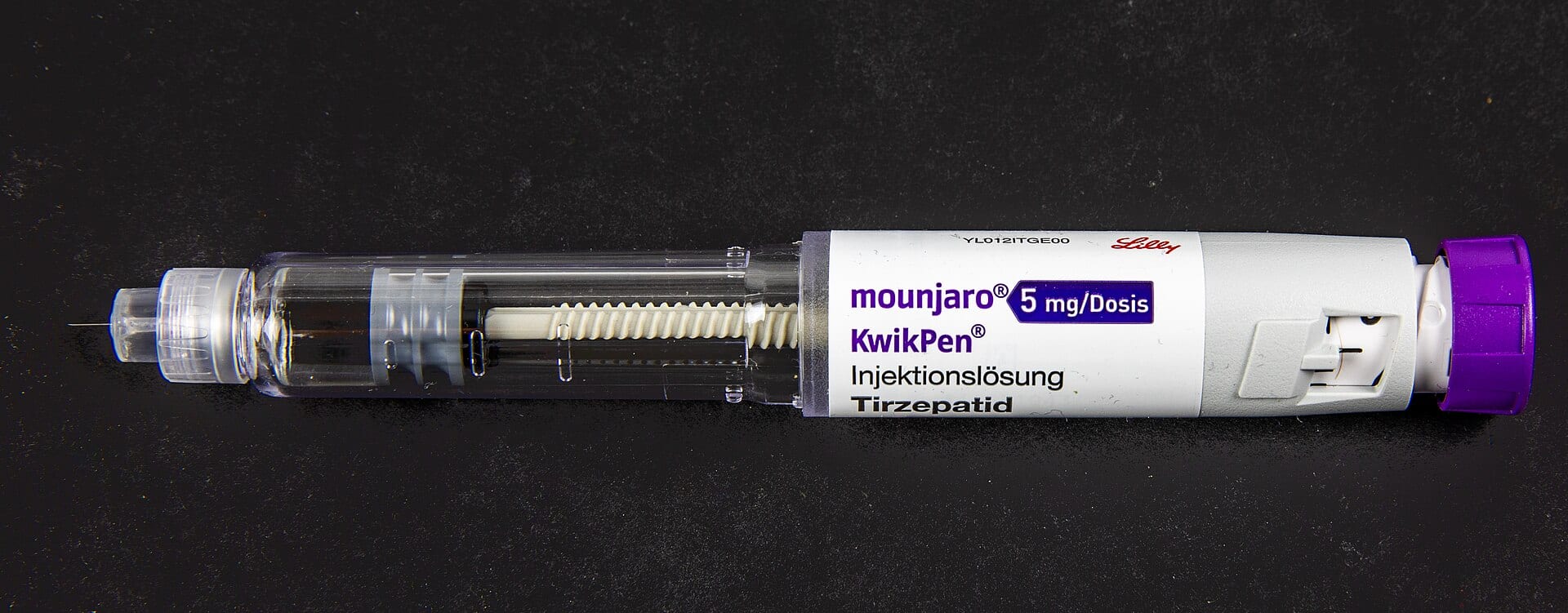
Apothecary Pharma, a compounding pharmacy, told the Food and Drug Administration in September it could not guarantee the safety of 22 lots of compounded tirzepatide, its copy of Eli Lilly's−3.33% — Eli Lilly, down 3.33 percent today obesity drug Zepbound 1. The notice surfaced on October 22 with a Class II rating, meaning temporary or medically reversible harm is possible 1.
The lots carry beyond-use dates, the expiry a compounder stamps on a drug it mixes itself, running from October 8 to November 26 1. For Lilly and Novo Nordisk−1.24% — Novo Nordisk, down 1.24 percent today, the only licensed makers of GLP-1 obesity drugs, it is evidence for their claim that the copies do not match the approved product's quality 1.
A fifth of U.S. GLP-1 users take a copy
What nobody has priced is the branded sales the compounders are taking. Gallup, in a poll updated on September 8, found 15% of Americans have used a GLP-1 for weight loss and 18% of those users take compounded versions; BioPharma Dive rounds the share to about 20% 21. The gray-market peptide trade itself already runs at an estimated $100 million a year 3.
Tirzepatide and Novo's semaglutide left the FDA shortage list in late 2024 and early 2025, which was meant to end mass compounding 2. The unapproved tail is growing fastest of all. America's Poison Centers logged 862 retatrutide exposures in the three months to September, after 460 and 249 in the prior two quarters 3. Separate FDA adverse-event reports, which the agency has not verified, describe two deaths involving products claiming to be retatrutide 3.
Poison-center exposures tied to retatrutide tripled across 2026
Data
| Reported retatrutide exposures | |
|---|---|
| Q1 2026 | 249 |
| Q2 2026 | 460 |
| Q3 2026 | 862 |
Lilly sues while Washington widens the lane
Lilly's answer is the courthouse. It sued six gray-market retatrutide sellers on August 12 and five more on October 8, and has reported more than 14,000 listings to authorities 43. It has settled two of the August cases 3. Retatrutide, a triple-hormone injection still in Phase 3, is due to be filed for approval in early 2027 4.
Washington pulls the other way. Health and Human Services has sent a peptide "interim access policy" to the White House budget office, designed to let pharmacies temporarily compound some of the most popular peptides without enforcement risk 5. That follows a July advisory vote, against the FDA's own scientists, to drop restrictions on six of seven peptides 5. Health Secretary Robert F. Kennedy Jr.'s answer on October 20: "Americans are going to be buying these anyway" 6. Analysts quoted by the AP price that lane at $2 billion to $3 billion 5.
The factories are the same bet
The lawsuits and the factories are the same bet: every patient on the labeled vial. In the recall's week, Lilly also broke ground on a $5 billion Virginia site, its first making both active ingredients and finished medicines, and a $6.5 billion Houston plant for orforglipron, its FDA-approved oral GLP-1 pill and the largest active-ingredient project in Texas history 78. Both sit inside a ten-site, more-than-$50-billion U.S. build-out that now runs from Katwijk in the Netherlands to Texas 7. Quarterly capex has tripled since 2023 9.
Lilly's quarterly capex has tripled as the U.S. build-out ramps
Data
| Quarterly capex | |
|---|---|
| Q3 '23 | $0.97B |
| Q4 '23 | $1.07B |
| Q1 '24 | $0.99B |
| Q2 '24 | $1.23B |
| Q3 '24 | $1.35B |
| Q4 '24 | $1.5B |
| Q1 '25 | $1.51B |
| Q2 '25 | $1.7B |
| Q3 '25 | $2.09B |
| Q4 '25 | $2.55B |
| Q1 '26 | $2.33B |
| Q2 '26 | $2.93B |
Two prints price the leak
Lilly reports third-quarter results on October 29, opening the volume test its record-high share price set up a week earlier 1110. Novo, at 9.8 times earnings against Lilly's 42, prints on November 4 1110. Watch the U.S. volume lines for Zepbound and for Wegovy, Novo's semaglutide weight-loss drug, the front Novo's September head-to-head win sharpened. A fifth of the patient pool is either a leak that closes or a haircut that stays, and those two prints say which.
What happens next
LLYDo U.S. Zepbound volumes show the compounded-copy leak closing, and does management size the copycat channel?
The case for
The Class II recall is courtroom-grade evidence that compounded copies fail the quality bar, strengthening Lilly's suits and the case for tighter compounding rules.
The case against
The compounding lane stays open: HHS's interim access policy and Kennedy's stance suggest regulators keep a legal gray market alive, capping branded U.S. volume growth.
- Thu Oct 29, morning ETLilly third-quarter 2026 results and conference call.
- Wed Nov 4, morning CETNovo Nordisk third-quarter results. Does U.S. Wegovy volume hold up against the compounded semaglutide channel after September's head-to-head win?
Get our follow-up when these land
Free. We'll email you when we publish on Eli Lilly, and send our free weekday newsletter. Unfollow in one click.