Intuitive Surgical to pay $450 million to settle hospitals' antitrust suit; revenue per procedure falls 3-5%
Intuitive settled the hospitals' instrument-servicing antitrust case for $450 million, then disclosed its own 3-5% per-procedure price cut for 2027. The recurring revenue that carries 84% of sales now faces cheaper instruments on two fronts, just as US procedure growth slows to 10%.
 Richard Tang · 3 min read
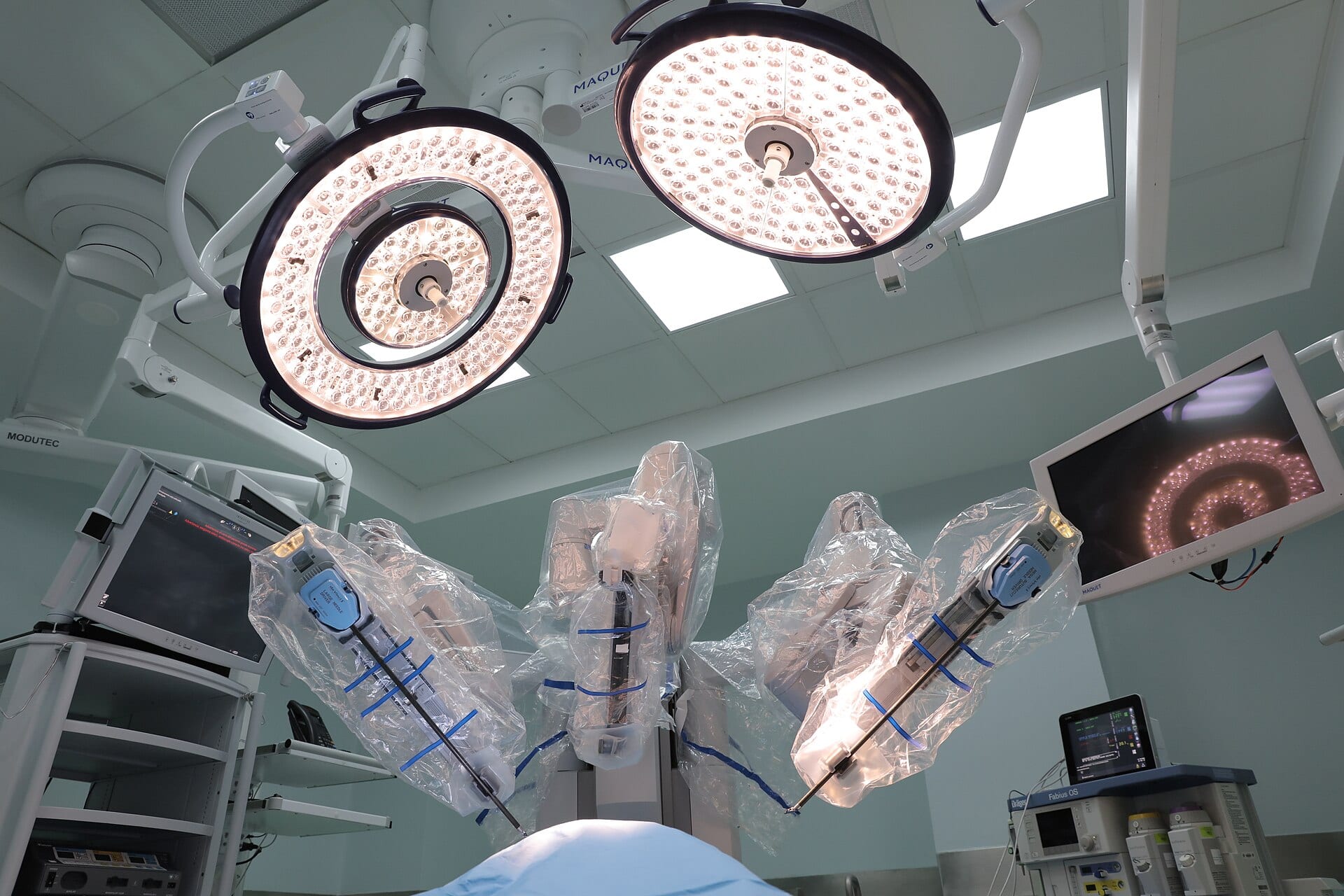
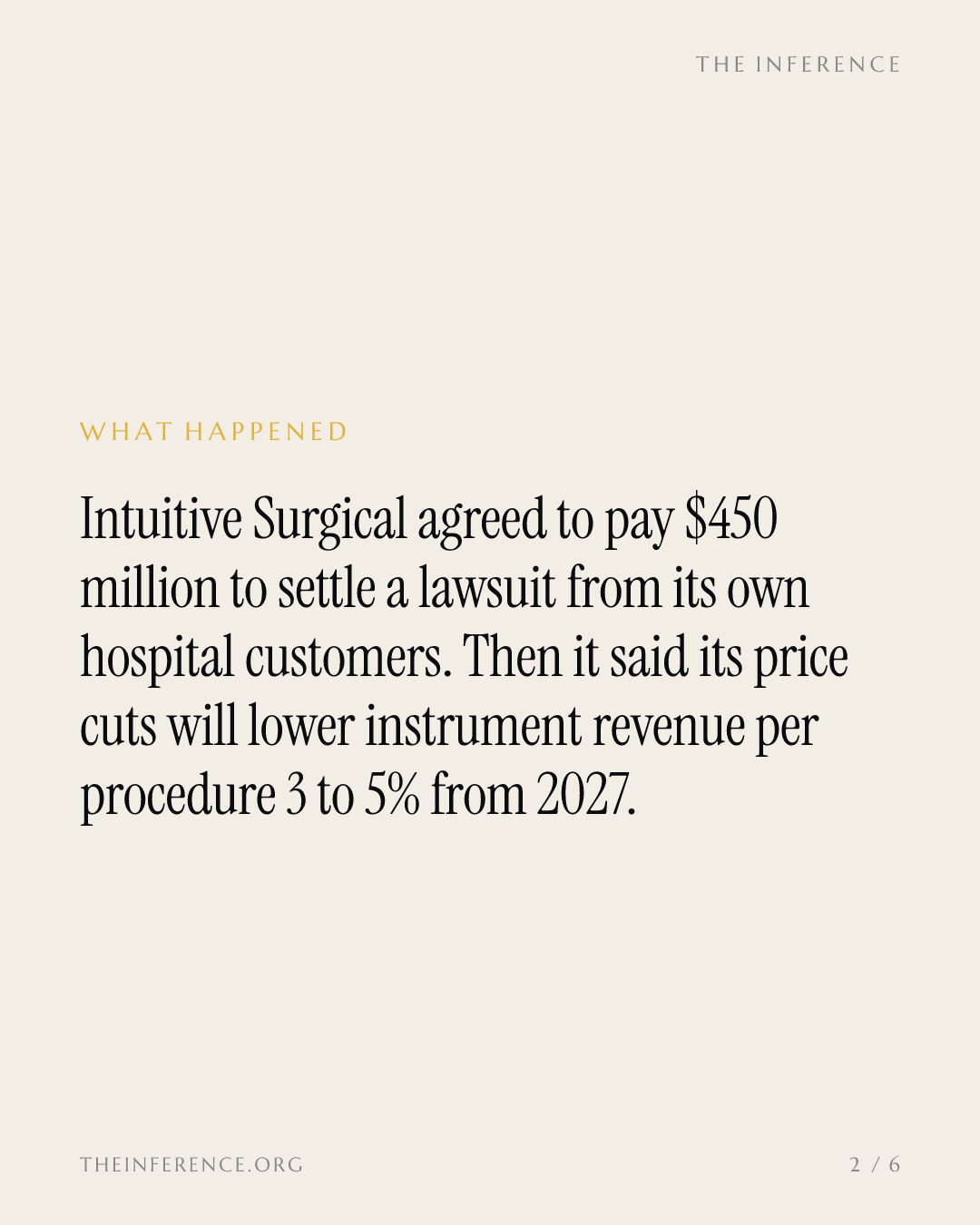
Intuitive Surgical+2.16% — Intuitive Surgical, up 2.16 percent today agreed on Monday to pay $450 million to settle the hospitals' antitrust case over da Vinci instrument servicing, and the next evening its Q3 print conceded the pricing point anyway: from the first half of 2027, its own Extended Use Program 2.0 plus China's regulated price cuts will lower instrument-and-accessory revenue per procedure by 3% to 5% 413.
Those plaintiffs are the company's own hospital customers, who alleged that contract terms blocked third-party servicing of the instruments. The lede's point stands on its own: nearly all of Intuitive's profit comes from what hospitals buy after they own the robot. Recurring revenue, mostly instruments, accessories and service, was 84% of the quarter's $3.05 billion in sales, which rose 22% year over year, and it carries a 69.9% non-GAAP gross margin 413. That is the profit core management just deliberately trimmed.
Recurring revenue, mostly instruments and service, is $2.3B of $3.05B
Data
| Q3 2026 revenue | |
|---|---|
| Instruments & accessories | 1,797.4 |
| Systems | 769.1 |
| Service | 482.2 |
The settlement leaves the conduct terms unread
The 10-Q shows the company and plaintiffs reached a written agreement after an October mediation, without any admission of liability, but it still needs court approval and the filing names no conduct terms 4. A court had already found, then vacated on market definition, rulings that the EndoWrist instrument repair market is a monopoly aftermarket; what carries forward is that a trial date had been set for September 14, 2027, the same year the price cuts land 4.
What the settlement actually lets third-party servicers do is unread, and that document could cheapen the blades further.
The quarter was strong, but US volume slowed
Adjusted EPS of $3.00 beat consensus near $2.65 1. The company placed 546 systems, 315 of them the newer da Vinci 5 2, and international procedures grew 20%, with benign surgery like hernia repair up 41% abroad 13. But US procedure growth slowed to 10%, the lowest rate since the early pandemic era, and 2026 guidance narrowed to 14-15% 13.
US procedure growth ran 10% in Q3, half the international rate; benign work abroad grew 41%
Data
| Procedure growth, Q3 2026, YoY | |
|---|---|
| US procedures | 10% |
| International procedures | 20% |
| Benign, international | 41% |
The bet is elasticity: cheaper instruments pull in ambulatory surgery centers and high-volume benign work fast enough to replace the price. If volumes do not answer, 2027 delivers falling revenue per procedure on slowing US growth while the court rules on the deal 42. The $1.49 GAAP EPS, down from $1.95 after the after-tax $347 million settlement hit, is the least of it 42.
The stock swung, and the question is the multiple
The market has not resolved this: shares fell 7.31% after hours, then rose 3.67% the next day on $1.22 billion of volume, the heaviest of the session 1.
The investor question is whether a premium multiple survives a deliberate concession at the profit core, contested by its own customers and by China's regulators, before the conduct terms are even public. Watch the 2027 volume response, not the settlement headline.
What happens next
ISRGDo volumes from ambulatory surgery centers and benign work replace the price?
The case for
Cheaper instruments could pull ambulatory surgery centers and high-volume benign work into the installed base, where benign procedures abroad already grew 41%
The case against
The 3% to 5% price cut lands on recurring revenue that is 84% of sales at a 69.9% non-GAAP gross margin
- First half of 2027Price cuts take effect, lowering instrument revenue per procedure 3% to 5%.
- September 14, 2027Antitrust trial date, if the settlement fails to win court approval. Does the settlement win court approval, and on what conduct terms?
Get our follow-up when these land
Free. We'll email you when we publish on Intuitive Surgical, and send our free weekday newsletter. Unfollow in one click.