AI Needs More Storage. These Four Stocks Get Paid Differently.
Seagate's Mozaic 4+ hard drive does something unfashionable in an industry obsessed with faster chips: it makes room. In March 2026, Seagate said its platform, supporting drives up to 44 terabytes, was qualified and in production with two hyperscale customers. By July, the financial attraction of that unglamorous job was becoming harder to miss. [1][2]
 Vincent Jiang · 6 min read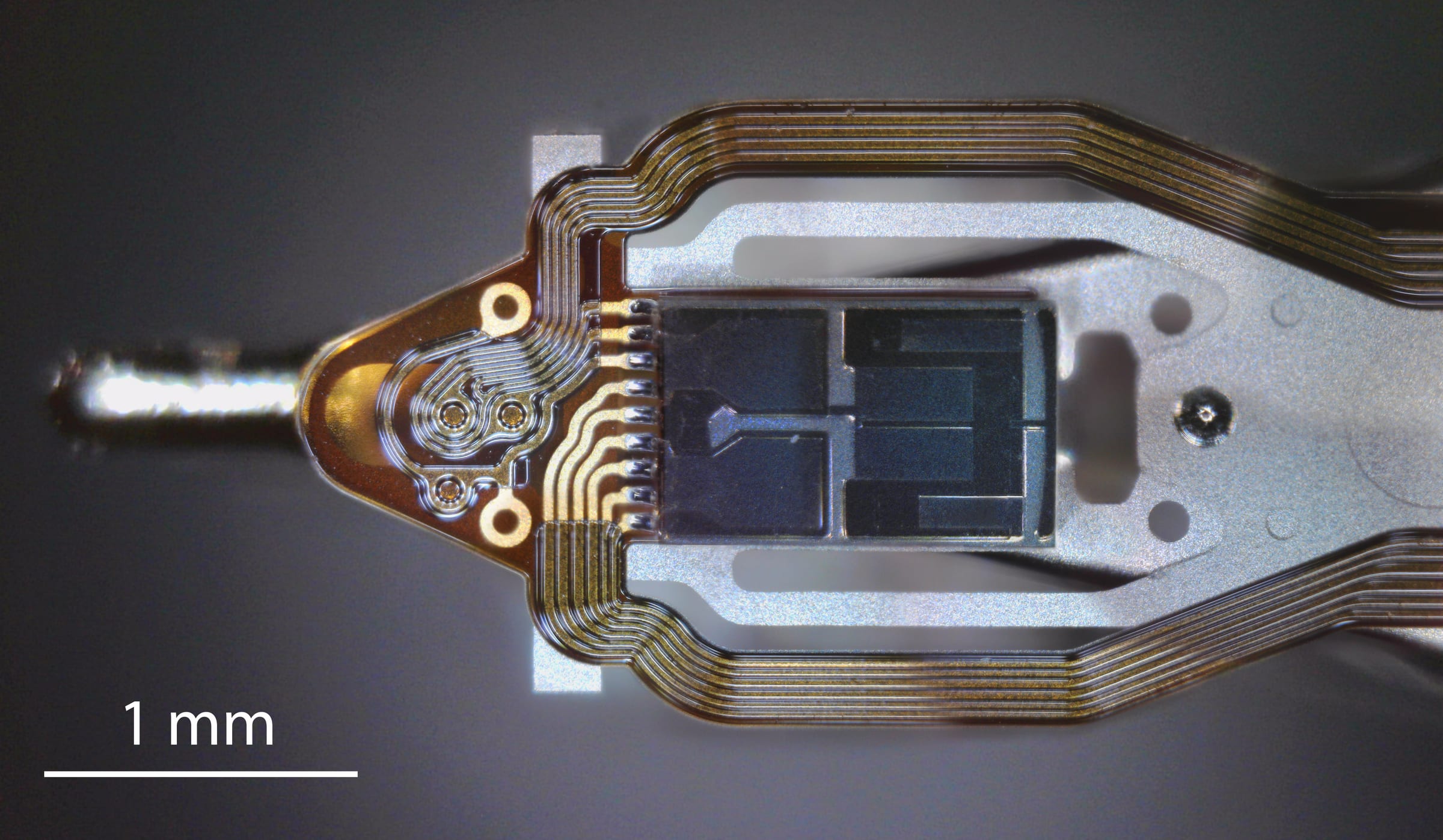
For investors watching Western Digital (WDC), Seagate (STX), Sandisk (SNDK) and Silicon Motion (SIMO), the temptation is to buy the same story four times: AI creates data, data needs storage, storage companies win.
The difficult part sits between the second and third steps. More stored data does not tell shareholders how many devices customers will buy, what they will pay, or who keeps the manufacturing savings.
The hard drive has found pricing power
Western Digital's August 5 results showed fiscal fourth-quarter revenue rising 44% year over year. Total capacity shipped rose from 190 to 231 exabytes, roughly 22%. Revenue grew much faster than the amount of storage delivered, consistent with better pricing and product mix. Dividing those numbers does not produce a clean contractual price per terabyte, but the direction is revealing. 34
The clearer evidence is gross margin. WDC's GAAP margin reached 54.1%, versus 41.0% a year earlier. Seagate's reached 52.3%, versus 37.4%. Both latest quarters ended July 3, 2026. These businesses retained substantially more of each sales dollar after production costs. 23
- Year-ago quarter
- Latest quarter
Data
| Year-ago quarter | Latest quarter | |
|---|---|---|
| Western Digital | 41% | 54.1% |
| Seagate | 37.4% | 52.3% |
Nearline hard drives serve large pools of online data where capacity economics matter. AI can add training corpora, checkpoints and retained outputs to that demand. But neither company's release isolates AI revenue. The evidence establishes stronger storage economics; it does not assign every extra dollar to a chatbot.
WDC and Seagate are taking different roads
Seagate's route is heat-assisted magnetic recording, or HAMR, which uses localized heating to enable denser recording. Western Digital has been extending energy-assisted perpendicular magnetic recording, or ePMR, while preparing its own HAMR transition. 15
These are different production schedules, not interchangeable labels. WDC's August presentation said it had begun shipping ePMR drives up to 40TB. Blocks & Files reported management's target for 44TB HAMR shipments in the first half of 2027. Seagate already had Mozaic 4+ in production; Tom's Hardware reported HAMR accounted for about 40% of its nearline exabyte shipment run rate at fiscal year-end. 1467
Seagate ships the biggest drive today; both roadmaps jump again in 2027
- Estimate
Data
| Value | |
|---|---|
| WDC ePMR, shipping now | 40TB |
| WDC HAMR, target H1 2027 (estimate) | 44TB |
| Seagate Mozaic 4+, in production | 44TB |
| Seagate next-gen HAMR, qualifying 2027 (estimate) | 50TB |
For WDC, extending a familiar manufacturing process could reduce transition risk. For Seagate, successful HAMR production could spread development costs across more capacity sooner. Those are investment inferences, not proof that either company has permanently won.
The test is usable capacity produced reliably at an attractive cost. A laboratory density record cannot pay a dividend. A qualified drive, shipped repeatedly at improving margins, can help fund one.
Sandisk's boom includes a large pricing effect
Sandisk occupies another layer: NAND flash and SSDs, where customers pay for solid-state access and increasingly dense storage. WDC completed its separation of the flash business in February 2025, so buying WDC no longer buys that operating exposure. 3
Sandisk's August 5 release reported fiscal fourth-quarter revenue of $8.965 billion, up 51% sequentially. Management attributed roughly one-third of that increase to volume and two-thirds to pricing. Datacenter revenue was $2.977 billion, about 33% of the total. The enterprise opportunity is material; the company still sells into other markets. 8
Zacks reported initial revenue shipments of Sandisk's Stargate QLC enterprise SSDs. That matters because denser flash must become qualified customer products before a technology announcement becomes durable revenue. It also creates a second route to growth beyond charging more for existing supply. 9
Yet rising NAND prices can help Sandisk while hurting customers' ability to buy devices. TrendForce's July research described strong enterprise SSD demand alongside weaker affordability in consumer markets. Treating both as one uniform AI boom misses the tension. 10
The analytical task is to separate bit shipments, selling prices and enterprise product mix. A forecast that extends the latest revenue growth indefinitely can quietly assume both rapid volume expansion and lasting scarcity.
Silicon Motion has to win the controller
Silicon Motion adds another complication. Its controllers manage the NAND inside SSDs, but it also sells storage solutions containing both controllers and flash. Its opportunity depends on product design wins and content per device, not simply the industry's total exabytes. 1112
Its July 30 results reported second-quarter revenue of $451 million, up 127% year over year. That was company revenue, not enterprise AI revenue. SSD-controller sales rose approximately 50% to 55%, while other product categories grew at very different rates. 11
On the earnings call, management said MonTitan enterprise controllers had entered commercial production with two Tier 1 customers. Management targeted MonTitan at 5% to 10% of company revenue exiting 2026. The first statement describes progress; the second remains a forecast. 12
Boot-storage products need another distinction. Boot storage that initializes servers or their networking components performs a valuable job, but it is not the bulk storage holding an AI dataset. Silicon Motion's product disclosures describe these as separate applications. 13
The potential reward is a larger foothold in demanding enterprise systems. The obstacle is qualification and competition, including customers developing controllers internally, a risk identified in its annual filing. Buying SIMO is therefore partly a bet on winning business from other designs. 14
More data can mean fewer devices
Density creates the central paradox. If each drive holds more, customers can store the same dataset using fewer drives. Expanding exabytes need not produce equally fast growth in unit shipments.
For HDD makers, the attractive outcome is a lower production cost per terabyte while customers continue paying enough to preserve margins. For Sandisk, denser NAND can reduce cost but also expand supply. For Silicon Motion, greater capacity does not automatically require proportionately more controllers; winning higher-value designs becomes important.
There is a demand risk, too. Generated data is not automatically retained data. Customers can delete, compress and move information between storage tiers. Faster access and cheaper retention solve different problems, so a larger AI budget does not flow evenly through every storage supplier.
The next test is what survives normalization
Sandisk's August results offered a useful warning: Yahoo Finance reported its shares fell in after-hours trading as the revenue outlook disappointed expectations despite rapid growth. A business can improve while its stock disappoints. 15
WDC's case depends on converting capacity growth into lasting margin and cash generation while managing its technology transition. Seagate's depends on sustaining HAMR economics as production scales. Sandisk needs enterprise adoption that remains valuable when NAND pricing becomes less favorable. Silicon Motion needs commercial controller ramps large enough to change its business mix.
The current evidence is strongest for improving HDD profitability, substantial but price-sensitive flash demand, and an emerging enterprise-controller opportunity. That is a judgment about business evidence, not a ranking of stock valuations. A low earnings multiple can still be expensive if it rests on profits inflated by temporary scarcity. The valuation needs earnings that can survive a less favorable cycle.
The same AI wave is lifting revenue at very different speeds
Data
| Value | Range | |
|---|---|---|
| Silicon Motion, total revenue | 127% | — |
| Silicon Motion, SSD-controller sales | 52.5% | 50–55% |
| Western Digital, revenue | 44% | — |
Mozaic's next milestone will be easier to recognize than the investment verdict: another drive, another capacity increase, another customer qualification. Shareholders still need to learn how much of the resulting savings stays with Seagate and how much gets negotiated away.
How this brief was made
01Gathered & sourced195 channels · 1,323 articles▾
Agents swept 195 channels and ingested 1,323 articles, then de-duplicated and ranked them for signal.
02Verified & cross-validated15 claims · 27 data feeds▾
Every one of 15 load-bearing claims was checked against primary sources, with 27 live data feeds reconciling the figures and charts.
- 1Seagate, "Mozaic 4+ production announcement", March 3, 2026
- 2Seagate / SEC, "Fiscal Q4 and FY2026 results", July 28, 2026 US release date
- 3Western Digital / SEC, "Fiscal Q4 and FY2026 results", August 5, 2026
- 4Western Digital, "Fiscal Q4 earnings presentation", August 5, 2026
- 5Western Digital, "Innovation Day technology plans", February 3, 2026
- 6Blocks & Files, "Reporting on WDC's results and technology transition", August 6, 2026
- 7Tom's Hardware, "Seagate's HAMR ramp and future qualification schedule", July 29, 2026
- 8Sandisk, "Fiscal Q4 FY2026 results", August 5, 2026
- 9Zacks, "Sandisk earnings and enterprise SSD adoption analysis", August 6, 2026
- 10TrendForce, "NAND market outlook and demand constraints", July 3, 2026
- 11Silicon Motion / SEC, "Second-quarter results", July 30, 2026
- 12Silicon Motion earnings call / The Motley Fool via AOL, "Q2 earnings-call transcript", call July 30, transcript August 8, 2026
- 13Silicon Motion, "Enterprise controller and boot-storage product disclosures", March 16, 2026
- 14Silicon Motion / SEC, "FY2025 Form 20-F", April 30, 2026
- 15Yahoo Finance, "Sandisk shares and expectations following results", August 5, 2026
03Reviewed & edited2 human editors▾
2 editors read the draft against the evidence, tuned the framing, and signed off before it shipped.
Become a contributor
Reporting on the business of AI and want it read? We take pitches from outside contributors who bring primary sources and a number worth arguing about.
Deepdive
AI-generated from this story and its cited sources. Not investment advice.