OpenEvidence raised $250 million at $15 billion; Pro Medicus fell 48% in a year on the same doctor screen
Private buyers marked clinician-distribution AI up in September; public sellers marked the workflow compounder down 48% despite A$1.3B of contracted minimums. PME now sits about 27% under its consensus target, and the AGM on November 25 is the next checkpoint on which price is right.
 Vincent Jiang · 3 min read
Medical AI just priced the same scarce asset, the screen a clinician opens every day, twice in one quarter, in opposite directions. Private buyers added $250 million to OpenEvidence~$6B — OpenEvidence, private, latest valuation ~$6B at a $15 billion valuation, confirmed on September 30, up from $12 billion at its January Series D 12. Public sellers cut Pro Medicus+4.50% — Pro Medicus, up 4.50 percent today, whose Visage 7 imaging software US hospitals open daily, 48.03% over twelve months, before it bounced 4.50% to A$165.73 on October 9 34. Someone is wrong.
What $15 billion buys
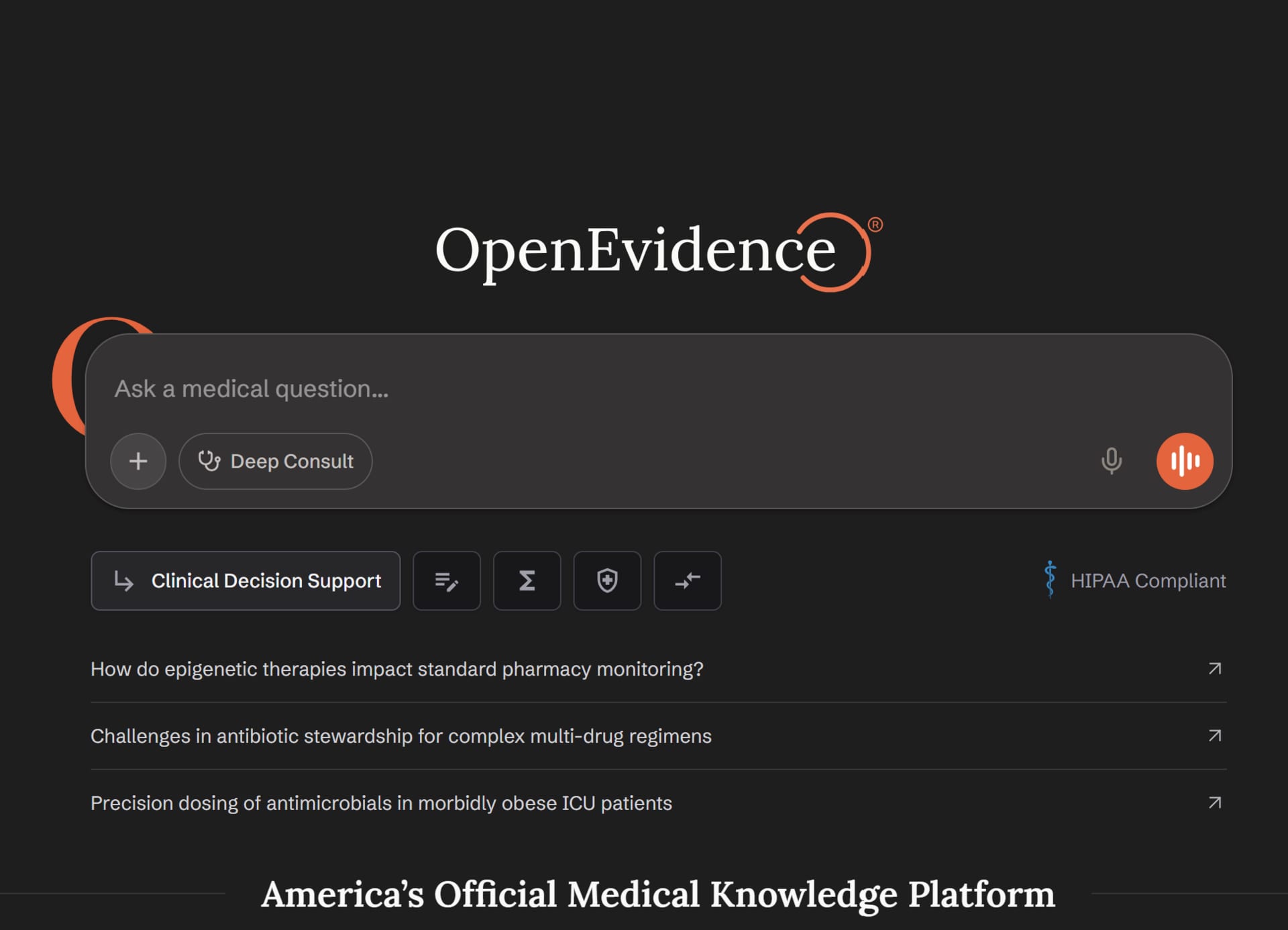
OpenEvidence's moat, per its own metrics, is data and distribution: more than 40% of practising US physicians use it daily, and US clinicians made 42 million queries in August alone 1. What it does not own is the model. A Claude-based decision-support engine runs underneath, white-labeled free to doctors in roughly 100 low- and middle-income countries under a September 22 deal, and many users never see the Anthropic$350B — Anthropic, private, latest valuation $350B brand at all 1. That is the whole bet in one sentence: rents the intelligence, owns the doctor.
What 48% took away
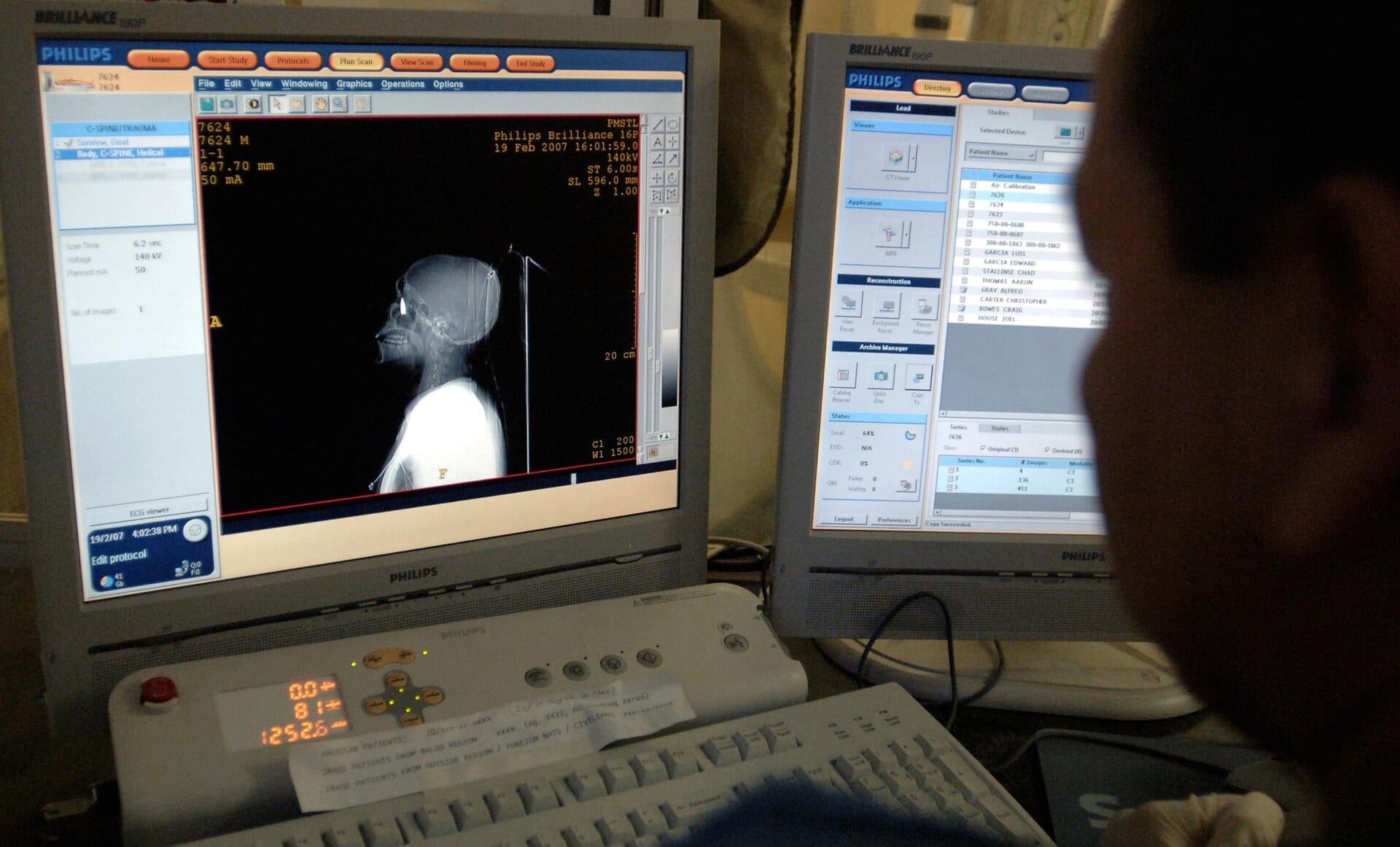
Pro Medicus reported FY26 revenue of A$261.7 million, up 22.9%, on a 74.9% underlying EBIT margin, ten new contracts worth at least A$407 million, six-of-six renewals repriced at higher fees per transaction, and about A$1.3 billion of minimum contracted revenue over five years 35. The selling was not about results; it was the fear AI commoditises imaging software, at a market cap of A$16.7 billion 4. Divide that cap by FY26 revenue and the stock still carries roughly 64 times trailing revenue, a bet that the contract pipeline keeps compounding 34. Even the growth quality argues against a commodity: constant-currency growth ran ahead of reported in every line, and renewals set higher fees in every case 3.
Every Pro Medicus growth line runs faster in constant currency than as reported
- Reported growth
- Constant currency growth
Data
| Reported growth | Constant currency growth | |
|---|---|---|
| Revenue | 22.9% | 28.4% |
| Underlying EBIT | 24.4% | 30.6% |
| Underlying NPAT | 24.1% | 32.5% |
The model-versus-plumbing fight
The bear case arrived this week by press release. Diagens Tech, a Hangzhou rival whose funded corporate newswire ran the same day PME bounced, argues imaging foundational models become the third high-value asset class in medical AI, after workflow software and patient data 6. The counter comes from the data side: of about 950 AI devices the FDA had authorized by mid-2024, roughly 723 were narrow, human-supervised radiology tools, and the hard part is that the pixels sit locked in PACS archives, where "the model is the easy 10%" 7. If data stays locked, Visage owns the toll booth.
Which moat settles it
If distribution-plus-data is the moat, the $15 billion mark is rational and Pro Medicus keeps derating. If contracted cash flows are the moat, the private mark is the mistake, and PME, about 27% under its consensus target of A$202.47 with an Outperform from 15 analysts, is the entry 5. Late-stage medical-AI investors carry the write-down risk either way when the product is a wrapper on rented models 1. The next checkpoint is Pro Medicus's annual meeting on November 25, 2026 5. Both prices cannot stay right.
Deepdive
AI-generated from this story and its cited sources. Not investment advice.