Chicago voted 72.5% to bring back ShotSpotter; SoundThinking's tender offer still pays $8.00 cash
Chicago's November 3 vote, 72.5% for restarting gunshot detection, is the clearest demand signal ShotSpotter has ever won. It cannot reach SoundThinking shareholders: the vote binds no one, the city has awarded no replacement contract in more than two years, and a tender offer prices the stock at $8.00 in cash.
 Richard Tang · 3 min read
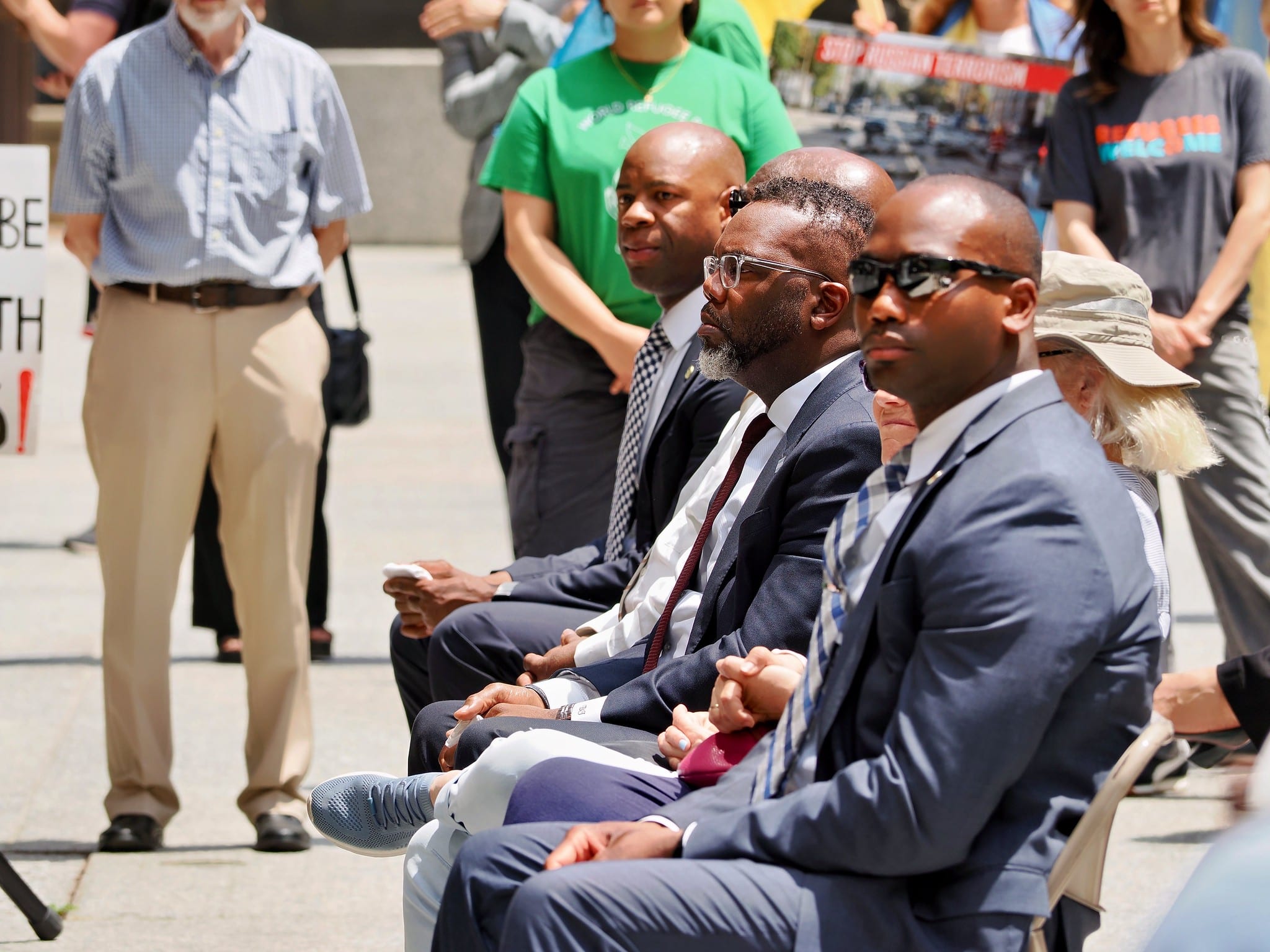
Chicago handed the acoustic gunfire network ShotSpotter the clearest demand signal in its history on November 3, 2026, with 72.5% of voters backing a restart of gunshot detection 1. That is roughly 447,000 yes votes, more than the mayor who switched the system off won in 2023 2. For SoundThinking+0.48% — SoundThinking, up 0.48 percent today, the Nasdaq-listed company behind it, none of that can reach shareholders, because the missing hop sits between a working sensor and a paying city: procurement. Chicago has not crossed it in more than two years 4.
The referendum cannot buy a sensor
The vote is advisory and changes no policy 1. Mayor Brandon Johnson ended the contract in September 2024, and the city has since collected nine bids on a replacement without awarding one 34. What stands is a six-month pilot across six South and West Side districts, free to the city, outside the bidding process, and promising no vendor a contract 3. Demand is real; deployment is the hop nobody has closed.
The evidence the pilot will weigh cuts both ways
CWB Chicago, a local crime-news outlet, counts 98 victims since the shutdown who appeared to wait for help because nobody called 911; 61% of them died, against about 21% of shooting victims citywide 4. A University of Chicago analysis found the opposite pull: officers reached top-priority calls four minutes faster after the switch-off 3. Homicides in those neighborhoods later fell by more than a third 3. Detection is no longer the contested link. Whether an automatic alert changes outcomes is, and that is the question the pilot is finally built to test.
The tender offer caps what Chicago could ever pay
On September 28, 2026, SoundThinking, whose systems have served roughly 2,100 public-safety agencies, agreed to go private under Transom Capital, a middle-market private equity firm, through a tender offer that buys shares directly from holders: $8.00 a share in cash, plus a contingent value right worth up to $3.00 more 56. That right pays only if ShotSpotter and SafePointe, its AI weapons-detection product, bill $73.5 million in 2027 5. The offer expires on November 17, with about a third of the stock already committed 69.
Management's own plan, filed in the deal documents, expects $77.4 million from those two products, worth $1.05 a share, and the company's banker illustrated the whole package at $8.77 8. The shares closed at $8.35 on November 3 10. That gap is the market's discount on a plan already cut once, when 2026 revenue guidance fell to $99–100 million in August 7. Chief Executive Ralph Clark was blunt about the city everyone is arguing over: his targets are "not dependent" on Chicago 7.
The offer's value runs from $8.00 cash to as much as $11.00 a share
Data
| Value | |
|---|---|
| Cash offer | $8 |
| With maximum CVR | $11 |
| Banker's illustration | $8.77 |
| Nov 3 close | $8.35 |
Quarterly revenue slipped after Chicago ended its ShotSpotter contract
Revenue peaked near $28 million and has slid since Chicago ended its contract
Data
| Revenue | |
|---|---|
| Q3 '23 | $23.98M |
| Q4 '23 | $26.05M |
| Q1 '24 | $25.41M |
| Q2 '24 | $26.96M |
| Q3 '24 | $26.25M |
| Q4 '24 | $23.41M |
| Q1 '25 | $28.35M |
| Q2 '25 | $25.89M |
| Q3 '25 | $25.1M |
| Q4 '25 | $24.79M |
| Q1 '26 | $24.18M |
| Q2 '26 | $23.89M |
The November 10 print stresses the right, not the deal
Third-quarter results land on November 10, inside the offer window, and analysts expect another loss 10. A miss cannot by itself break the deal: the merger agreement's material-adverse-effect definition explicitly excludes a failure to meet published guidance, though the underlying facts can still count 5. What a miss would hit is the revenue path behind most of the non-cash value, a path the filed plan grows through smaller cities, international deployments and SafePointe adoption rather than through Chicago 8. AI-native rivals are already mounting gunshot sensors on ordinary streetlights 11.
The bottleneck has moved from the sensor to the signature. Detection works, voters want it back, and the value now belongs to whoever converts that demand into a signed contract. In Chicago, that conversion is two years overdue.
Get Deals by email, free
The acquisitions, rounds and contracts that move AI money. In our daily email, every weekday.