Crude nears $83 as Iran's war cools, and Delta's fuel bill rose 62% while jet fuel is near $150
We expect crude's war premium to fade over weeks, not days, as a Gulf supply glut builds, and we expect the Gulf's AI money to stay on defense for as long as the war runs.
 Richard Tangfive-minute read
Drafted with AI from the documents listed under Sources, then edited and fact-checked by Richard Tang. How we work
Stocks and macro better, AI worse
US stocks: better, medium. The hot-war tail risk has receded, more oil is escaping the blockade, and a supply glut is building. The fade plays out over weeks, not days.
Macro: better, medium. Cheaper crude is a disinflation tailwind into a December 9 Fed hike traders already price at 98% 4; the new tariff proposals do not land before January 56.
AI: worse, medium. A war officials expect to run to 2029 keeps Gulf capital on defense, and the UAE is weighing burying its planned 5-gigawatt data-center hub underground 2.
| Company | Ticker | Better or worse | Why |
|---|---|---|---|
| Delta Air Lines | DAL | Better | Jet fuel trades near $150 a barrel against $85 before the war, and Delta's quarterly fuel bill rose 62%; a fading premium lands straight in earnings 13. |
| United Airlines | UAL | Better | United's fuel bill rose $1.84 billion year on year, and its chief executive says fuel staying high is "increasing the stress" 13. |
| Exxon Mobil | XOM | Worse | Its third-quarter beat was built on high prices and record output; a glut and falling crude cut both 910. |
| Oracle−4.53% — Oracle, down 4.53 percent today | ORCL | Worse | Stargate UAE, its flagship Gulf buildout with OpenAI$1.18T — OpenAI, private, latest valuation $1.18T, is being redesigned around the war 12. |
| Nvidia | NVDA | No change | The Gulf is a marginal buyer; today's slide is the AI trade repricing itself, not the war 8. |
Stalemate, no talks, oil escaping
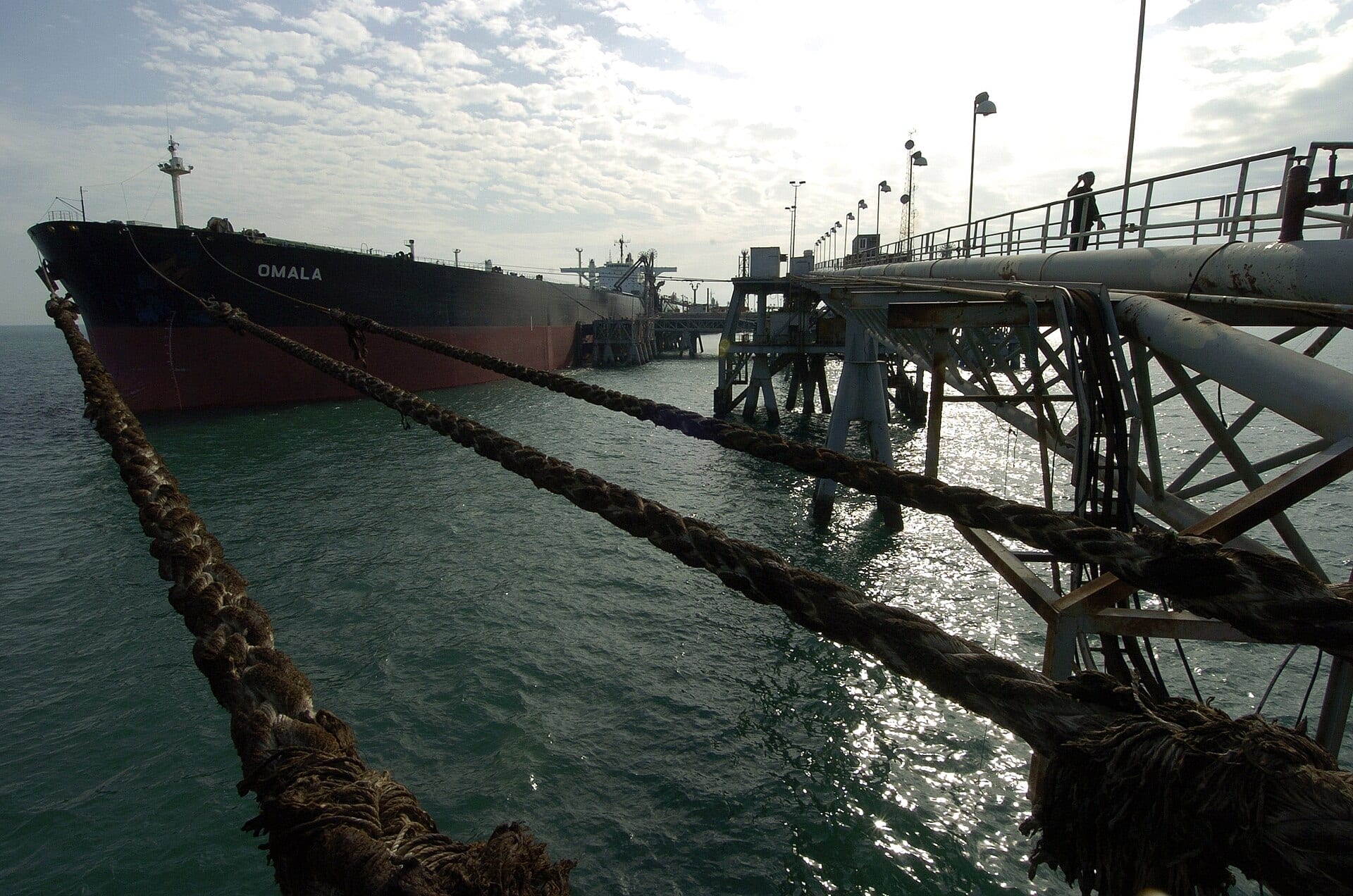
The Economist's daily assessment lands today with the phase change: Iran's hot war has cooled to an unstable stalemate, with America's blockade of the Strait of Hormuz still on but a lot more oil slipping through it. President Donald Trump has told Vice President JD Vance to step away from negotiations, saying America does not need a deal, and there are no meaningful talks toward a ceasefire or a settlement of Iran's nuclear program 1.
Iran assumes zero oil revenue this year against the third of its budget oil normally supplies, yet the Gulf states are pleading with Washington to keep it cold. Officials in Washington and the Gulf expect the conflict to run through 2027, perhaps until Trump leaves office in January 2029 2.
The pinpricks, funded through January
The attacks continue, which is why the call is a slow fade and not a gap. Iran's Revolutionary Guard says two more tankers struck mines in Hormuz early on Wednesday, a claim that cannot be independently verified, while Saudi air defenses downed drones over Ras Tanura, home to the kingdom's main crude export terminal, and the Saudi-led coalition struck the Houthi-held port of Hodeidah 3.
Trump says the war is funded through January, when Democrats take control of both chambers, and lawmakers face an December 11 funding deadline 3. Crude for January delivery trades near $83, up about 1% on the day 4.
A second story: tariffs, and hot inflation
Washington added a second story this morning. The US Trade Representative, Jamieson Greer, proposed new tariffs on 14 trading partners, 15% for the European Union and up to 20% for China, following an eight-month overcapacity investigation; they are unlikely to take effect before January 56. The day's tape was set by inflation, not the war: core PCE, the Fed's preferred gauge, rose to 3.3% in October, and the S&P 500 fell 2.6% while the chip ETF lost 6.9% 478.
Chips, not crude, led the selloff on inflation day
Data
| Value | |
|---|---|
| Chip ETF (SMH) | -6.9% |
| S&P 500 (SPY) | -2.6% |
| January crude | 1% |
The glut is real and the premium is thin
Equity risk was priced for escalation, and escalation is what has just gone away. Rystad Energy's chief economist, Claudio Galimberti, expects a "fragile pseudo-normalization" of the strait next year, with both blockades gradually relaxing 2. The International Energy Agency already forecasts a 1.7 million barrel-a-day global surplus in the fourth quarter as Gulf exports recover 9.
Brent peaked near $120 in March, traded above $110 in October and sits near $93 today, so the premium left in oil is small and shrinking 910. WTI's 1% bounce on a day of tanker blasts is the tell: markets now treat the attacks as noise against a coming glut 4.
Brent has given back most of its war premium since March
Data
| Brent crude | |
|---|---|
| March 2026 peak | $120/bbl |
| October 2026 | $110/bbl |
| 20 Nov | $92.18/bbl |
| 25 Nov | $93.13/bbl |
The crude tailwind has a shelf life
The crude tailwind lands in the December and January inflation prints, into a Fed decision that is already priced at 98% for a 25-point hike 4. The 10-year Treasury yield has eased to 4.81% 11.
The offset is today's tariff proposal: within the caps allies already negotiated, a proposal rather than a duty, and January at the earliest. A proposal arriving after the hike does not change the hike. Fed policymakers have warned the levies would push prices higher once they land, so the tailwind has a shelf life 6.
AI loses on capital, not chips
AI loses here, and the reason is capital, not chips. Allianz estimates the Gulf states will run a cumulative fiscal deficit of $475 billion from 2026 to 2030, and the IMF projects five of six Gulf economies will contract this year 2.
Stargate UAE, the Gulf's flagship AI project, is the OpenAI venture run with Oracle and SoftBank and led by G42; it is already being split into smaller, partly underground sites after Iran named it a target 12. The Economist reports the UAE now weighing burying the full 5-gigawatt plan, with tech executives sceptical that power and cooling can be buried with it 2.
Chips are repricing on their own logic
Chips are falling today for their own reasons: semis are down 21% in a month, a repricing of the AI trade itself, not the war 8. What the war takes away is marginal Gulf demand and adds cost, and it does so for as long as anyone can see.
Three things would prove us wrong
A sustained drop in Hormuz flows, not just tanker claims: volumes leaving the strait have already declined in recent days, and if that sticks, the glut thesis dies 3. A Trump decision to resume strikes after the New Year, which he has said is possible, would re-run the hot war 3. And tariffs that take effect at the proposed rates in January, on top of a 3.3% core PCE, would turn the crude tailwind into a fresh inflation problem for the Fed 6.
Five dates from December 9 to January 10
December 9, the Fed decision 4. December 11, the government funding deadline where Democrats could try to restrict war operations 3. December, the G20 in Miami, where the Saudi crown prince presses Trump in person for strikes on the Houthis 2, and the tariff comment period 6. January 10, when the US-China trade truce expires 6. Into 2027, Rystad's "fragile pseudo-normalization" of the strait, or its failure 2.
Sources
- 1The Economist, Strait draw: Iran's hot war cools, 25 November 2026
- 2The Economist, The Gulf survived a short, hot war. A long, cold one will be harder, 24 November 2026
- 3HNGN, Iran Claims New Tanker Blasts, Drones Target Saudi Oil Port, 25 November 2026
- 4Yahoo Finance, Stock market today: Dow, S&P 500, Nasdaq sink on hot inflation, new Trump tariffs, 25 November 2026
- 5Yahoo Finance/dpa, Trump administration announces new tariffs on EU, China imports, 25 November 2026
- 6HNGN, US Proposes New Tariffs on 14 Partners Over Overcapacity, 25 November 2026
- 7The Inference, S&P 500 (SPY) index, as of 25 November 2026
- 8The Inference, Semiconductors (SMH) index, as of 25 November 2026
- 9OilPrice.com, Oil Prices Caught Between a Looming Glut and Middle East Turmoil, 20 November 2026
- 10The Mercury News (AP), ExxonMobil and Chevron top Q3 estimates on higher prices and strong output, 30 October 2026
- 11The Inference, 10-year Treasury yield index, as of 25 November 2026
- 12TNW, The UAE is splitting up its $30bn AI data centre after Iran named it as a target, 11 September 2026
- 13Yahoo Finance/Oilprice.com, Airlines Face Fuel Crisis as Price Hedges Expire, 16 November 2026
Get Economy by email, free
How AI moves rates, banks, payments and the wider economy. In our daily email, every weekday.



Reader comments
0 comments