Delaware court dismisses former Accelevation COO's $15 million equity claim
The Court of Chancery held on November 25 that a contractual buyback is not a breach of duty. The same class of clause now moves the sponsor's cash out of the listed company, which is why the ruling lands on ACCV holders and not just one unlucky executive.
 Richard Tangthree-minute read
Drafted with AI from the documents listed under Sources, then edited and fact-checked by Richard Tang. How we work
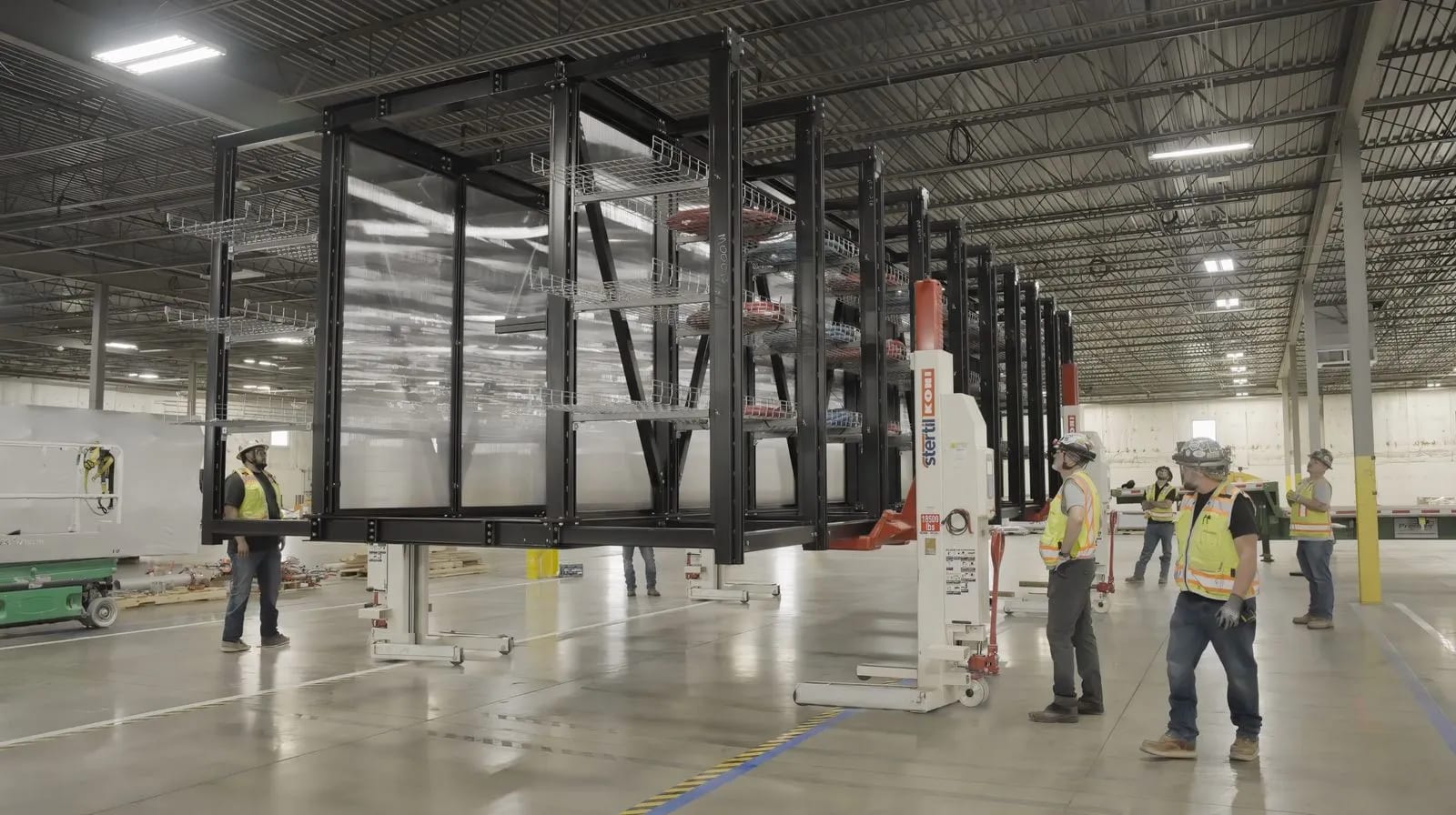
Delaware's Court of Chancery has told Accelevation's+9.45% — Accelevation, up 9.45 percent today minority holders what the cap table already said: the sponsor's money leaves exactly as the contracts write it. On November 25 the court dismissed, with prejudice, all four counts of a suit by the company's former chief operating officer, whose 5.61% stake would have been worth about $15 million after Accelevation sold for more than $450 million in late 2024 1. For anyone holding ACCV, the ruling matters less for the plaintiff than for what it blesses: the same class of clause now moves the controlling shareholder's cash out of the listed company.
The contract won on its own terms
The executive bought 5.61% of Accelevation, a vertically integrated data center infrastructure manufacturer, in July 2022, right as it entered talks with LFM Capital Partners, the private equity firm buying it 1. His operating agreement carried a drag-along, a clause letting majority owners force minority holders to sell on the same terms, and the majority exercised it the next day as part of a $57 million buyout 1.
He cashed out 19% of his stake, rolled the rest into the buyer's holding company, and was fired three weeks after closing 1. The holding company bought his units back at fair market value that November; he did not object then. He sued only in November 2025, after the late-2024 sale would have made his stake worth roughly $15 million 1.
The court found no scheme. Exercising a contractual buyback right is not a breach of duty under Delaware precedent, the operating agreement's waiver left no gap for a bad-faith claim, and his duress argument failed because he joined knowing the drag-along existed 1.
The buyer of that sale now runs the listed company
Olympus Partners, the private equity firm that completed its purchase of Accelevation on January 2, 2025, is the principal stockholder behind the October IPO, controlling about 85% of ACCV's voting power 2. In the offering that closed on October 1, selling stockholders affiliated with Olympus sold 20 million shares at $18, roughly $360 million, while the company itself netted about $171 million 34. In the nine months to September 30, distributions to the company's members ran to $318.4 million, and the members' equity remaining on the balance sheet was $4.5 million 4.
Each handoff priced Accelevation bigger: $57M, then $450M, then a $540M IPO raise
- Deal value or IPO proceeds
- Estimate
Data
| Deal value or IPO proceeds | |
|---|---|
| 2022 buyout base price | $57M |
| Late 2024 sale (estimate) | $450M |
| September 2026 IPO raise | $540M |
About $678 million out to owners, $4.5 million of equity left
The cash left through distributions and the IPO, not through the balance sheet
Data
| Value | |
|---|---|
| Distributions to owners, 9 months to 30 Sep 2026 | $318M |
| IPO sell-down by sponsor vehicles, gross | $360M |
| Members' equity left, 30 Sep 2026 | $4.5M |
The backlog is real, and so is the paper that decides who keeps the cash
None of this says the AI demand is fake. Quarterly revenue reached $202 million, up 66% year over year, and the backlog hit $1.68 billion 4. But interest expense of $16 million nearly consumed the quarter's operating income of $18.2 million, and net income fell to $2.9 million, down about 78% from a year earlier 4. The company carries $649 million of long-term debt 4. Even employee-style units carry the 2022 logic: a Series P holder who leaves before distributions are earned must repay the cash 4. The demand side of the AI buildout is delivering; the cap table decides who keeps it.
The ruling locks the sponsor's economics in place
ACCV closed November 27 at $10.46, about 42% below its 52-week high of $18.10, on a $1.255 billion market cap 6. Commentators already rank it among 2026's worst IPOs, down about 40% since pricing, with the thin float behind Olympus's control part of the reason 7. The ruling does not touch demand or operations; it removes the hope that litigation or governance pressure would soften the sponsor's economics. Price the clauses, then the backlog: the cash the AI buildout generates will keep flowing through contracts a court has now enforced as written.
Sources
- 1HCAMag, Fired COO's $15 million equity claim crashes into his own contract, 27 November 2026
- 2Accelevation Holdings Corp. Form S-1/A, filed 22 September 2026
- 3Accelevation Holdings Corp. Form 8-K, IPO closing, filed 1 October 2026
- 4Accelevation Holdings Corp. Form 10-Q for the quarter ended 30 September 2026, filed 13 November 2026
- 5Benzinga via Yahoo Finance, Accelevation Set to List Wednesday After Raising $540 Million in IPO Fueled By AI Data Center Demand, 30 September 2026
- 6Sina Finance, Accelevation Holdings Corp. closed up 9.87% at $10.46, 28 November 2026
- 7Yahoo Finance / Insider Monkey, What Went Wrong for Accelevation Holdings (ACCV) Following the September IPO?, 25 November 2026
Get Policy & Labor by email, free
The rules governments write for AI, and what AI does to jobs. In our daily email, every weekday.

Reader comments
0 comments