Duke Energy asks Florida for 300 MW of solar and a $1 billion savings claim, six days after a data-center loss
The filing claims $1 billion of lifetime customer savings, but that number is avoided fuel cost, not a bill credit, and it lands six days after the same commission unanimously rejected Duke's data-center cost plan. For Duke shareholders, commissions reading this arithmetic decide whether the $103 billion build gets paid.
 Vincent Jiangtwo-minute read
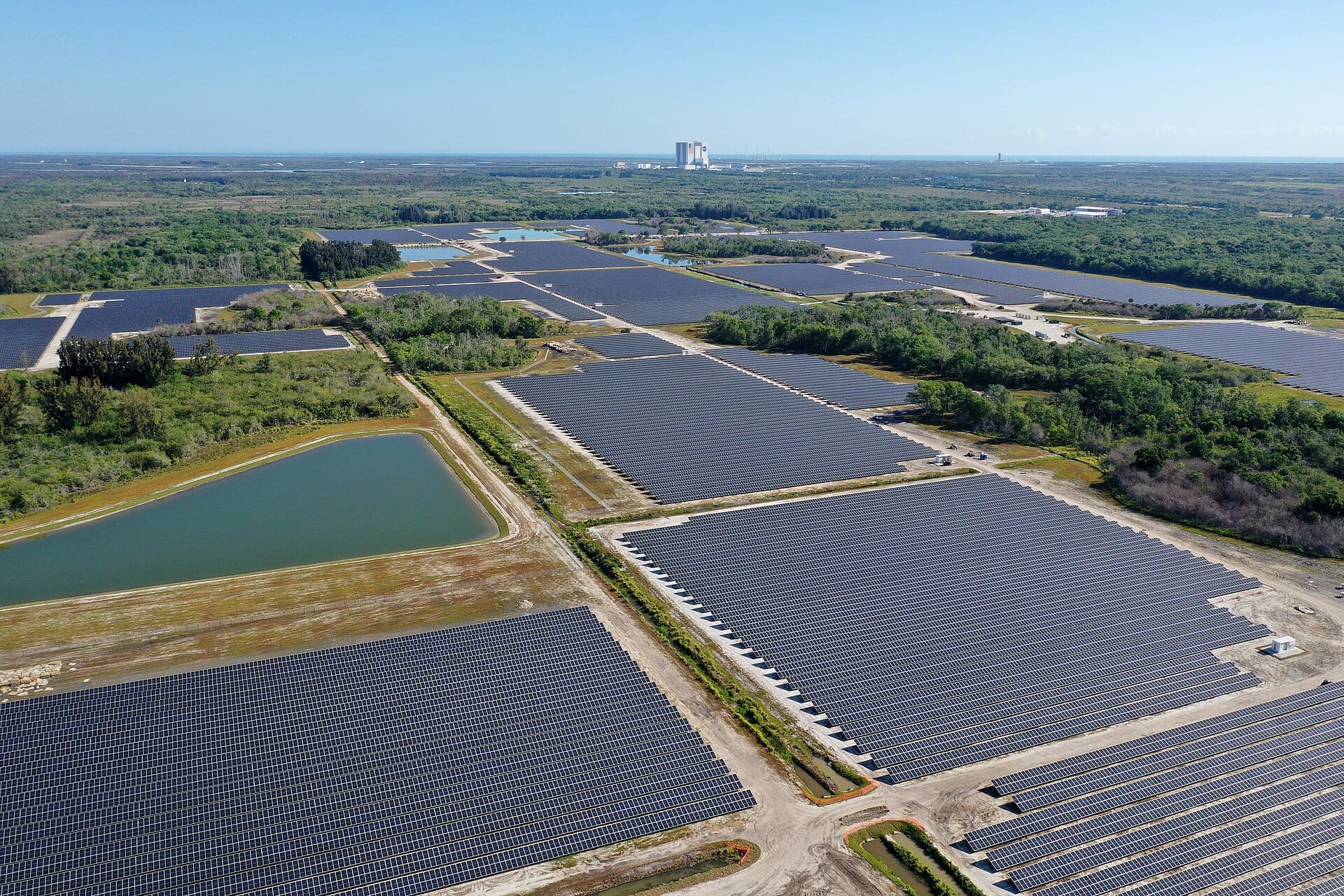
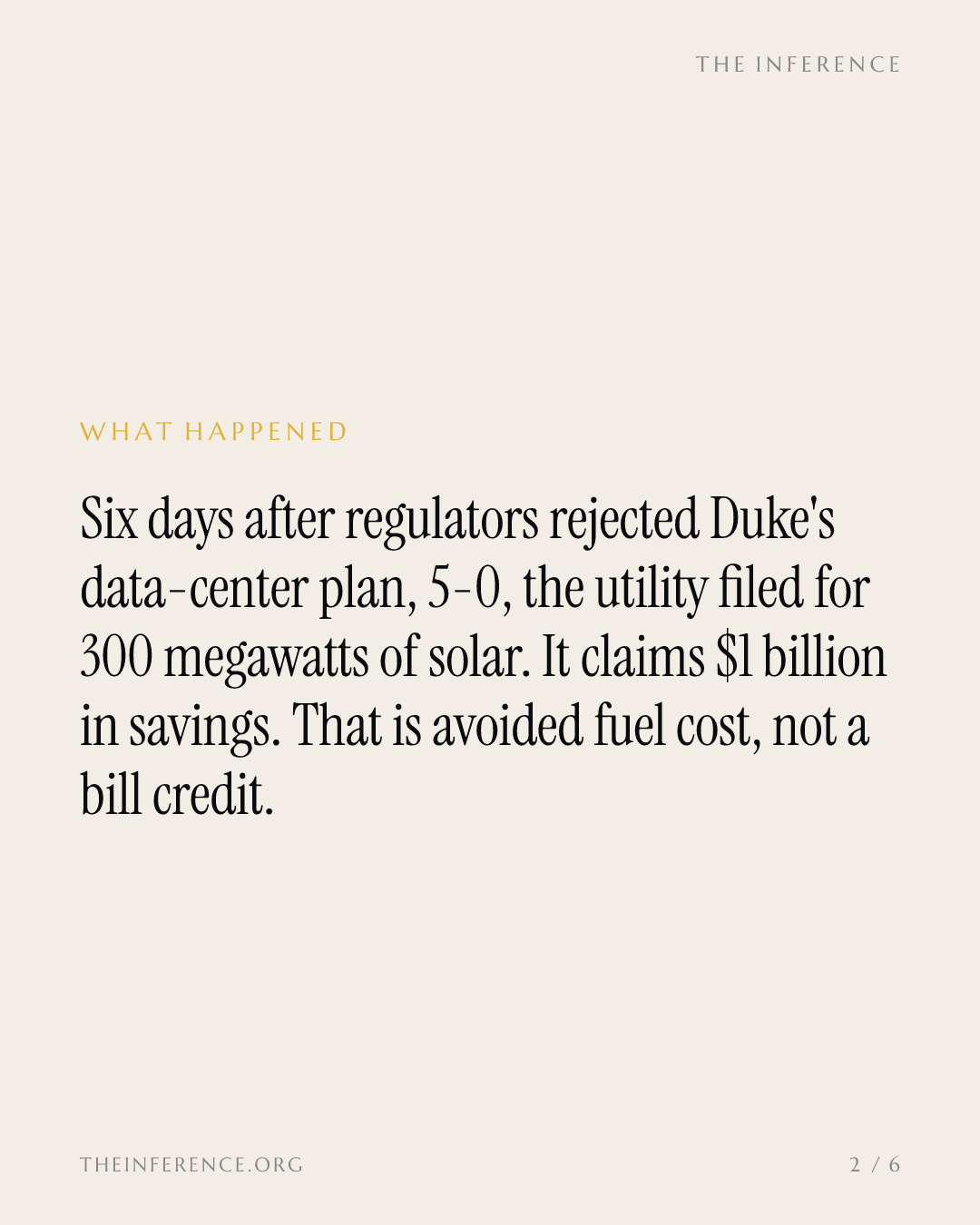
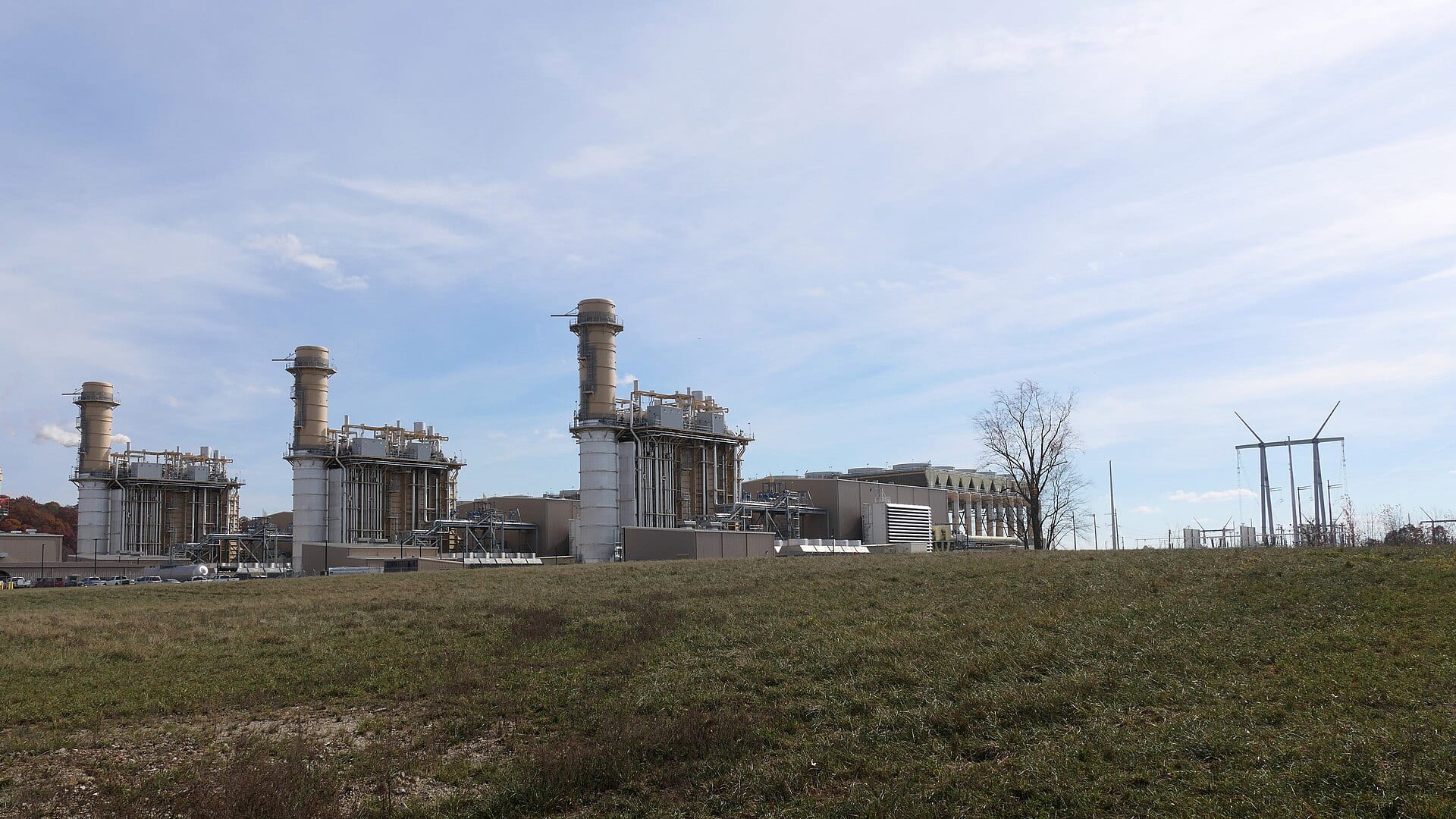
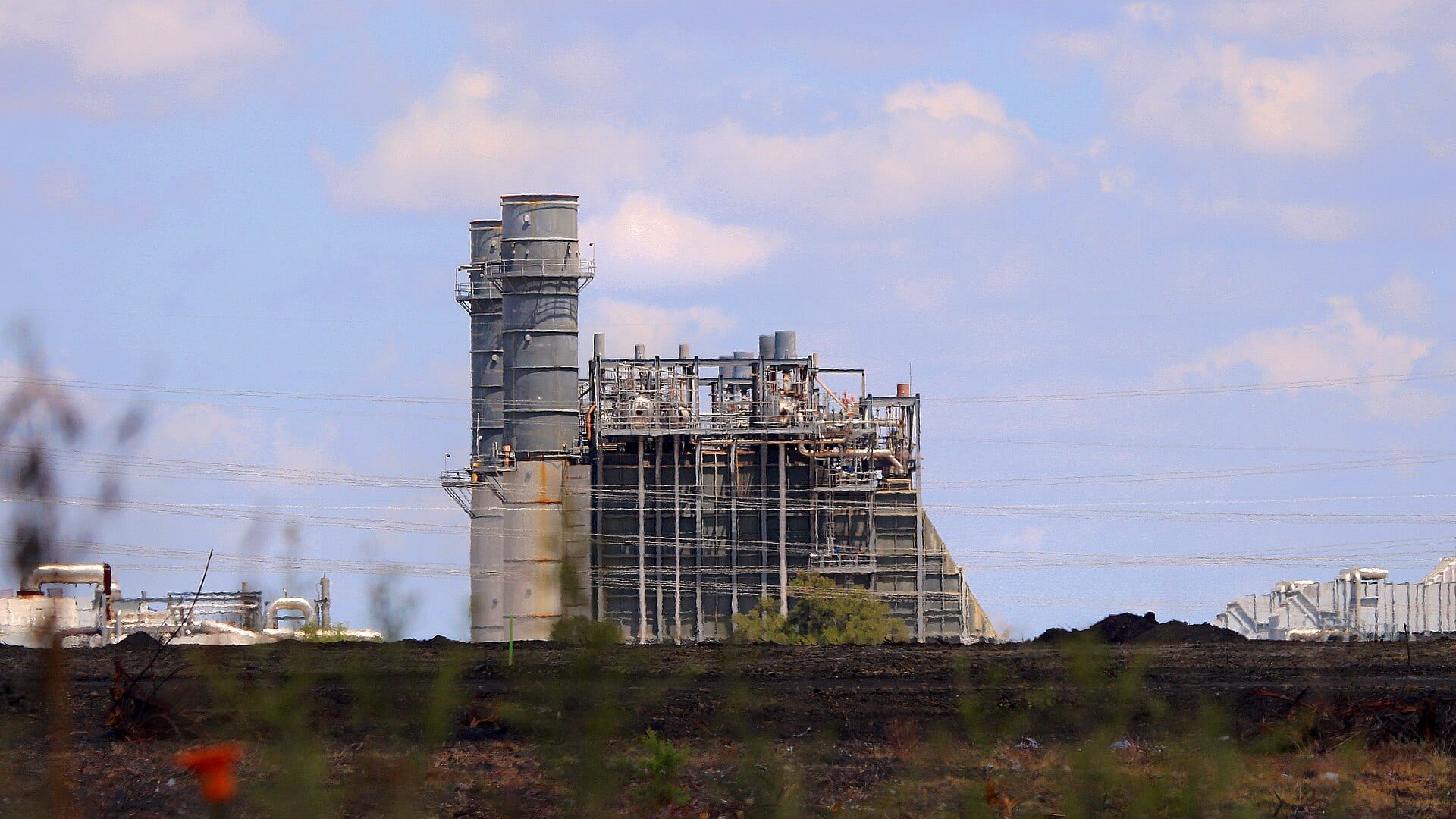
Six days after Florida's utility regulators voted 5-0 to reject Duke Energy's+0.20% — Duke Energy, up 0.20 percent today plan for charging data centers, the utility came back to the same commission with a different pitch 13. On November 10, Duke Energy Florida filed to build four solar sites, totaling 300 megawatts in Orange and Sumter counties, and put a number on them: an estimated $1 billion in customer savings over the sites' roughly 30-year lifetimes 13.
The savings are fuel, not bills
Read the filing closely and the $1 billion is not a bill credit 124. It is avoided fuel cost, about $250 million per site over three decades, because solar displaces natural gas, oil and coal Duke would otherwise burn 124.
The near-term money is smaller and separate: about $75 million a year of Inflation Reduction Act production tax credits passed to customers, worth at least $2.50 per 1,000 kilowatt-hours on monthly bills 12. Duke also says it is accelerating credits from its Powerline battery site in Citrus County to avoid a scheduled 2027 base-rate increase; regulators approved that 2027 reduction on November 3, with a typical residential bill about $33 lower year over year 6.
Why the timing matters
The Florida commission unanimously rejected Duke's data-center cost plan on November 4, finding it did not "reasonably ensure" data centers bear their own full cost of service under the state's new law 3. Now the same board must approve 300 megawatts of new generation on a lifetime savings claim, while Duke has said it will return in 2027 for a base-rate increase and a fresh data-center tariff 3. Duke frames each new site as powering about 15,000 homes 14; the demand Florida actually needs to serve is increasingly measured in gigawatts of data centers, not subdivisions.
What the money is riding on
The petition is the exhibit Duke will use to argue its Florida build pays for itself, and the parent company needs regulators to keep believing it. Duke's $103 billion capital program has outrun operating cash flow in six of the last eight quarters 5.
Duke's build has outrun its cash in six of the last eight quarters
Duke invests faster than it earns, and regulators hold the recovery
- Capital spending
- Operating cash flow
Data
| Capital spending | Operating cash flow | |
|---|---|---|
| Q4 '24 | 3.09B | 3.38B |
| Q1 '25 | 3.15B | 2.18B |
| Q2 '25 | 3.28B | 2.86B |
| Q3 '25 | 3.45B | 3.63B |
| Q4 '25 | 4.14B | 3.66B |
| Q1 '26 | 4.09B | 1.51B |
| Q2 '26 | 4.15B | 2.76B |
| Q3 '26 | 4.33B | 3.62B |
The build is funded on paper by $10 billion of new equity, a third secured, and recovered through rate cases 5. The near-term calendar decides it: North Carolina's ruling on Duke's large-load settlement, which makes Amazon−1.20% — Amazon, down 1.20 percent today, Google, Meta−2.63% — Meta, down 2.63 percent today and Microsoft−2.43% — Microsoft, down 2.43 percent today prepay connection costs, is due by mid-November, the resource-plan order by year-end, and Duke returns to Tallahassee in 2027 35. Whose money builds the sun: the hyperscalers', if the prepay structure holds; everyone on the grid, if it does not.
Get Power by email, free
How AI's hunger for electricity moves utilities, power plants and the grid. In our daily email, every weekday.