Elvis rights holders sue Suno over his cloned voice, seeking more than $50 million
Elvis Presley's rights holders and Eminem's publisher Eight Mile Style filed the claims on November 6, and the ELVIS Act count is the one Suno's catalog licenses never priced. If it holds, per-voice clearance becomes a cost line under a $5.4 billion valuation set in June, and the read-through runs to every AI-media firm that can generate a recognizable likeness.
 Richard Tangthree-minute read
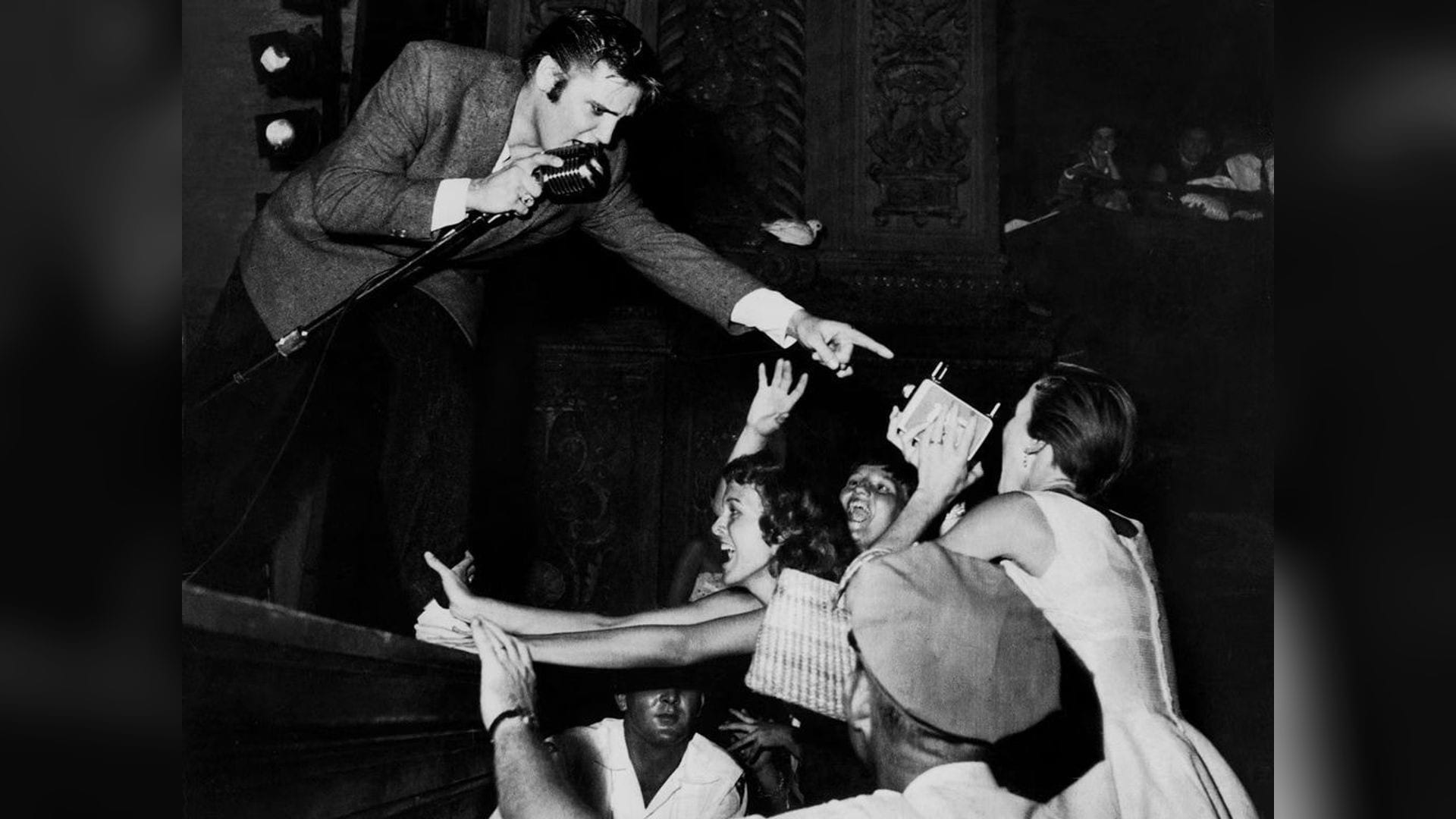
Elvis Presley's rights holders sued the AI music generator Suno~$2.45B — Suno, private, latest valuation ~$2.45B on November 6 for letting users clone his voice, and the claim to watch is the one no catalog license covers 12. Elvis Presley Enterprises, the Authentic Brands Group unit that controls the intellectual property tied to Elvis, and Raleigh Music Publishing, another owner of Presley song rights, seek more than $50 million under Tennessee's ELVIS Act, a figure the complaint asks the court to triple, stacked on copyright counts over his songs 124.
The same lead counsel, veteran music litigator Richard Busch, filed a companion suit that day for Eight Mile Style, the publisher behind 269 Eminem compositions, with Eminem himself not a party 14. That case is about copyright only. At the fixed per-song penalty copyright law sets, claimed at the maximum across those songs, it totals $40.35 million 25. Both landed in San Francisco federal court, eight weeks after Suno shipped its first label-backed model 3.
The clone comes from the model, not the prompt box
Suno's public defense is a filter: it blocks artist names in prompts and screens uploads through third-party providers 4. The complaints aim past the filter. The Presley team entered lyrics containing his name, spelled out letter by letter, and says Suno returned two songs in his voice 2. The complaint attaches 38 recordings it calls synthetic Elvis 2.
Eight Mile exhibits a Suno track titled "Lose Yourself By Eminem" that copies the song's verse and chorus almost word for word 25. The complaints trace the corpus behind such outputs to audio ripped from YouTube−1.54% — YouTube, down 1.54 percent today and lyrics pulled from Genius at scale 25. Suno told a Massachusetts court, in a likeness case led by the singer Jason Isbell, that its outputs do not replicate any real artist's voice; the Presley complaint calls that statement false 24.
No deal in Suno's stack covers a voice
Suno's plan has been to buy legitimacy: a Warner Music Group settlement in November 2025, then BMG and Believe, then v6, launched September 9 on licensed catalogs with every past model retired 36. Universal and Sony+0.87% — Sony, up 0.87 percent today sued over v6 anyway, asserting 60,202 more recordings 6.
Those deals cover recordings and compositions. None covers a voice, a right the labels mostly do not control: name, image and likeness rights are generally retained by artists and their estates, so the labels Suno signed could not have sold Elvis's even if they had tried 3. The ELVIS Act, in force since July 2024, protects a voice "regardless of whether the sound contains the actual voice or a simulation," and it reaches the company that provides the cloning tool, not just the user 47.
Suno's November claimants pair copyright asks with a voice claim no license covers
The voice claim stands beside the copyright asks, and no catalog deal covers it
Data
| Value | |
|---|---|
| Reservoir, copyright (Oct) | $186.4M |
| Presley group, copyright (Nov) | $128.85M |
| Presley group, voice (Nov) | $50M |
| Eight Mile Style, copyright (Nov) | $40.35M |
A liability line nobody has priced
Suno's $5.4 billion valuation was set in June, before most of this wave landed 1. Copyright asks were already climbing, as we reported when Reservoir sued in October and when we charted Suno's licensed climb to the top of AI music 18.
A clearance cost for every model that can render a voice
What November adds is the line no June investor priced: liability that attaches to a generated voice rather than to a catalog 2. If the ELVIS Act count holds, every AI-media firm that can render a recognizable likeness carries a clearance cost it never modeled, and the money moves toward estates, brand owners and independent publishers, exactly the plaintiffs here 78.
Two questions now set the price of a voice. One is whether the court lets the ELVIS Act count proceed, its first major test against an AI company 14. The other is what a voice costs: the deals Suno has struck cover songs, and nothing in them prices a likeness 3. The first estate to license a voice for AI sets the rate for every firm downstream, Suno included.
Get Policy & Labor by email, free
The rules governments write for AI, and what AI does to jobs. In our daily email, every weekday.



Reader comments
0 comments