Formosa Sumco rations wafers as AI demand outruns supply, but parent SUMCO waits for 2027 contract prices
The Taiwanese wafer maker's 8-inch demand now exceeds supply, so it is allocating by quota while negotiating prices. But the profit stream behind the scarcity story is not switched on yet: one of the world's four largest wafer makers, Japan's SUMCO, sold down the subsidiary that is repricing and its own contracts hold old prices until late 2026.
 Richard Tangthree-minute read
Drafted with AI from the documents listed under Sources, then edited and fact-checked by Richard Tang. How we work
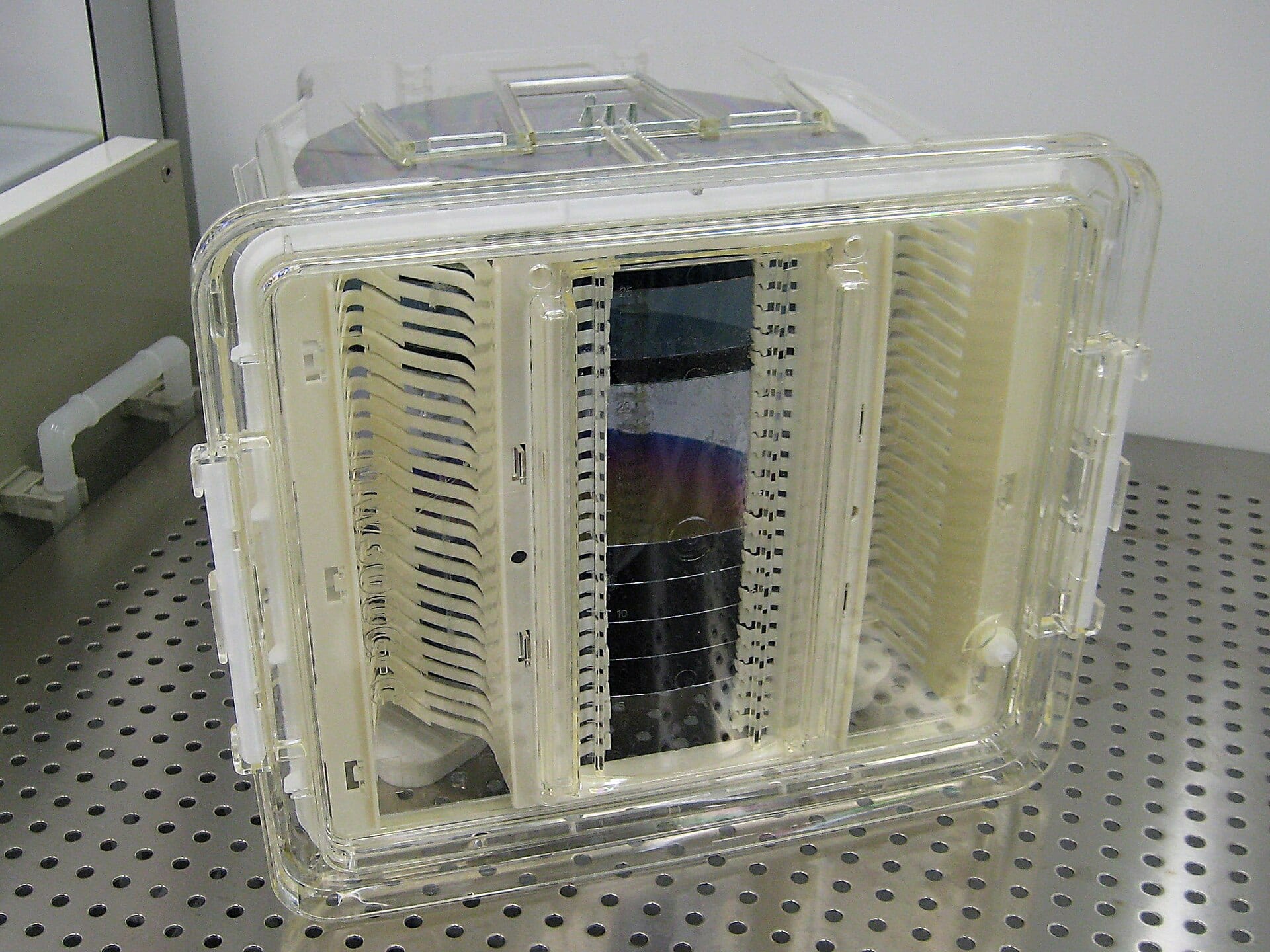
Formosa Sumco, the Taiwanese wafer maker, told investors on November 26 that its 8-inch and 12-inch lines are fully loaded, that demand for the smaller wafers already exceeds supply, and that it is now allocating wafers by quota while negotiating price rises with customers 1. The AI buildout has run out of the blank disc every chip starts on. The catch sits one company over.
The demand mechanism is arithmetic in silicon area. AI servers take 3.8 times the wafer input of a standard server 2. HBM memory stacks use roughly three to four times the wafer area per gigabyte of conventional DRAM 2. Add the packaging that wires AI chips together, stacked dies, CoWoS interposers and silicon capacitors, and each accelerator consumes more of the disc 1. Global shipments rose 13.4% year on year in the third quarter, and SEMI, the industry association, expects record volumes every year through 2029 3.
Silicon wafer shipments climbed 13.4% year on year
Third-quarter shipments ran 13.4% above a year earlier
Data
| Shipments, million square inches | |
|---|---|
| Q3 2025 | 3,313M sq in |
| Q2 2026 | 3,573M sq in |
| Q3 2026 | 3,756M sq in |
Supply cannot answer, so the price is the only valve
SUMCO's president, Jiro Ryuta, said on the November 11 earnings call that the company cannot justify expansion investment at current wafer prices and cost inflation, and that even a decision today would take years to produce capacity 4. The four largest makers, Shin-Etsu, SUMCO, GlobalWafers and Siltronic+5.08% — Siltronic, up 5.08 percent today, all warn of shortages by 2027, and none has announced a new plant 5.
So the price is the only valve, and the contract book is welded shut. Long-term agreements signed at the cycle trough still govern most volumes; spot prices move, contract prices do not until late 2026 5. That is why the profit line looks upside down: SUMCO grew nine-month sales 9% and still swung to a ¥4.4 billion operating loss 6. It guides to another loss for the full year 6.
The repricing shows in Taiwan, outside the parent's accounts
Formosa Sumco, the subsidiary that is repricing, left SUMCO's balance sheet on September 30 and became an equity-method line; the parent booked a ¥13.7 billion gain on the sale and kept the Japanese business whose contracts are still shut 6. What investors can buy today is the company that will not expand and cannot yet reprice.
The repricing is real. Taiwan's wafer makers pushed prices up at least 10% in August, ending a three-year freeze 2. Right now it is the quota-issuer in Taiwan and its spot customers who collect it, not the Tokyo parent whose contracts hold old prices and whose expansion is shelved.
The contract roll in 2027 decides who collects
Ryuta says from the first half of 2027 SUMCO faces "difficult choices" about which customers to supply, which is when the next round of contracts gets written 4. The company also expects further tightening: it said it is on the verge of being unable to keep pace with the 300mm volumes customers request, and customer inventories fell clearly through the first three quarters, so buyers have less buffer as the market tightens 4. Watch the contract book, not the shipment chart.
Whoever signs those contracts at scarcity prices, or builds the capacity everyone else refuses to fund, closes the gap between a sold-out wafer market and a wafer industry that cannot pay for itself. That is where the value in this shortage sits.
Scarcity reaches chip prices as contracts roll
Today the scarcity camp owns a story whose profits sit in a subsidiary the parent deconsolidated, under contracts that unlock late. Silicon is no longer a commodity input at the bottom of the bill of materials; it is the constraint the whole AI supply chain waits behind, and the shortage should surface in chip and device prices as contracts roll through 2027 25.
Until then, the disclosed facts say the shortage is arriving faster in quotas than in profits.
Sources
- 1Hardwareluxx, "KI-Boom erreicht den Wafermarkt: Formosa Sumco meldet volle Auslastung", 27 November 2026
- 2Tech Times via MSN, "Silicon wafer prices break three-year freeze: AI fills every fab and foundries are next", 24 August 2026
- 3Fudzilla, "Silicon wafer shipments jump 13.4 per cent" (SEMI quarterly data), 5 November 2026
- 4Sumco Corp. Q3 FY2026 earnings call transcript, Yahoo Finance/Quartr, 11 November 2026
- 5heise online, "Silicon wafers are running short", 27 November 2026
- 6JapanStockPulse, "SUMCO Swings to ¥4.4 Billion Nine-Month Operating Loss Despite 9% Sales Rise on AI Wafer Demand; Deconsolidates Taiwan Unit", 11 November 2026
Get Chips by email, free
How AI demand is reshaping chipmakers, memory and the fabs behind them. In our daily email, every weekday.

Reader comments
0 comments