Weiss Ratings and Traders Union pitch Teradyne on stale Q2 numbers and a self-graded Skild AI benchmark
Two retail pitches sell the chip-test maker on its Q2 figures, a print before the flat Q4 guide, and on a benchmark that Skild AI ran against a baseline it trained itself. The robotics upside is 7.4% of sales, and the Q3 filing the pitches skip lists $2.25 billion of purchase commitments against $461 million of cash.
 Vincent Jiangfour-minute read
Drafted with AI from the documents listed under Sources, then edited and fact-checked by Vincent Jiang. How we work
Two retail pitches sell the same robot story
On November 27, Weiss Ratings, a stock-ratings letter, ran "Own the AI Chip Boom Today, With Robots as Upside" by contributor Michael A 1. Robinson 1. Traders Union, a retail trading news site, followed with "Teradyne+4.05% — Teradyne, up 4.05 percent today offers AI chip exposure with robotics upside", crediting Weiss 2. The stock is Teradyne (TER), the Massachusetts chip-test maker, rated C+ by Weiss itself 1.
The proof of robotics upside is S1, a model from Pittsburgh startup Skild AI$17.16B — Skild AI, private, latest valuation $17.16B that teaches a robot a new job from one video: 66% of steps completed on unfamiliar tasks against 9% for "a competing AI approach", and $100 million in annual recurring revenue, credited to a Nasdaq congratulation and sourced to Skild's own X account 1.
The Q2 numbers are real and a quarter stale
The Q2 figures are real: revenue of $1,329 million against $652 million a year earlier, earnings per share of $2.38 against $0.49 3. But Teradyne printed Q3 on October 27: revenue of $1,306 million, EPS of $2.17, and fourth-quarter guidance of $1,250 to $1,350 million, whose $1,300 million midpoint sits below Q3 and Q2 4. Eight quarters of filings show the shape: revenue doubled from $652 million in Q2 2025 to $1,329 million in Q2 2026, then stalled 6.
Teradyne's Q4 revenue guide is flat against Q3, a quarter that came in below Q2
Q4 guidance of $1.25 to $1.35 billion centers on $1.30 billion, flat on Q3
- Revenue
- Estimate
Data
| Revenue | |
|---|---|
| Q4 2024 | $0.75B |
| Q1 2025 | $0.69B |
| Q2 2025 | $0.65B |
| Q3 2025 | $0.77B |
| Q4 2025 | $1.08B |
| Q1 2026 | $1.28B |
| Q2 2026 | $1.33B |
| Q3 2026 | $1.31B |
| Q4 2026 guide (estimate) | $1.3B ($1.25–1.35B) |
Commitments are nearly five times the cash
The filing three days later lists $2,252.9 million of purchase commitments for components and materials, $1,906.4 million of it due within a year, against $460.7 million of cash 5. The forecast wobbles too: Weiss dates its 133% profit growth to "this year", Traders Union to "2024" in its highlights and "this year" in its body, one piece contradicting itself 12.
The robotics leg points the wrong way
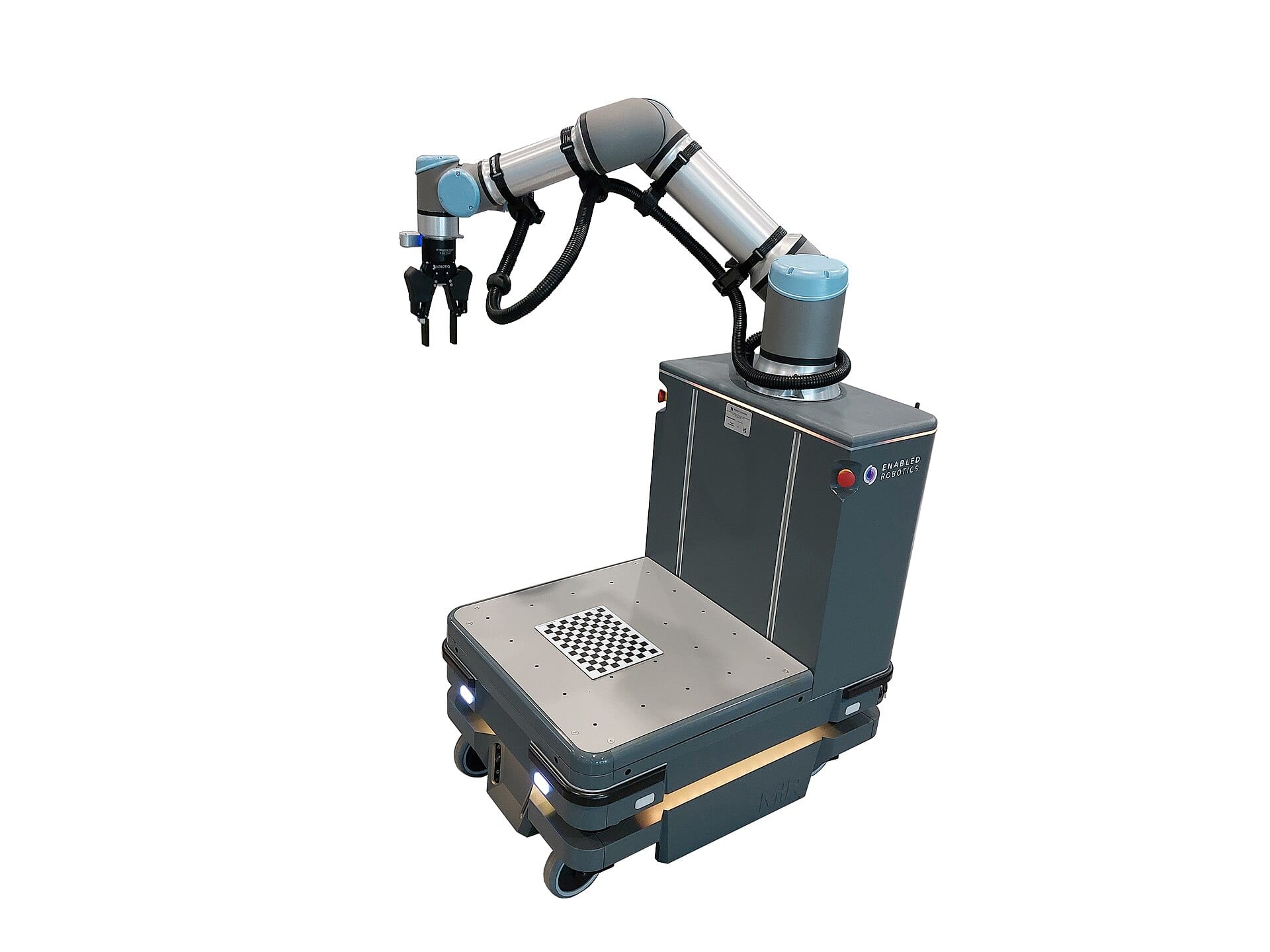
Robotics was $96 million of Q3's $1,306 million, 7.4%, down from $100 million in Q2 34. The segment sells Universal Robots' collaborative arms and Mobile Industrial Robots' warehouse carts, the traditional kind that Weiss says need new programming when a factory changes a task 125.
Robotics is 7.4% of Teradyne's Q3 revenue, $96 million of $1,306 million
The robotics leg the pitch sells is 7.4% of the company
- Semiconductor Test$1,072M82%
- Product Test$138M10.6%
- Robotics$96M7.4%
Data
| Part | Q3 2026 revenue | Share |
|---|---|---|
| Semiconductor Test | $1,072M | 82% |
| Product Test | $138M | 10.6% |
| Robotics | $96M | 7.4% |
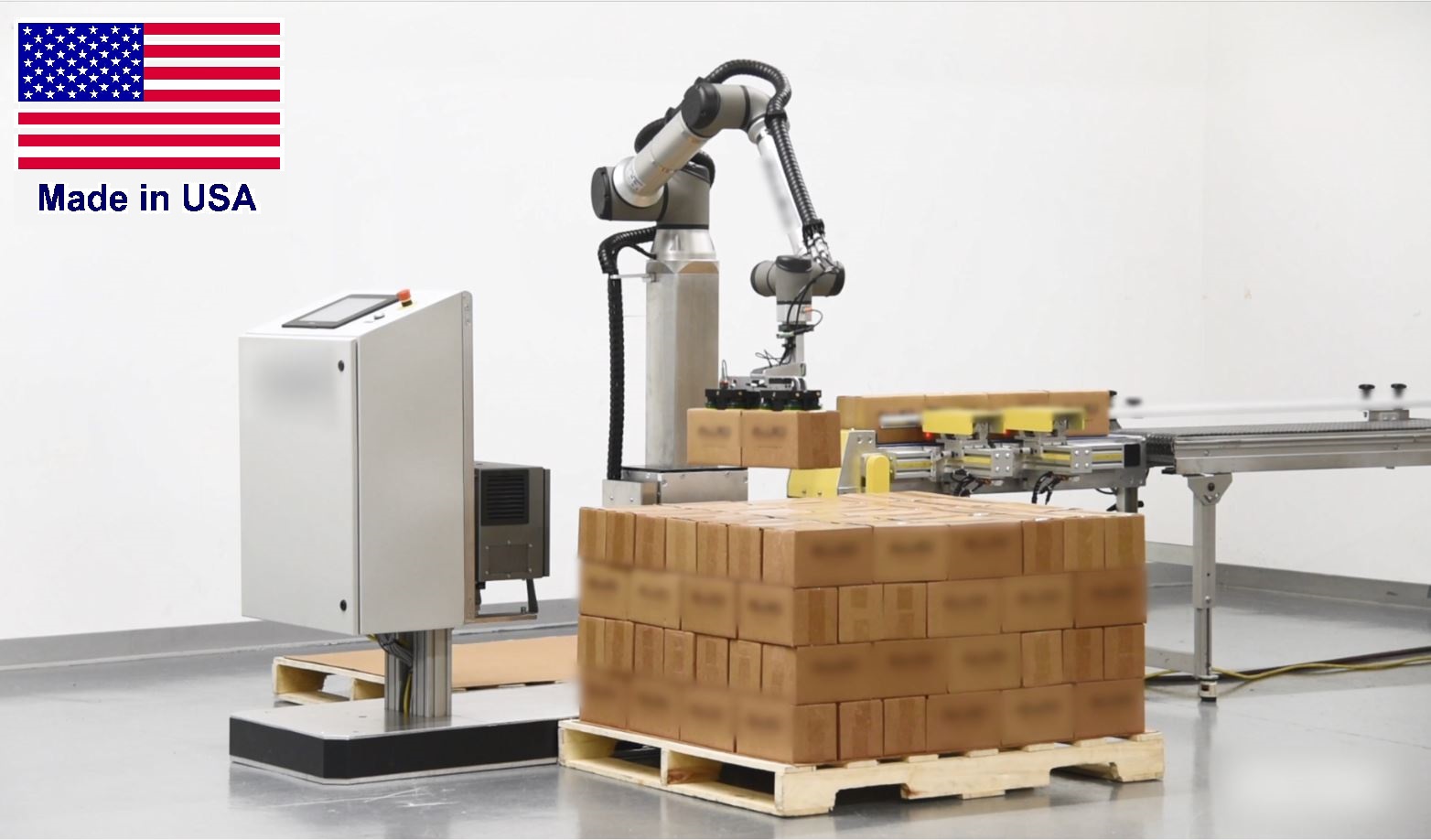
Skild sells the layer that makes that programming unnecessary, for any body: "a general-purpose model that works regardless of the hardware", chief executive Deepak Pathak told the Seoul Economic Daily on November 10 7. Skild bought Zebra Technologies'+4.12% — Zebra Technologies, up 4.12 percent today robotics automation business in April, so it owns robots as well as brains 89. Its deployments are real: S1 has run since June on a line assembling Nvidia's+0.27% — Nvidia, up 0.27 percent today Blackwell chips in Houston, and at an LG Group battery plant 7.
The 66% is a test against Skild's own baseline
Skild's blog describes a controlled study against a baseline Skild trained itself: a model prompted with words rather than shown a video, graded per step on Skild's internal suite of unseen tasks, with human intervention so the baseline did not score zero 10. S1 scored 66% from one video with no further training, the baseline 9%; post-trained on 2,000 demonstrations, that baseline reached 86% 10.
Skild's own baseline reaches 86% of steps once post-trained, against 66% for S1 from one video
Data
| Value | |
|---|---|
| S1, one video prompt | 66% |
| Skild's baseline, text prompt | 9% |
| Skild's baseline, 2,000 demos | 86% |
Teradyne holders have no claim on Skild's revenue
The $100 million run-rate is Skild's figure, reported by Bloomberg and relayed by TNW; Skild's president put 2025 revenue at about $30 million 811. Skild is private, marked at over $14 billion in a January round led by SoftBank 11, so no filing shows its revenue. Teradyne's quarterly filing never mentions Skild, and the round's named investors include no Teradyne 511, so a Teradyne holder has no claim on what Skild charges for S1.
The pitch costs Skild nothing and puts a $14 billion private mark in front of retail buyers 45. A Teradyne buyer pays for a 7.4%-of-sales story with a flat guide and $2.25 billion of commitments against $461 million of cash 45.
A strong quarter, and the arms case is a maybe
The quarter was not weak: revenue rose 70% year on year, robotics posted its highest third-quarter revenue and turned profitable 4, and a brain that makes arms easier to use could sell more arms, a case Weiss hedges with "that doesn't mean Teradyne's robots already learn from Skild's videos" 1.
Deep dives: Skild's airport debut, the Zebra sale at 6.6 cents on the dollar, Skild's open-sourced physics engine.
Watch Skild's next revenue statement for a customer list, and Teradyne's Q4 print against the $1,300 million guide midpoint 4.
Sources
- 1Weiss Ratings, Michael A. Robinson, 'Own the AI Chip Boom Today, With Robots as Upside', 27 November 2026
- 2Traders Union, 'Teradyne offers AI chip exposure with robotics upside' (page headline 'Teradyne: AI & Robotics Edge'), undated, collected 28 November 2026
- 3Teradyne, 'Teradyne Reports Second Quarter 2026 Results', press release dated 28 July 2026, SEC Form 8-K Exhibit 99.1
- 4Teradyne, 'Teradyne Reports Third Quarter 2026 Results', press release dated 27 October 2026, SEC Form 8-K Exhibit 99.1
- 5Teradyne, Form 10-Q for the quarter ended 27 September 2026, filed 30 October 2026 (Note A robotics description, Note F equity method investment, Note R purchase commitments)
- 6Teradyne, quarterly figures from its SEC filings, The Inference company series, retrieved 28 November 2026
- 7Seoul Economic Daily, 'Skild AI Founder Seeks Deeper Ties With Korean Robot Hardware Makers', interview with Deepak Pathak, 10 November 2026
- 8TNW (The Next Web), 'Skild AI hit $100M in run-rate revenue selling robots a brain that learns from one video', 10 September 2026
- 9Investor's Business Daily via MSN, 'AI stock catapults 58% amid robotics business spinoff; nears pivot as earnings loom', late October 2026
- 10Skild AI, 'Introducing S1: In-Context Learning for Robotics', August 2026
- 11Business Wire, 'Skild AI Raises $1.4B, Now Valued Over $14B', 14 January 2026
Get Chips by email, free
How AI demand is reshaping chipmakers, memory and the fabs behind them. In our daily email, every weekday.
Reader comments
0 comments