SanDisk jumps 16% as Nvidia and Kioxia turn 144 SSDs into GPU memory
A proof of concept showed petabytes of flash acting as GPU memory inside Nvidia's own rack, and the flash complex repriced around it. The rally rests on qualification, not on a product: no orders, no pricing, no launch date.
 Richard Tangthree-minute read
Drafted with AI from the documents listed under Sources, then edited and fact-checked by Richard Tang. How we work
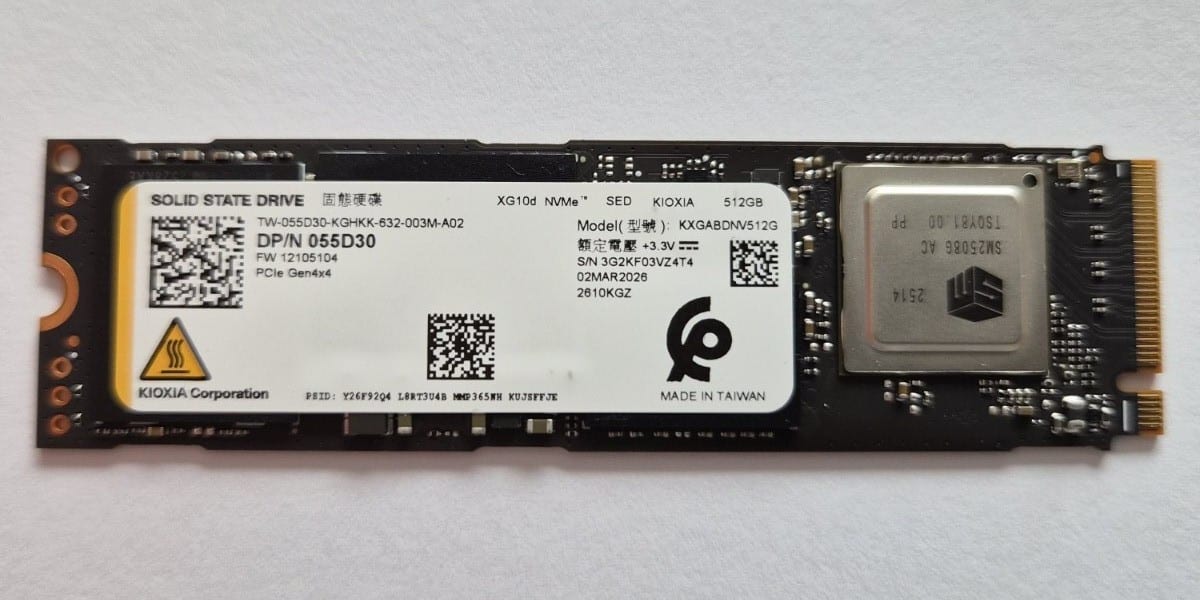
Nvidia+0.34% — Nvidia, up 0.34 percent today and Kioxia have demonstrated a rack of solid-state drives doing a job that until now belonged to high-bandwidth memory, and the market paid SanDisk+15.55% — SanDisk, up 15.55 percent today roughly $10.8 billion for it on Friday 12. SanDisk, which makes NAND flash in a manufacturing joint venture with Kioxia+8.86% — Kioxia, up 8.86 percent today, closed the shortened post-Thanksgiving session at $85.36, up 16% 12. Micron+7.24% — Micron, up 7.24 percent today, Western Digital+6.81% — Western Digital, up 6.81 percent today and Seagate+7.44% — Seagate, up 7.44 percent today each closed up 7 to 8 percent on the same news, while Nvidia, whose software made the demonstration possible, added less than 1% 3. Kioxia announced the collaboration on November 26; Friday's half session was the first US trading day to price it 3.
Nvidia's software makes the drives addressable memory
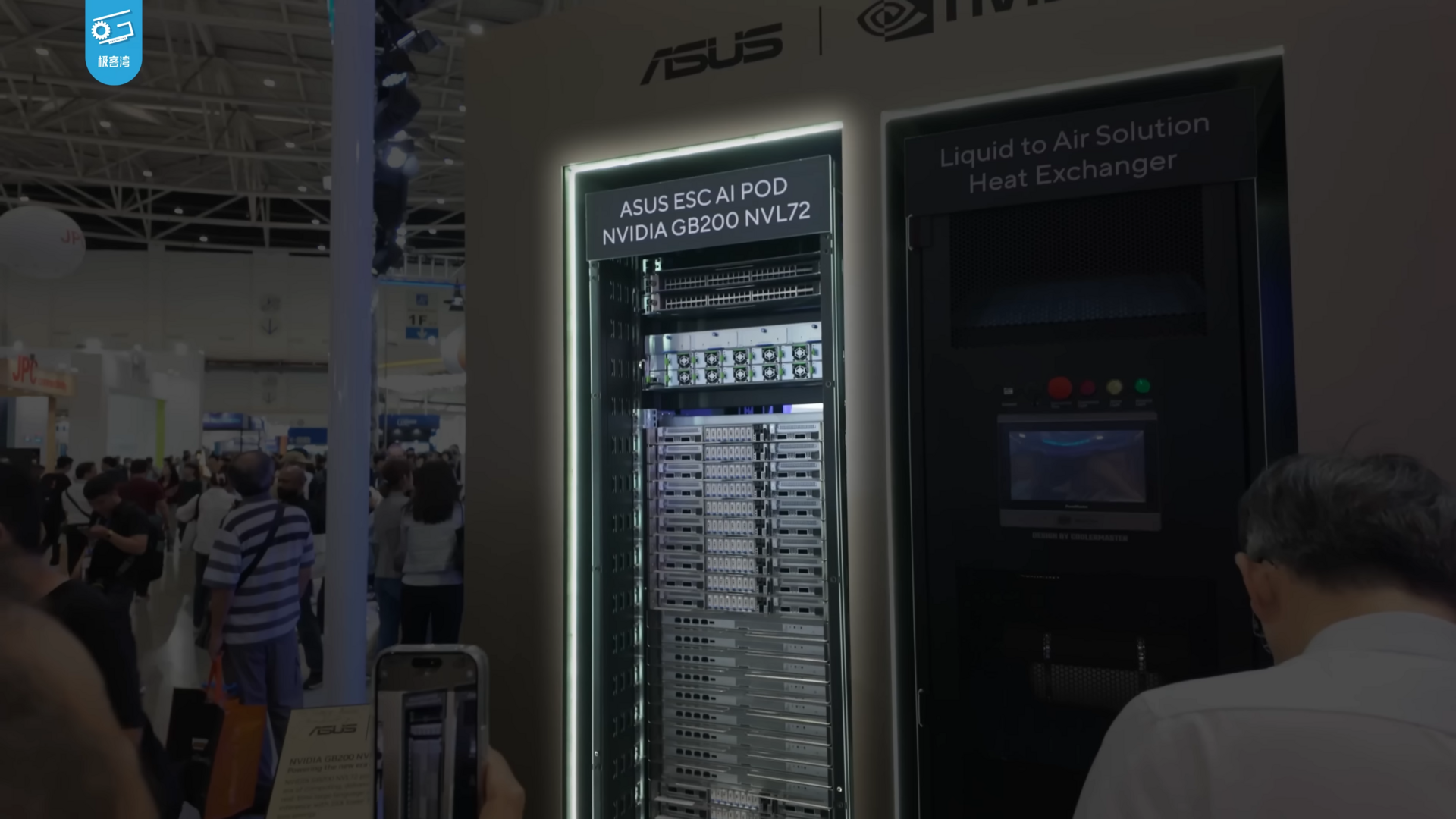
Here is the technical fact underneath the move. A GPU's usable knowledge is capped by its high-bandwidth memory, which is fast but small and expensive, so the usual workaround splits a large dataset into chunks and shuttles them between storage and GPU memory over and over. Nvidia's SCADA software, short for Scaled Accelerated Data Access, lets the GPUs in a GB200 NVL72 rack address NVMe drives directly as extended memory, in chunks as small as 512 bytes 4.
The demonstration ran 144 Kioxia XD8 drives inside one rack, about 1.1 petabytes of raw flash 45. In principle that architecture serves a database of two trillion vectors, the shape of the vector databases and graph datasets that strain HBM today 4. Nvidia's storage chief Jason Hardy put the use case plainly: the intelligence of AI agents will increasingly depend on the knowledge they can access, not just the compute power they consume 6.
Why the whole flash complex moved, not Nvidia
If flash becomes a qualified memory tier, every AI rack carries petabyte-scale enterprise NAND on top of its ordinary storage, and that is a demand leg the bear case does not model. GF Securities warned earlier this month that NAND could tip into surplus in 2027 as supply growth outruns demand, calling SanDisk the most exposed name because Micron and SK Hynix+6.62% — SK Hynix, up 6.62 percent today can lean on DRAM and HBM 7.
Friday's tape inverted that logic: Micron, the supposedly insulated name, rose alongside the pure-play flash makers 3. And nothing in the demo involves SanDisk's own product. The company moved because it shares wafer output with Kioxia, and because it entered the session down about 75% from its June peak, primed for anything that argues against the glut thesis 23.
Flash names repriced on the news; Nvidia barely moved
The market repriced the NAND complex, not the GPU maker whose software made the demo
Data
| Value | |
|---|---|
| SNDK | 15.96% |
| STX | 7.9% |
| MU | 7.6% |
| WDC | 7.22% |
| NVDA | 0.8% |
The gap is qualification, not capacity
Capacity is demonstrated; speed is not. The companies published no performance figures and say they are still evaluating technical feasibility, with no orders, pricing, volume or launch date attached 34. Flash is far slower than HBM, so the open question is whether fine-grained access over NVMe is fast enough for real inference workloads, and only a production qualification answers it. Kioxia is already building for that job, with a GP series of drives designed for direct GPU access 45. The link that now limits the outcome is not manufacturing but qualification: whether Nvidia or a hyperscaler certifies flash-as-memory in a shipping system.
Friday's gain buys an option, not demand
The direction is right, and it is good for adoption. An agent's usefulness is set by the knowledge it can reach, and flash attacks the memory wall from the cheap, abundant side of the industry. When we wrote in October that SanDisk and Kioxia had bet $31 billion on AI storage demand, with SanDisk owing half the fixed costs, that bet rested on forecast demand 3.
But a proof of concept is not a product, and Friday's rally priced the first as if it were the second. Watch for a qualification announcement. Until one lands, the glut thesis stands and this week's gains are the price of an option, not of demand.
Sources
- 1Yahoo Finance / GuruFocus, "SanDisk Stocks Jump 12.85% After Kioxia and Nvidia Stretch GPU Memory With SSDs", 27 November 2026
- 2The Motley Fool, "Why Sandisk Investors Are Giving Thanks After Thanksgiving", 27 November 2026
- 324/7 Wall St., "Kioxia Stock Has Soared 21% in Two Days After an Nvidia SSD Test", 27 November 2026
- 4EE Times Asia (article by Kioxia Corp.), "Kioxia, NVIDIA Demonstrate SSD-Based Extension of GPU Memory for AI Workloads", 27 November 2026
- 5TechSpot, "Kioxia and Nvidia demo 144 SSDs that expand GPU memory past 1 petabyte in a GB200 NVL72 rack", 26 November 2026
- 6HotHardware, "Kioxia And NVIDIA Tap 144 SSDs To Push AI GPU Memory Past 1 Petabyte", 25 November 2026
- 7Yahoo Finance / GuruFocus, "Micron and SanDisk Stocks Fall as GF Securities Warns NAND Glut Could Hit in 2027", 17 November 2026
Get Chips by email, free
How AI demand is reshaping chipmakers, memory and the fabs behind them. In our daily email, every weekday.

More about NVIDIA
NVDAFiscal Q2 2027Revenue rose 106% to $96.2B, 92.5% of it from Data Center, “driven by the ramp of our Blackwell Ultra infrastructure”. Gains on equity stakes of $7.8B lifted net income to $59.7B.
Show as a table
| Line | Value |
|---|---|
| Revenue | $96.2B |
| Gross margin | 75.0% |
| Operating margin | 66.2% |
| Net income | $59.7B |
| Hyperscale | $48.7B |
| AI clouds & enterprise | $40.3B |
| Data Center | $89.0B |
| Edge Computing | $7.2B |
| Gross profit | $72.1B |
| Cost of revenue | $24.1B |
| Other income | $7.8B |
| Operating income | $63.7B |
| Operating expenses | $8.4B |
| Tax | $11.8B |
| R&D | $7.1B |
| SG&A | $1.4B |


Reader comments
0 comments