Google DeepMind's Kohli promised a phase transition; the receipts are an RSA-1024 result and Antigravity posts
DeepMind's chief scientist for Google Cloud promised a glimpse of a "phase transition" in scientific discovery within weeks. The numbers behind it are already on the table: RSA-1024 cracks, an hour-long drug-design loop, and a blog cadence that funnels straight into Google Antigravity.
 Vincent Jiangthree-minute read
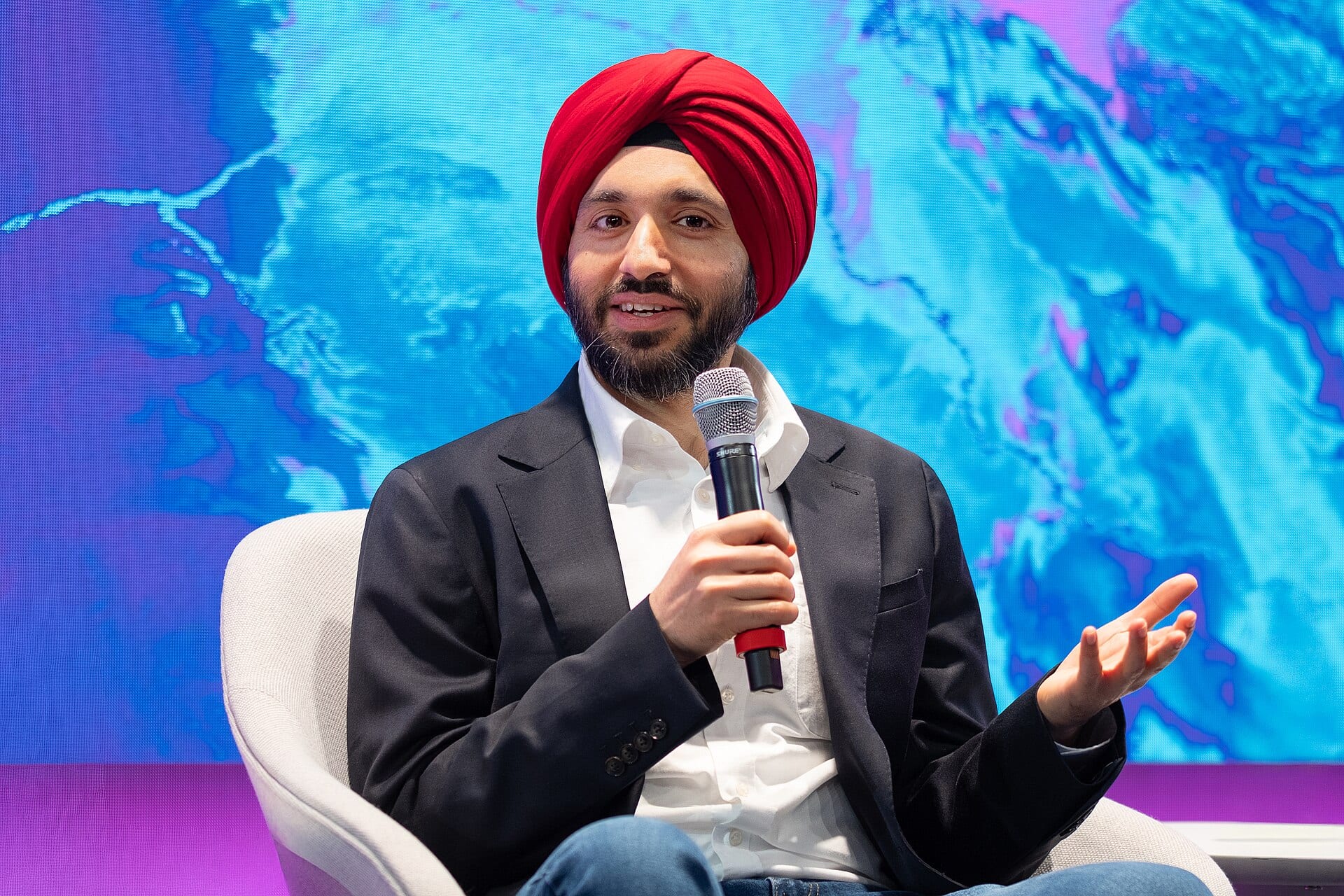
Pushmeet Kohli, a vice president at Google DeepMind and chief scientist at Google Cloud, posted on X at 10:15 UTC on November 8, 2026: "we are witnessing a genuine phase transition in the pace of scientific discovery 1. You will see a glimpse of this in our releases in the next few weeks" 1. The post named no release and no date, and it had 11,126 views when read that morning 1.
Hype accounts filled the silence within 24 minutes, one claiming Google's+1.01% — Google, up 1.01 percent today "internal models have been cooking something big"; that reading is the account's, not Kohli's 1. This is the first move since our October 28 report that DeepMind's Genie 4 shipped unpriced 3; what is new since is Kohli's post today, the November 6 RSA paper, and the Antigravity pattern under it.
The receipts are already public
Two days before the post, on November 6, DeepMind published research showing AI agents, steered by humans, found two weaknesses in legacy 1024-bit RSA, the retired encryption standard 2. The agents reproduced a signature-forging result with 3.5 times less CPU time than the earlier academic study, at under a thousandth of the compute needed to break the underlying key 2.
A new padding-attack algorithm improves on the best prior method by roughly 1,600 times for 1024-bit keys, and a new batch-factoring method cuts the average cost of factoring each additional 1024-bit key by about 30 times 2. Modern 2048-bit keys are unaffected, so this is a sandbox demonstration on obsolete systems, not a security event 2.
The pattern is cadence, and the products are walkthroughs
DeepMind's blog lists five Science-tagged posts since September 3, dated 3, September 8 and 30, October 15 and November 3: gaps of 5, 22, 15 and 19 days, a 17-day median by the publisher's arithmetic 1. Kohli's promise came five days after the latest one.
DeepMind's science cadence: gaps of 5, 22, 15 and 19 days between posts
The last five Science posts landed at a 17-day median gap
Data
| Value | |
|---|---|
| Sep 3 to Sep 8 | 5 |
| Sep 8 to Sep 30 | 22 |
| Sep 30 to Oct 15 | 15 |
| Oct 15 to Nov 3 | 19 |
Walkthroughs, not model launches
The tell is what the two latest posts actually are. Neither is a model launch. Both are walkthroughs of Google Antigravity, Google's agentic development platform. The October post says Antigravity compresses "a fragmented search over multiple databases into a single session," with its lead now in wet-lab validation 1.
The November post says drug design "typically takes multiple days for a single iteration," yet an agent proposes novel rigidified macrocycles with synthetic routes in an hour 1. AlphaEvolve, DeepMind's code-evolving agent, already beat a 56-year record this way: its method multiplies 4x4 complex matrices in 48 scalar multiplications, the first improvement on Strassen's 1969 algorithm 2.
Who pays, who benefits
Read together, the science is the funnel: enterprises get agentic workflows and pay Google Cloud for the surface and the compute, while labs selling raw model tokens compete on price. Kohli's profile carries both hats, DeepMind VP and Google Cloud chief scientist 1.
For Alphabet investors, the dated window is "the next few weeks" 1. The unprovable part is whether the coming releases are the model bombshell the hype accounts want, or more Antigravity walkthroughs; Kohli's wording supports only the cadence claim. The next Science post on the DeepMind blog settles it: a new model would vindicate the hype, another Antigravity walkthrough would confirm the funnel.
Get Model by email, free
The AI labs, their models, and the business behind them. In our daily email, every weekday.