Google's Gemini agents killed Minecraft's final boss for $520 in tokens; the rate doubles December 1
A Google DeepMind paper on four Gemini 4 Argon agents killing Minecraft's final boss carries an unusually complete invoice for frontier agent work: about $520 for a 27-hour shift at introductory prices, double from December 1. The cheapest kill on record belongs to Anthropic's model, which was handed its tools.
 Vincent Jiang · 3 min read
Four agents, 27 hours, one invoice
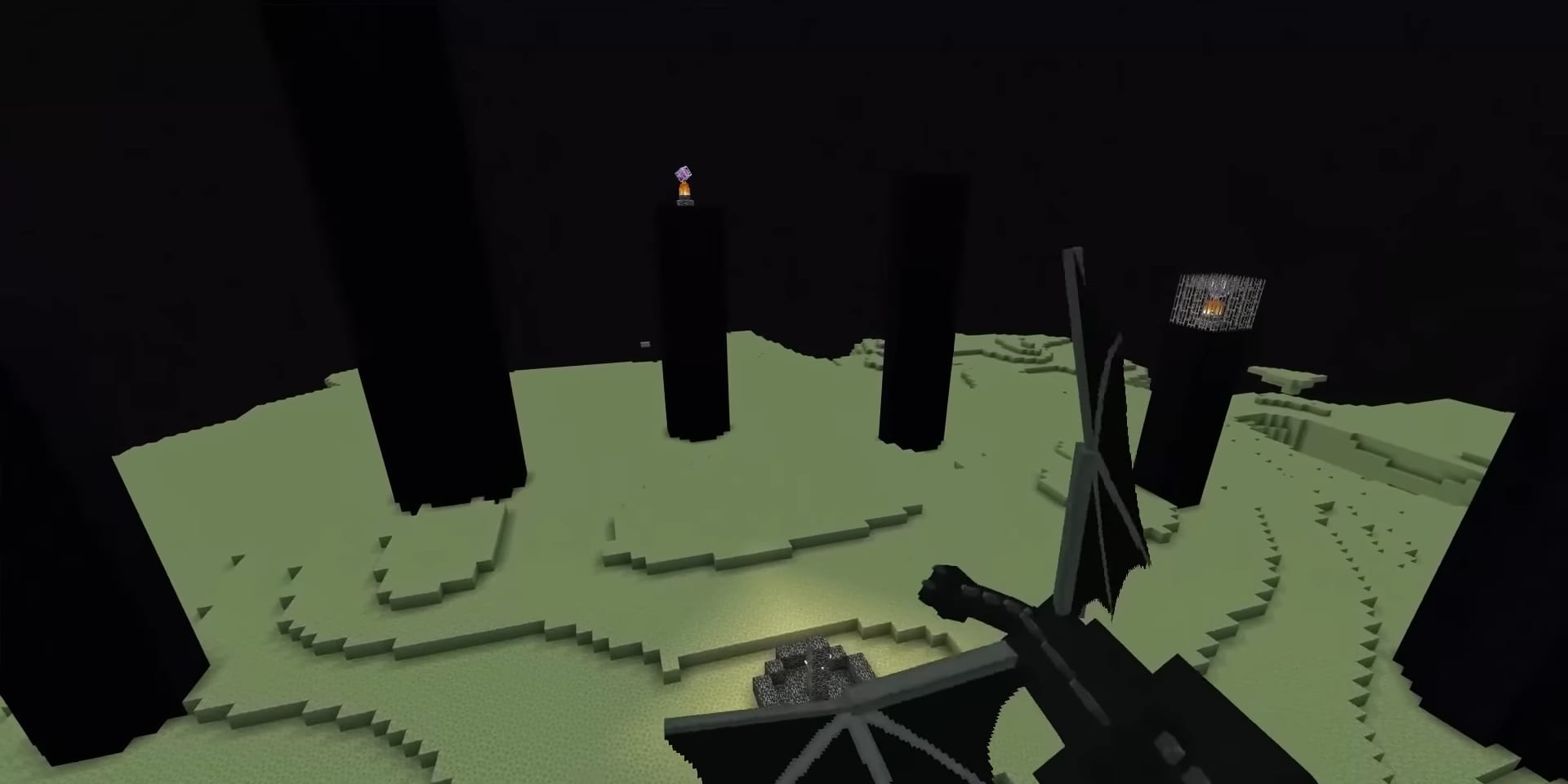
Four agents running Gemini 4 Argon, Google's flagship reasoning model and general-purpose coding agent, entered a random Minecraft survival world with one instruction: kill the Ender Dragon, the game's final boss 12. The dragon died 27 hours and 14 minutes later, per a Google DeepMind paper posted on arXiv, the preprint site, on October 15 by researchers Maxence Faldor, Satinder Singh and Roberta Raileanu 1.
The agents wrote all 2,783 of their programs themselves, traded 229 chat messages and died 605 times, and the researchers watching a live dashboard never had cause to intervene 13.
The invoice is the new part. The run consumed about 1.35 billion input tokens, 91% of them served from cache, across roughly 24,000 model calls, priced by the researchers at about $520 at Argon's introductory rate and $1,040 at the standard rate 45. Counting a fifth observer agent that watched for cheating and found none, the session ran about $810, or $1,620 45.
The cheap kill came with human-written tools
The record's cheapest dragon kill is not Google's−1.91% — Google, down 1.91 percent today. A community run on Anthropic's$350B — Anthropic, private, latest valuation $350B Claude Opus 5 killed the same boss in 3 hours 56 minutes, on 388 tool calls, one death and about $93 at API-equivalent rates, because it was handed 37 ready-made, high-level tools 5. OpenAI's$1.18T — OpenAI, private, latest valuation $1.18T GPT-6 Astra took about 24 hours on the game Portal in September, at $571 in tokens 5.
Google's agents were handed nothing beyond Mineflayer, an open-source bot library; they wrote every tool themselves, and 22% of those programs still threw errors 45. The cheapest run on record is also the one where humans had written the game logic.
Token bill per run: $93 with ready-made tools, $1,040 with none
- Estimate
Data
| Value | |
|---|---|
| Opus 5, Minecraft | $93 |
| Argon, Minecraft (intro) | $520 |
| GPT-6 Astra, Portal | $571 |
| Argon, Minecraft (list) (estimate) | $1,040 |
About twenty dollars an hour, until December 1
Every Argon rate doubles December 1: input, output and cache alike
- Introductory rate
- List rate from December 1
Data
| Introductory rate | List rate from December 1 | |
|---|---|---|
| Input per 1M tokens | $2 | $4 |
| Output per 1M tokens | $10 | $20 |
| Cached input per 1M tokens | $0.1 | $0.2 |
Spread each bill over its run time and the runs cluster: $93 across 3 hours 56 minutes is about $24 an hour, $571 across 24 hours is about $24, and $520 across 27 hours 14 minutes is about $19. No cited source quotes a per-hour rate; these are the stated costs divided by the stated run times.
From December 1, the Argon shift bills closer to $38 an hour 2. The promotional prices expire on November 30: input goes from $2 to $4 per million tokens, output from $10 to $20, and cache from $0.10 to $0.20 2. Cache is the quiet defense in the invoice, a twentieth of the input rate at either price, and 91% of tokens came from it 25. Uncached at the $4 list rate, 1.35 billion input tokens alone would cost about $5,400; the cache is what holds the bill at $1,040 5.
What the paper admits, and what Alphabet has booked
The paper concedes its limits: Mineflayer tells the agents where every block and creature stands, even behind solid rock; the world was on Easy; and the result is a single run 4. Deaths that cost nothing in a sandbox would not cost nothing in production, as TechRepublic frames it for enterprise buyers 6. The demand this invoice sizes is already booked: The Inference put Alphabet's cloud backlog at $514 billion in September 6.
Watch December, not the dragon
Argon left the lab this month. Google unveiled the model on September 30 to approved cyber defenders, made it broadly available on October 13, and the paid tier of the Gemini API now carries it for everyone 278. Google sells it for software engineering, financial analysis, legal work, cybersecurity and scientific research 7.
The dated test is December 1, when the introductory rate expires and the same Minecraft shift bills about $38 an hour at list prices. Whether Alphabet's next cloud report, the first to carry usage billed at December's rates, shows agent demand holding is the reading that decides it.
The daily newsletter