Perplexity claims $1 billion of revenue on five times less spend than Anthropic's $1.4 trillion IPO
Perplexity says it hit $1 billion in recurring revenue on a fraction of Anthropic's spend, three days before Anthropic prices a $1.4 trillion IPO on the opposite assumption. Whose economics hold will only be settled by a filing Srinivas now says could come in early 2027.
 Richard Tangtwo-minute read
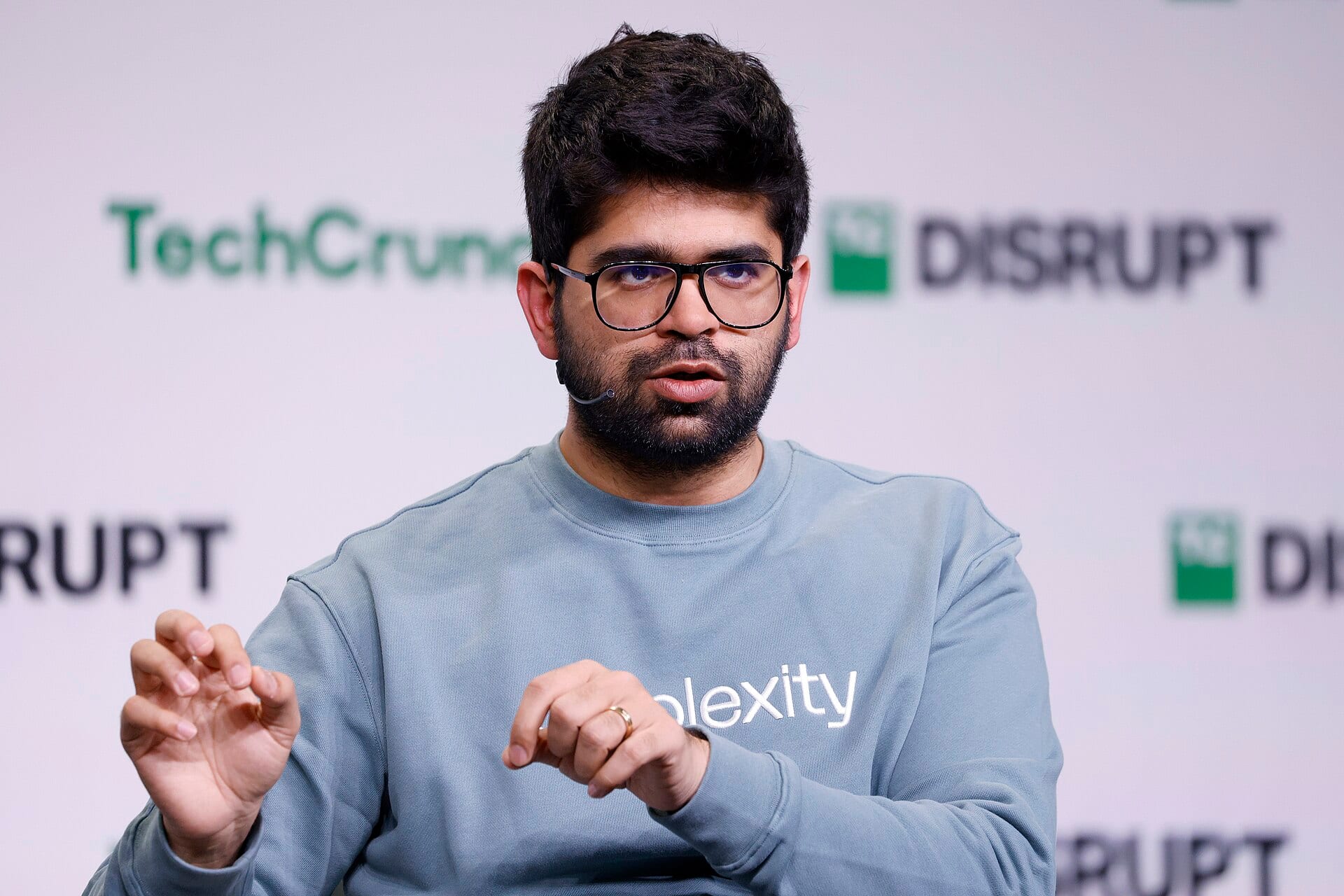
Aravind Srinivas picked the loudest week of the AI year to stop being quiet about money. On November 16, at Semafor's conference, and again on CNBC, Perplexity's$30.00B — Perplexity, private, latest valuation $30.00B co-founder and CEO said the company had passed $1 billion in annual recurring revenue, beating the $750 million target it set for the end of 2026, and that it got there spending about five times less than the company going public that week 13. That company is Anthropic$350B — Anthropic, private, latest valuation $350B, which prices its Nasdaq debut on November 19 at roughly a $1.4 trillion valuation 2.
The two claims rest on opposite assumptions about how AI makes money. Anthropic's price assumes scale demands vast spending on owned compute and frontier training. Srinivas's number assumes the opposite: rent the intelligence, buy the distribution, keep the margin. Perplexity routes work across Anthropic, OpenAI$1.18T — OpenAI, private, latest valuation $1.18T and Google models 1, and paid for reach with a free Pro year through Airtel's 360 million subscribers in India, now its largest market 4, and about $400 million in cash and equity for Snapchat−0.45% — Snapchat, down 0.45 percent today distribution 1.
Every Anthropic call Perplexity sells also pays Anthropic
Here is the part the headline hides: every Claude call Perplexity sells also earns Anthropic money 1. Its suppliers run competing products and set its costs. The five-times-lower-spending line came without a cost breakdown, and no margin has been published 3.
What has been published is spend that looks like distribution, not advantage: a $750 million Azure agreement with Microsoft 25, and, announced the same day as the revenue milestone, more than 10,000 GPUs committed to Frontier Research, its bid to build an autonomous AI scientist 6. Perplexity is spending to stop being a reseller, which is exactly the position its cost claim quietly depends on escaping.
A 2027 filing puts audited numbers behind the claim
The test is already scheduled. Srinivas said he would not rule out filing in the first quarter of 2027, a year earlier than the 2028 target he gave in June 25. Nvidia's−2.79% — Nvidia, down 2.79 percent today reported talks to invest above a $30 billion valuation now sit on that filing 3.
If the numbers reach a prospectus, investors finally get audited answers to the question this week was really about: whose economics does AI scale reward? Until then, that cheap route to a billion is a claim, not a fact 3. Start learning to read these filings now; the gap between a milestone and audited financials is where the money is decided.
Get Model by email, free
The AI labs, their models, and the business behind them. In our daily email, every weekday.



Reader comments
0 comments