Kaiser's 1,200-scan trial found AI echo drafts matched clinicians and halved read time
The Permanente Medical Group ran the randomized trial of EchoPrime itself and found the AI drafts matched clinician drafts while cutting cardiologist read time nearly in half. Days later it launched Permanentech, its own vehicle to commercialize clinical AI, so the buy-or-build question just got a benchmark.
 Richard Tangthree-minute read
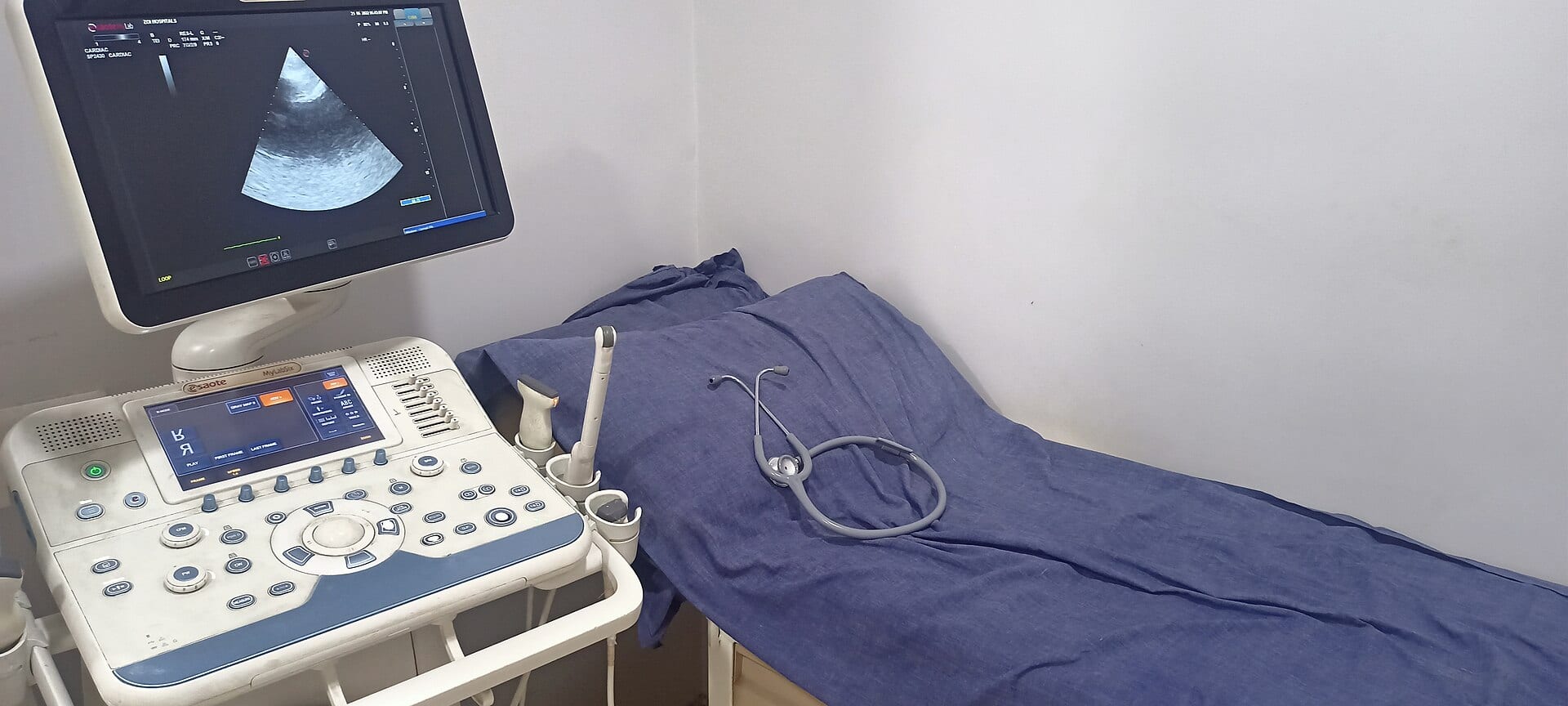
The Permanente Medical Group, Kaiser Permanente's 10,000-doctor group, funded and ran the trial itself: 1,200 echocardiograms from 21 Northern California centers, each read by a sonographer, a cardiologist and EchoPrime, an AI model licensed to InVision Medical Technology 1. Blinded cardiologist overreaders made substantial changes to half the AI drafts and half the clinician drafts, meeting the trial's noninferiority bar 1. David Ouyang, the Kaiser Permanente cardiologist behind the model, is now preparing the FDA clearance needed to deploy it in practice 5.
Parity on accuracy, decisive on time
Accuracy is not the money here; seconds are. A cardiologist finalizing a report from an AI draft spent nearly half the time of reading with no draft at all 1. And the AI draft does what no human draft can do for free: it erases the nearly ten minutes a sonographer spends writing the preliminary interpretation before a cardiologist ever looks 1. Echo demand keeps climbing as the population ages while the imaging workforce stays the same size, and Ouyang says that backlog, not accuracy, is what motivated the trial 5.
Any preliminary draft roughly halves the cardiologist's read time
Data
| Value | |
|---|---|
| No draft | 507 sec |
| Sonographer draft | 282 sec |
| Cardiologist draft | 276 sec |
| AI draft | 274 sec |
The caveats are the price list
The trial was not powered to show any effect on patient outcomes, the AI was inferior to cardiologists reading alone, and overreaders guessed which interpreter wrote a draft barely better than chance 1. None of that kills the model. It prices it: EchoPrime is validated as a drafting tool whose final read a cardiologist still owns, not a replacement 15.
Models do not travel, validated deployments do
The same week, Kaiser's research division published 49 models that predict pregnancy complications from routine medical records for roughly 443,000 pregnancies, and showed the models lose accuracy when moved to a nationwide dataset until they are locally adapted 26. That is the pattern for clinical AI: models do not travel, validated deployments do.
The value lands with whoever owns the read layer
No listed company sells EchoPrime; it is Cedars-Sinai intellectual property licensed to the private InVision Medical Technology 5. The value lands with whoever holds the read layer: the integrated operator banks a labor line per scan and can cap what it pays vendors, because it has now proven it can trial a vendor's model in its own halls and publish the result 1. Permanentech, the wholly owned innovation company TPMG launched this week to partner with outside AI developers and build physician-created tools, is the hedge on both sides of that trade 34.
The model gets the headline. The validation pipeline gets the margin. Kaiser has just shown it can test the best outside model against its own clinicians, and that it intends to own the pipeline that makes such tests possible.
Get Health by email, free
AI in medicine, pharma and biotech. In our daily email, every weekday.



Reader comments
0 comments