Motorola Solutions' memory bill of $150 million to $160 million could double in 2027, testing margin promises
The November 4 call put a number on it: the memory inside police radios cost about $150 million to $160 million this year and could double in 2027, just as management promises margins keep rising on its first 2027 revenue figure of about $14.25 billion.
 Vincent Jiang · 3 min read
The memory inside the radio now has a landlord
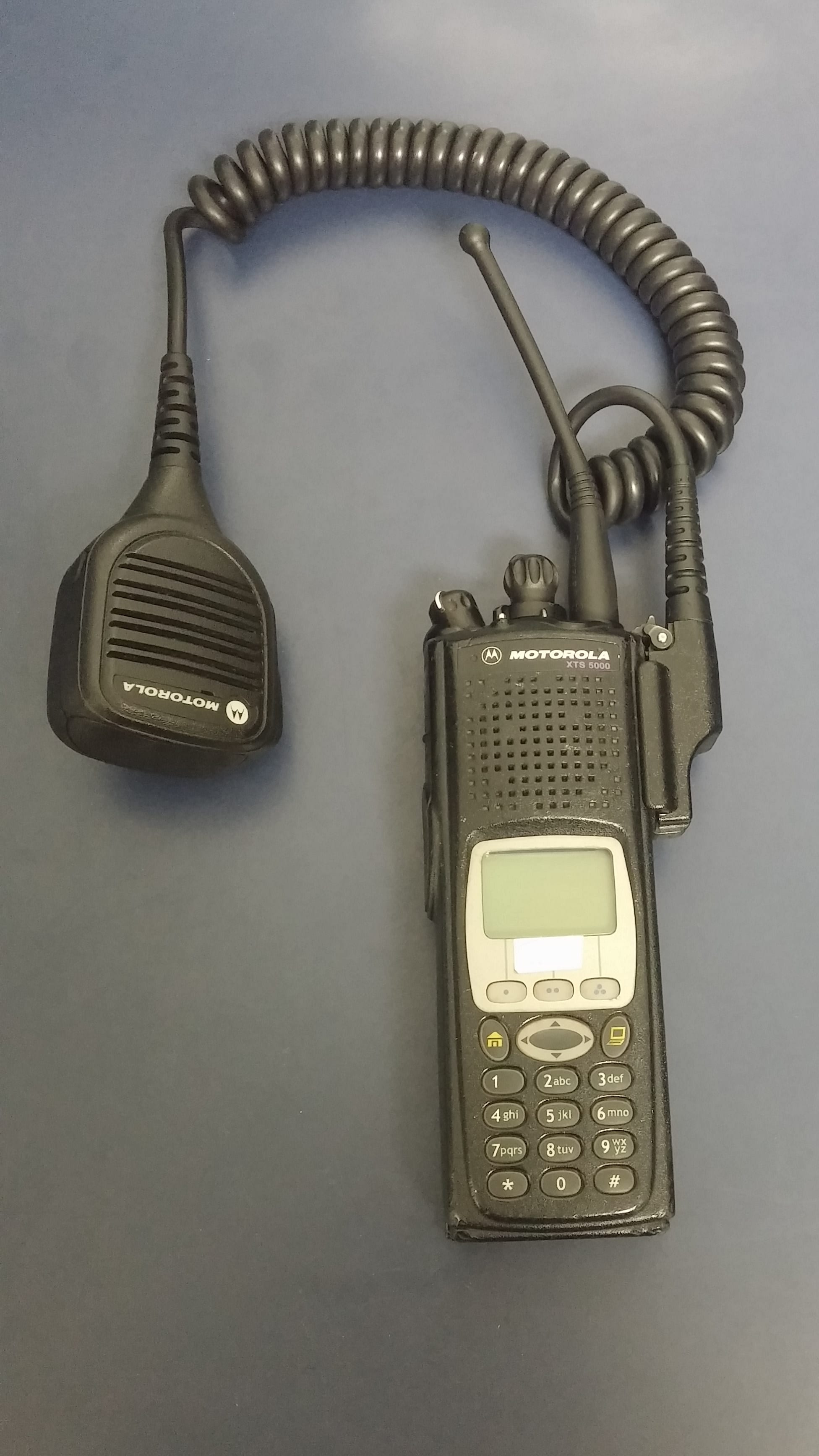
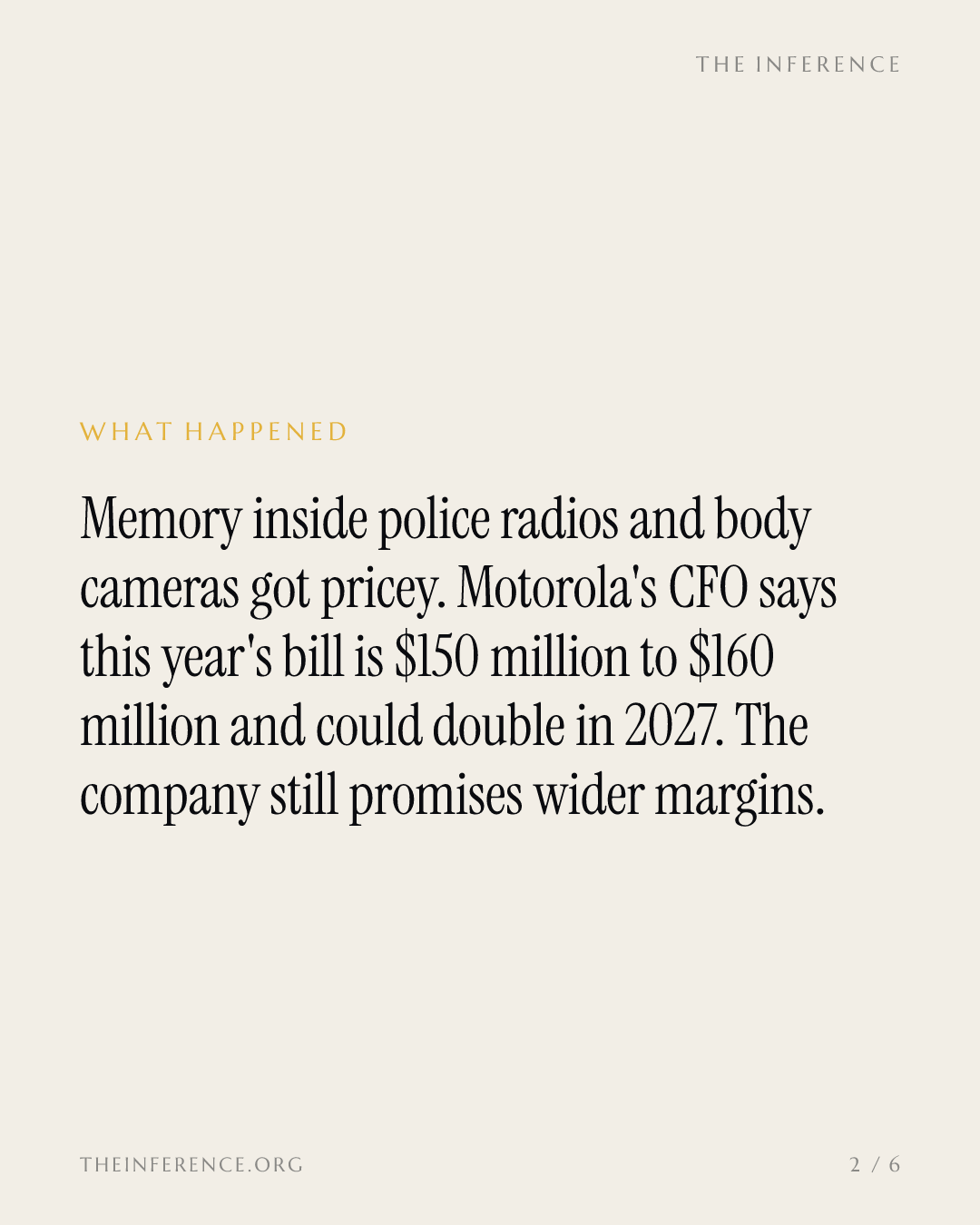
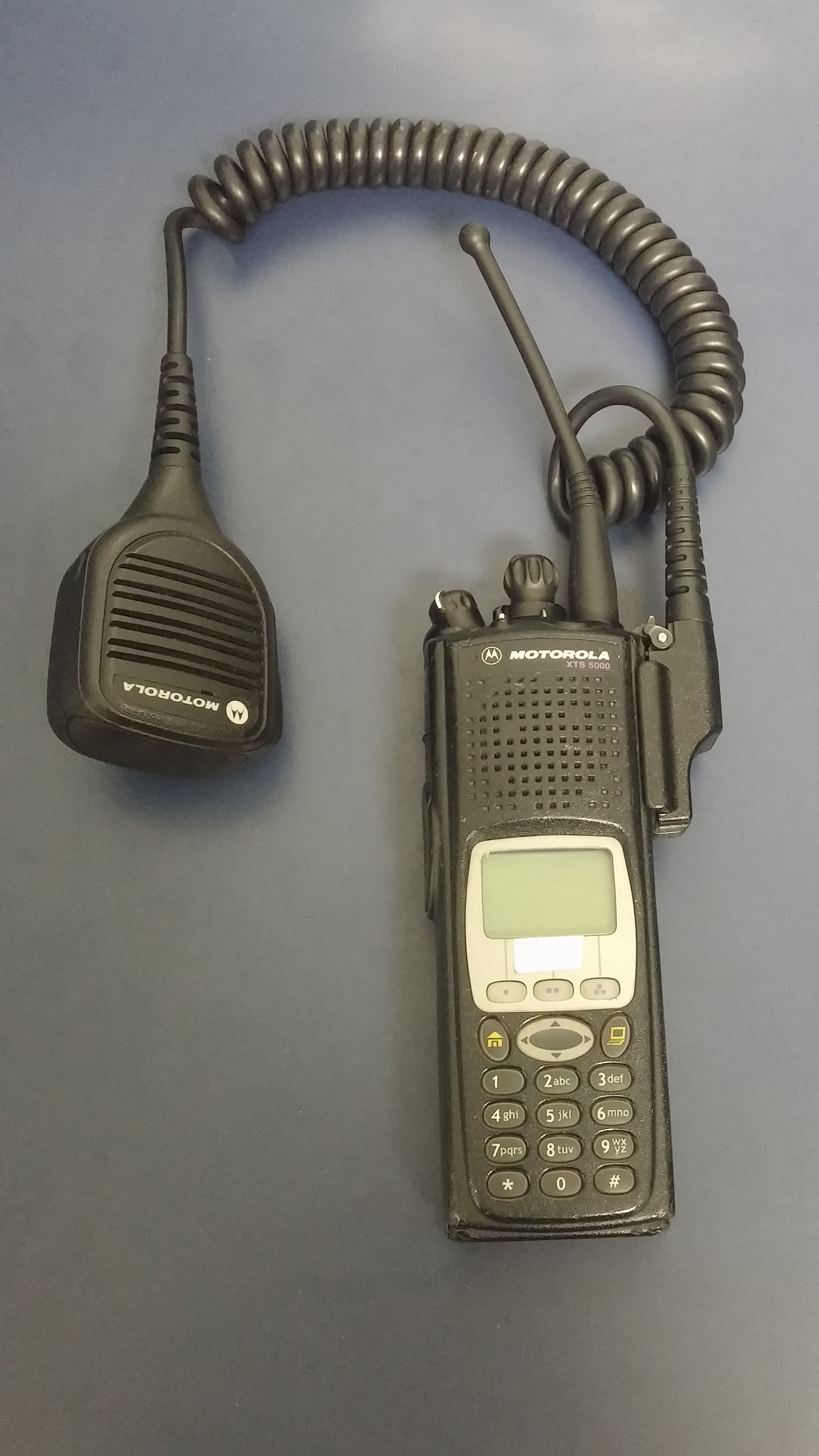
The most revealing number in Motorola Solutions'−0.43% — Motorola Solutions, down 0.43 percent today otherwise record third quarter did not appear in the press release. It came on the November 4 earnings call, when CFO Jason Winkler priced the company's memory bill: about $50 million of direct memory components in 2025, roughly $150 million to $160 million this year, and a figure that "could effectively double" in 2027 1. That is the cost of the DRAM inside police radios and body cameras, repriced by the same AI data-center buildout the market pays Motorola Solutions to be adjacent to.
The quarter itself was flawless. Sales hit $3.376 billion, up 12%, with double-digit growth in both segments and all three technologies 2. Orders set a Q3 record, backlog reached an all-time high of $16.6 billion, up 14% year on year, and management raised full-year guidance for the third time, to about $13.05 billion of revenue and $17.94 to $17.99 of adjusted EPS 12.
Growth you bought, not growth you grew
Here is the complication the headline hides. Acquisitions contributed $211 million of the quarter's revenue growth; on the company's own reconciliation, organic revenue rose just 5% 3. The Silvus tactical-networking business, bought for its defense and drone demand, ran to nearly $300 million in Q3 and is expected to clear $900 million for 2026, with about 30% growth pencilled in for 2027 1.
More than half the quarter's growth came from things acquired, not built. The stock closed November 5 at a one-year high of $517.01, up 4.0% on a day the S&P 500 fell 4.4%, and trades at about 41 times trailing earnings against 22.9 for the index 5.
The memory bill: $50 million, then $150-160 million, then the CFO says it doubles
From $50M in 2025 to a $150-160M range in 2026, then the CFO says it doubles
- From
- To
Data
| From | To | Change | |
|---|---|---|---|
| 2025 | $50 | $50 | 0.0% |
| 2026 | $150 | $160 | +6.7% |
| 2027E (derived) | $300 | $320 | +6.7% |
The math on the 2027 promise
The same call carried management's first frame for 2027: roughly $14.25 billion of revenue, organic growth stronger than in 2026, and further operating margin expansion, even as memory costs double 1. Run the bill forward and the doubling adds roughly $150 million of annual cost, about 1% of sales, which margin must absorb alongside the loss of a $75 million IEEPA tariff-refund benefit booked this year and not expected to repeat 12.
Management's cushion is real but thin. The CFO says higher memory costs have been met by qualifying additional suppliers, adjusting some sales prices and favorable mix, and non-GAAP operating margin still expanded 200 basis points to 32.5% this quarter 1.
The pressure is industry-wide, not company-specific. Memory contract prices rose nearly 20% in Q3 alone as AI demand outran supply, and Bernstein expects shortages to stretch into 2027 6. A hardware maker selling into public budgets, where state and local agencies fund most of the business, cannot reprice like a software company, though management notes backlog carries long-term service attach and DHS is funded through 2029 1.
What the other side says
The bull case is simply the backlog. Record orders across all three technologies, a D-Fend counter-drone acquisition funded with $950 million of new notes, and a $2 billion buyback increase argue demand is durable and capital is returning 23.
The bear case is valuation on a Q4 revenue guide that landed 1.3% below consensus, growth increasingly rented rather than organic, and a margin promise resting on mitigation working exactly as planned 4. Both can be right through February, when the formal 2027 outlook arrives 4. At 41 times earnings, that outlook is the first test of whether the margin promise survives the memory bill 4.
Get Chips by email, free
How AI demand is reshaping chipmakers, memory and the fabs behind them. In our daily email, every weekday.