NORAD confirms an AeroVironment laser now guards Mar-a-Lago as the stock sits near a 52-week low
The Secret Service asked for the layer, and the Army has already bought the production run behind it. AeroVironment still trades near a 52-week low, priced for one paused Space Force contract while its counter-drone line compounds orders.
 Richard Tangthree-minute read
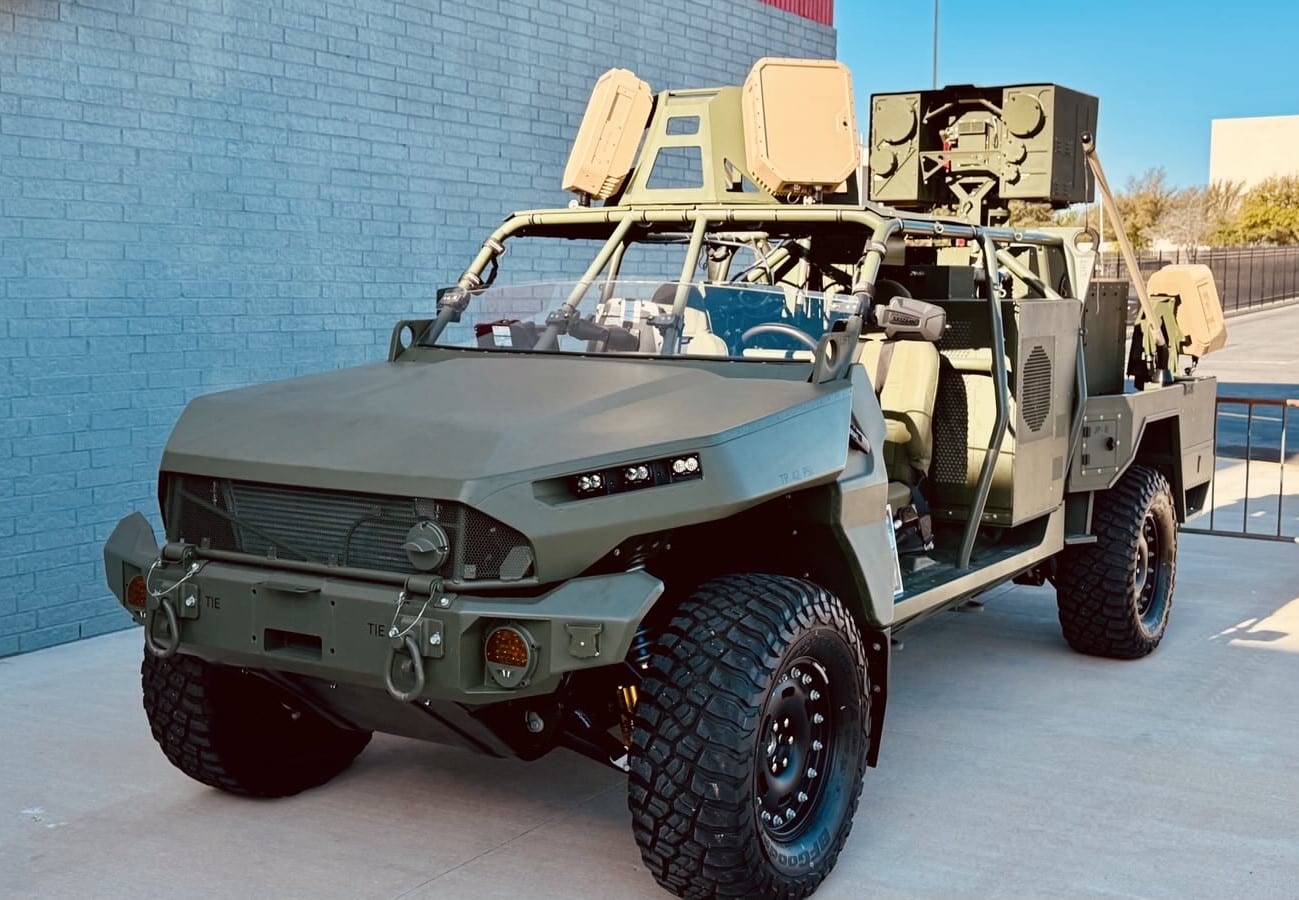
A LOCUST counter-drone laser built by AeroVironment−2.73% — AeroVironment, down 2.73 percent as of its last quote (NASDAQ: AVAV) now guards President Trump's Mar-a-Lago estate, and the US military has confirmed it 12. Coverage has treated the deployment as a security spectacle; it is better read as a demand signal the market has ignored. The stock closed Friday at $112.76, near a 52-week low 36.
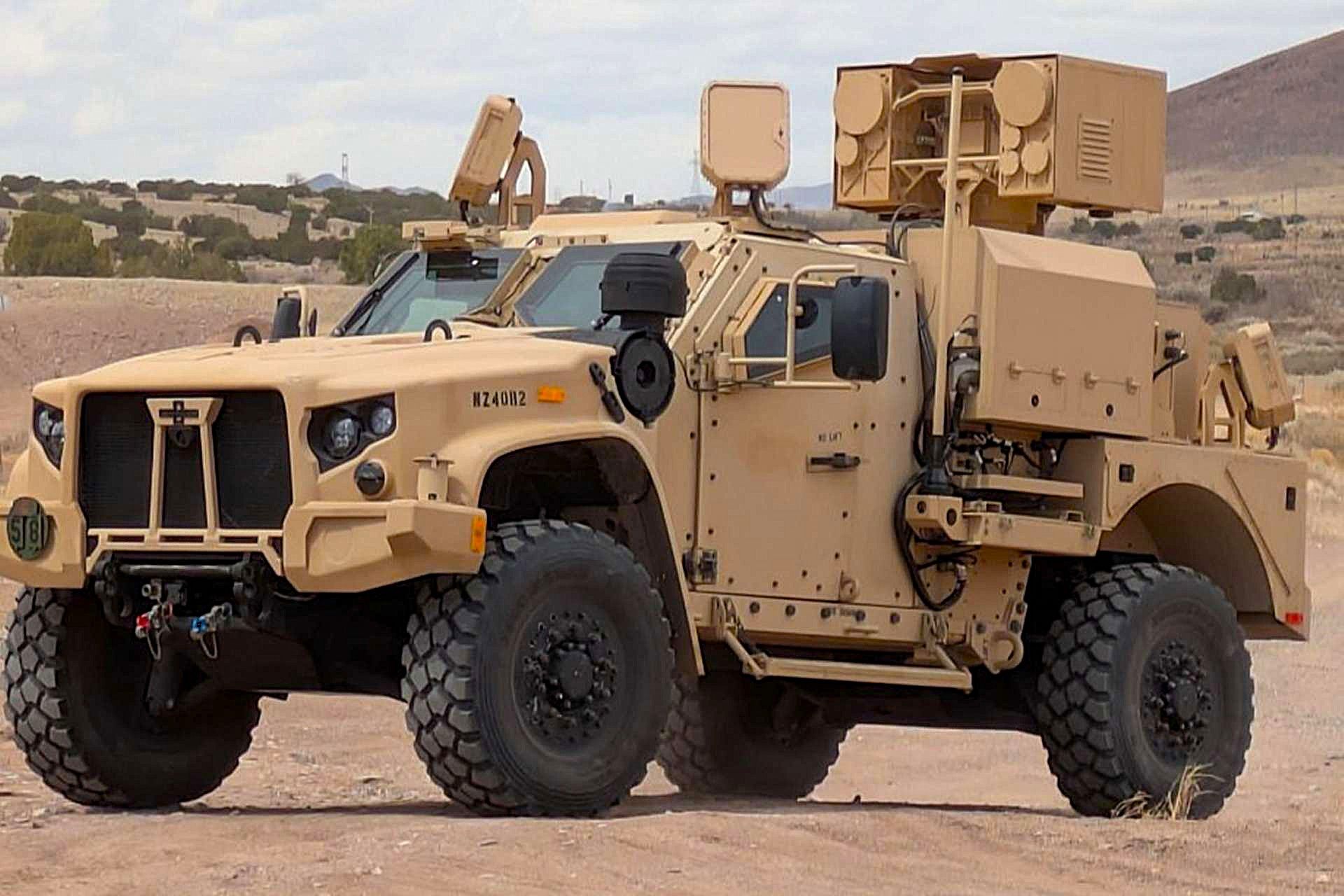
The Secret Service requested the layer. NORAD, the joint US-Canada air defense command, and US Northern Command, the military command responsible for defending the US homeland, confirmed the deployment, and photographs show the laser mounted on a Joint Light Tactical Vehicle, an Army light truck, working alongside missile launchers, radar and jammers 124.
A $10 shot is why a laser can sit in Palm Beach
LOCUST pairs a turret laser with AI-driven sensors that find, track and engage aerial targets largely on their own, and AeroVironment says a shot costs under $10, against interceptor missiles that cost millions 14. That asymmetry is why this weapon can sit between palm trees in a residential town: a missile intercept rains shrapnel over Palm Beach, and a laser does not 2.
By photo identification, the unit is the 20-kilowatt Army version delivered in late 2025 2. Neither the commands nor AeroVironment have confirmed the variant, and the X3 now entering production is the larger 30-kilowatt model 2.
Nine months from a Texas test to domestic airspace
The binding constraint was never the laser; it was permission to fire one at home. A test shot shut El Paso's airspace in February. In April the Federal Aviation Administration and the Pentagon signed the agreement clearing this laser family for domestic airspace, and in October the Pentagon picked it for a year-long pilot at US bases 24.
The safety case rests on the beam's automatic cutoff, which stopped it at White Sands when an airliner strayed into its track 2. No agency has said in public whether that agreement covers a laser parked under an approach path, with airliners passing overhead daily 2.
The taxpayer funds the shield and the arsenal
The taxpayer pays on both ends of this deployment. The Secret Service requested the protective layer, and in September the Army bought the arsenal behind it: about $464.8 million for dozens of the larger X3 systems, the first US production contract for a high-energy laser weapon 124. The line is compounding rather than pausing: days later, AeroVironment took its first international LOCUST order, worth more than $50 million 5.
The market prices one paused contract, not the record backlog
Against that ledger, the stock chart looks disconnected. Last quarter's revenue set a first-quarter record at $480.5 million 56. The funded backlog hit a record $1.5 billion, and management reaffirmed full-year guidance 56. Even after Friday's bounce the shares remain down about 69 percent for the year 8.
The selloff runs through one contract: a paused $1.7 billion Space Force satellite-communications award tied to BlueHalo, the defense-tech firm whose acquisition closed on May 1, 2025, and roughly doubled AeroVironment's quarterly revenue 7810. Analysts at investment bank Raymond James−0.58% — Raymond James, down 0.58 percent as of its last quote cut the stock to Sell over it 7. Private money pays up for the other end of the drone market: Zipline, the delivery-drone company, just raised at a $21.5 billion valuation, with private shares that have roughly tripled in a year 8.
Revenue has stayed above $400 million in every quarter since BlueHalo closed
The operating line never broke; the market priced a break anyway
Data
| Quarterly revenue | |
|---|---|
| Q3 '23 | $180.82M |
| Q4 '23 | $186.58M |
| Q1 '24 | $196.98M |
| Q2 '24 | $189.48M |
| Q3 '24 | $188.46M |
| Q4 '24 | $167.64M |
| Q1 '25 | $275.05M |
| Q2 '25 | $454.68M |
| Q3 '25 | $472.51M |
| Q4 '25 | $408.05M |
| Q1 '26 | $641.62M |
| Q2 '26 | $480.49M |
The paused Space Force award is worth about three times both laser orders combined
Data
| Value | |
|---|---|
| Space Force satcom (paused) | $1,700M |
| Army X3 production | $464.8M |
| International LOCUST order | $50M+ |
The funded backlog decides whether the market priced the wrong story
The deployment is a confirmed fact; follow-on orders are still projection. The chain runs one way: automated targeting and the beam's cutoff earned the safety case, the safety case opened domestic airspace, and domestic airspace just produced the most public customer a counter-drone company could ask for. Watch the funded backlog: if it keeps growing while the Space Force contract stays paused, the market priced the wrong story.
Get Robotics & Defense by email, free
Robots, self-driving vehicles, drones and AI in defense. In our daily email, every weekday.