Parcha's Greptile bill passed $7,000 a month, so it built an 18-cent reviewer and open-sourced it
The bill is the first customer-published measure of what usage-priced AI code review costs when agents write the pull requests, and it landed the week Cohere bought the reviewer ranked above Greptile on an independent leaderboard. The money at stake is Greptile's $750 million mark and every seat-priced review vendor's renewal.
 Richard Tangthree-minute read
Greptile's customers pay a dollar a review, and this week one of them published the bill. In December Parcha paid $180 a month for the AI agent that reviews its pull requests 1. Its own coding agents then began opening more of those pull requests. October's bill ran $6,451, and November has already passed $7,000 1.
Instead of paying, Parcha, a YC-backed agent platform whose site now announces a rename to Grep AI 5, open-sourced AgentRun, an Apache-2.0 platform, and built a reviewer on a cheap model that costs about 18 cents a review 13. The launch drew 138 points on Hacker News this week 4.
A meter that grows with your own agents
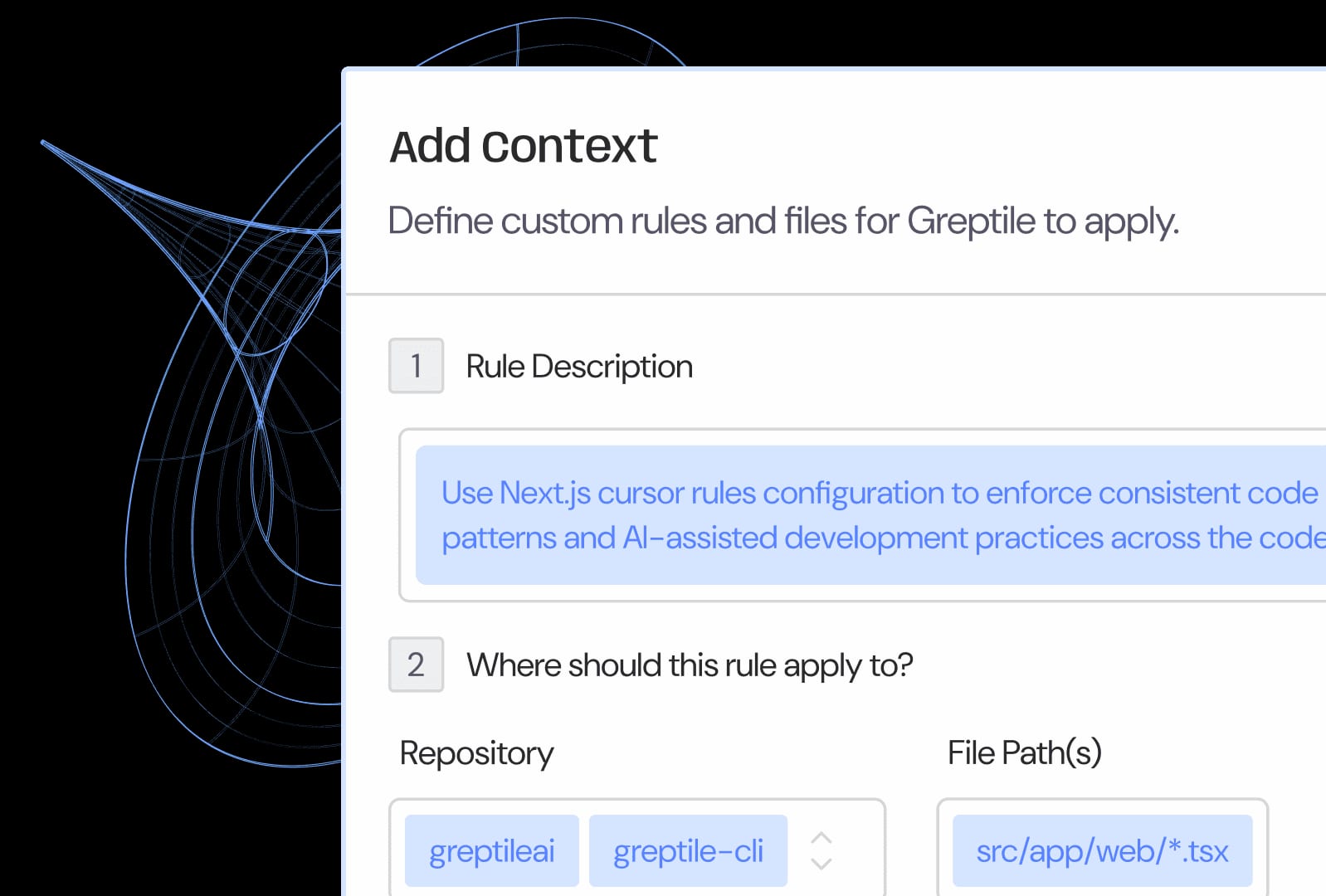
The meter itself is not new; we covered it last week 6. Greptile's Pro plan charges $1 per credit, one for a standard review and ten for a review of a large change, with no seat fees 5. The company says it reviews more than 1% of all pull requests opened on GitHub daily for customers including Nvidia−4.27% — Nvidia, down 4.27 percent today and Coinbase−6.77% — Coinbase, down 6.77 percent today 6.
What is new is the receipt. Usage pricing scales with the pull-request volume a coding-agent rollout creates, so the bill compounds with the customer's own automation, and Greptile's answer is that price tracks the tokens a correct review needs 6. Parcha's answer is to take the tokens off the meter.
Parcha's Greptile bill grew 36x in ten months
- Monthly Greptile bill
- Estimate
Data
| Monthly Greptile bill | |
|---|---|
| December | $180 |
| October | $6,451 |
| November to date (estimate) | $7,018 |
Eight cheap reviewers under a verifying parent
Parcha's replacement is a parent agent that dispatches eight reviewers over a read-only checkout of each change: five quick readers of the whole diff and three deep readers of the risky parts. The parent verifies every finding against the code and posts a comment-only review that never approves 1. Access, not model size, was the bottleneck: with only the diff, the cheap model was wrong about 70% of the time 1. Given read-only shell on the repository, that error rate fell to 7% 1.
On the 30 pull requests Parcha held out of tuning, its reviewer caught 42% of real bugs; Greptile caught 26% 1. Of the 8 serious bugs, Parcha's caught 5 and Greptile 1 1. The caveats are real: Parcha's own repository, its own pooled answer key of 78 bugs, and no false-positive comparison, so 5 versus 1 is suggestive, not settled 1.
Parcha's tuned reviewer caught more of Parcha's real bugs than Greptile did
- All real bugs caught
- Serious bugs caught
Data
| All real bugs caught | Serious bugs caught | |
|---|---|---|
| Parcha AgentRun | 42% | 62.5% |
| Greptile | 26% | 12.5% |
The independent leader just joined a $25 billion buyer
The ground moved the same week. Martian's independent leaderboard ranked cubic first at 64.9% F1 as of October 6, ahead of Greptile, CodeRabbit and GitHub−0.70% — GitHub, down 0.70 percent today Copilot, though cubic does not name the models behind its score 7. Cohere bought cubic on November 13, with terms undisclosed 78. It came days after a Series E that values the company at about $25 billion 7. Greptile had raised $50 million from Menlo Ventures in October 6. The round marked it at $750 million 6.
The value moves to whoever earns merge-time trust
Greptile's own logic makes its revenue track inference cost and pull-request volume 6. A customer has now shown that the product can be rebuilt on a cheap model tuned to one repository, for a fraction of the price 1. What a managed reviewer still sells is cross-repo context and the confidence to let it gate a merge, which is where the margin now lives 5.
The recipe is public, so the question for Greptile's investors is whether $1 a review holds once every agent-heavy team can tune its own reviewer, and the seat-priced holdouts should ask the same of their seats. Parcha built the missing link between a cheap model and a reviewer a team will trust, and gave it away. On this chain, the builder who turns the capability into something people rely on is the one creating the value.
Get Platforms by email, free
The cloud, data and developer software AI is built on. In our daily email, every weekday.





Reader comments
0 comments