S&P lifts SanDisk and Kioxia to BBB as Oracle sits one notch above junk on a $42 billion cash deficit
Within 48 hours, S&P lifted SanDisk into investment grade and raised Kioxia a notch, while Oracle sits at BBB- on a free-cash-flow deficit the agency models at $42 billion for fiscal 2027. The memory makers sell into the same boom for cash today; Oracle borrows against payments that start in 2027.
 Vincent Jiang · 3 min read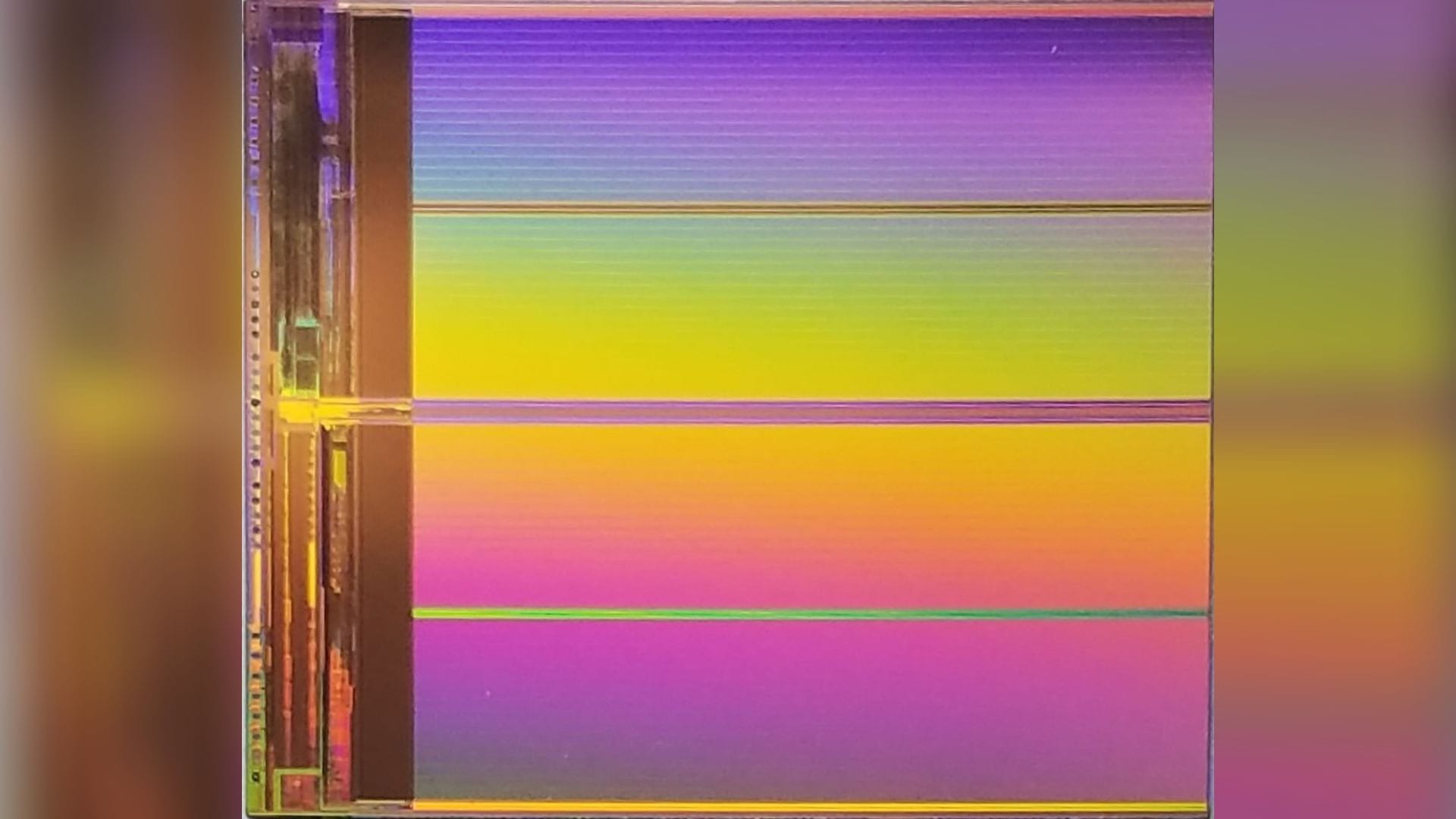
Two upgrades in 48 hours, one cut since July
On October 12, 2026, S&P Global Ratings$123B — S&P Global Ratings, private, latest valuation $123B raised SanDisk, the Nasdaq-listed NAND flash maker, to BBB from BB+, the single step from speculative grade into investment grade, on AI-driven demand for memory 1. A day later it raised Kioxia, the Japanese NAND and solid-state-drive supplier, from BBB- to BBB with a positive outlook 2.
The same agency has held Oracle+2.08% — Oracle, up 2.08 percent today, the software and cloud company borrowing to build AI data centers, at BBB- since July 9, one notch above speculative grade 3. Moody's+4.37% — Moody's, up 4.37 percent today, the other major rating agency, carries Oracle on negative outlook 3. The memory makers are paid as chips ship; Oracle's largest contract begins paying in 2027.
The notch decides who can hold the bonds
A further cut, to BB+, would automatically remove roughly $120 billion of Oracle bonds from investment-grade indexes, forcing sales by funds restricted to investment-grade paper, according to a Seeking Alpha analysis 4. The mechanism matters more this month: The Inference reported on October 15 that the market funding AI data centers with debt has frozen.
The mirror image lifted SanDisk. Revenue rose 175% in its fiscal 2026, it repaid all of its funded debt, and S&P projects free cash flow above $23 billion for fiscal 2027 1. Kioxia has run net cash since mid-2026 and is moving toward multiyear supply agreements covering about half its shipments by 2028 2.
Oracle borrows now, collects from 2027
Oracle guided fiscal 2027 capital spending to $90–95 billion, near $70 billion net of customer prepayments 54. S&P lifted its own forecast for that spending almost 60%, from $60 billion to $95 billion, after talks with management, and said it is "playing catch up" 6. The agency models Oracle's free-cash-flow deficit widening to $42 billion in fiscal 2027, after a burn of nearly $24 billion in the year ended May 2026 35.
From late 2025 the gap between Oracle's capex and its cash flow stopped being seasonal
- Capital expenditure
- Operating cash flow
Data
| Capital expenditure | Operating cash flow | |
|---|---|---|
| Q1 '24 | $1.67B | $5.48B |
| Q2 '24 | $2.8B | $6.08B |
| Q3 '24 | $2.3B | $7.43B |
| Q4 '24 | $3.97B | $1.3B |
| Q1 '25 | $5.86B | $5.93B |
| Q2 '25 | $9.08B | $6.16B |
| Q3 '25 | $8.5B | $8.14B |
| Q4 '25 | $12.03B | $2.07B |
| Q1 '26 | $18.64B | $7.15B |
| Q2 '26 | $16.49B | $14.62B |
| Q3 '26 | $28.5B | $23.1B |
The backlog Oracle borrows against is $664 billion in remaining performance obligations, its measure of contracted future revenue, with about half expected to convert within 36 months 5. Roughly $300 billion of that, about 45%, is tied to OpenAI$1.18T — OpenAI, private, latest valuation $1.18T, which begins paying about $60 billion a year under its reported five-year, 4.5-gigawatt cloud contract only in 2027 57.
Bondholders have already priced that schedule. Five-year credit-default swaps, the insurance against default, recently traded above 200 basis points, a level last reached in the 2008 crisis 6. Separately, $18 billion of loans tied to Project Jupiter, Oracle's New Mexico data-center campus, trade at 89–91 cents on the dollar 5.
What S&P is grading is OpenAI's ability to pay
Oracle co-CEO Clay Magouyrk says OpenAI can "of course" cover its payments, pointing to ChatGPT's 800 million weekly users, and $75 billion of the backlog is customer-prepaid GPU purchases 7. OpenAI lost $38.5 billion in 2025 8.
S&P kept Oracle investment grade on the argument it should be "harvesting cash flow at years three, four, five" of its contracts, while calling it a "show me" story in a "no moat business" 6.
Two readings will settle whether the split holds. OpenAI's annualized revenue, corrected on October 8 to about $50 billion against the $68 billion investors had been using, tests the payer 8. Oracle's December quarter, the second of its fiscal 2027, tests whether the $664 billion backlog converts to revenue on schedule 5.
Deepdive
AI-generated from this story and its cited sources. Not investment advice.