TSMC's record quarter says the AI bottleneck is now the bond market
TSMC posted a sixth straight record quarter and said capital spending rises from here, paid for out of a 66.4% gross margin. The chip rout around the print looks like a repricing of how the AI buildout gets financed, not of the demand underneath it.
 Richard Tang · 3 min read
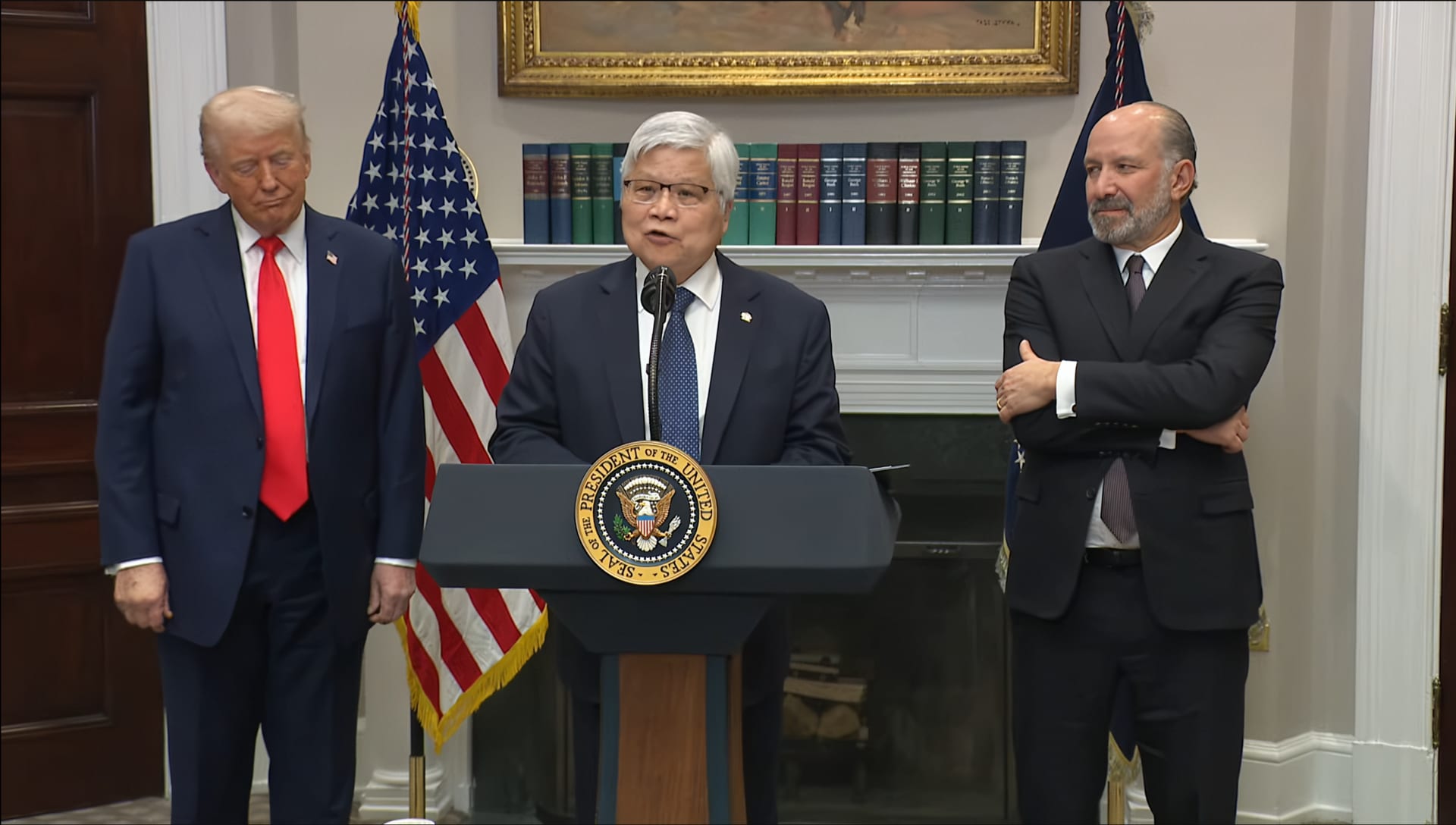
TSMC−3.23% — TSMC, down 3.23 percent today, the Taiwanese company that makes most of the world's most advanced chips, posted the strongest quarter in its history, and the rout around it says the argument has moved. Net profit rose 69% to a sixth consecutive record, on demand chief executive C.C. Wei tied to "the increasing adoption of agentic AI" 1. The quarter printed a 66.4% gross margin 1. The consequential line belonged to chief financial officer Wendell Huang: capital spending goes "significantly higher" from here, paid for with about two points of gross-margin dilution this year 1.
The demand link has receipts into 2030
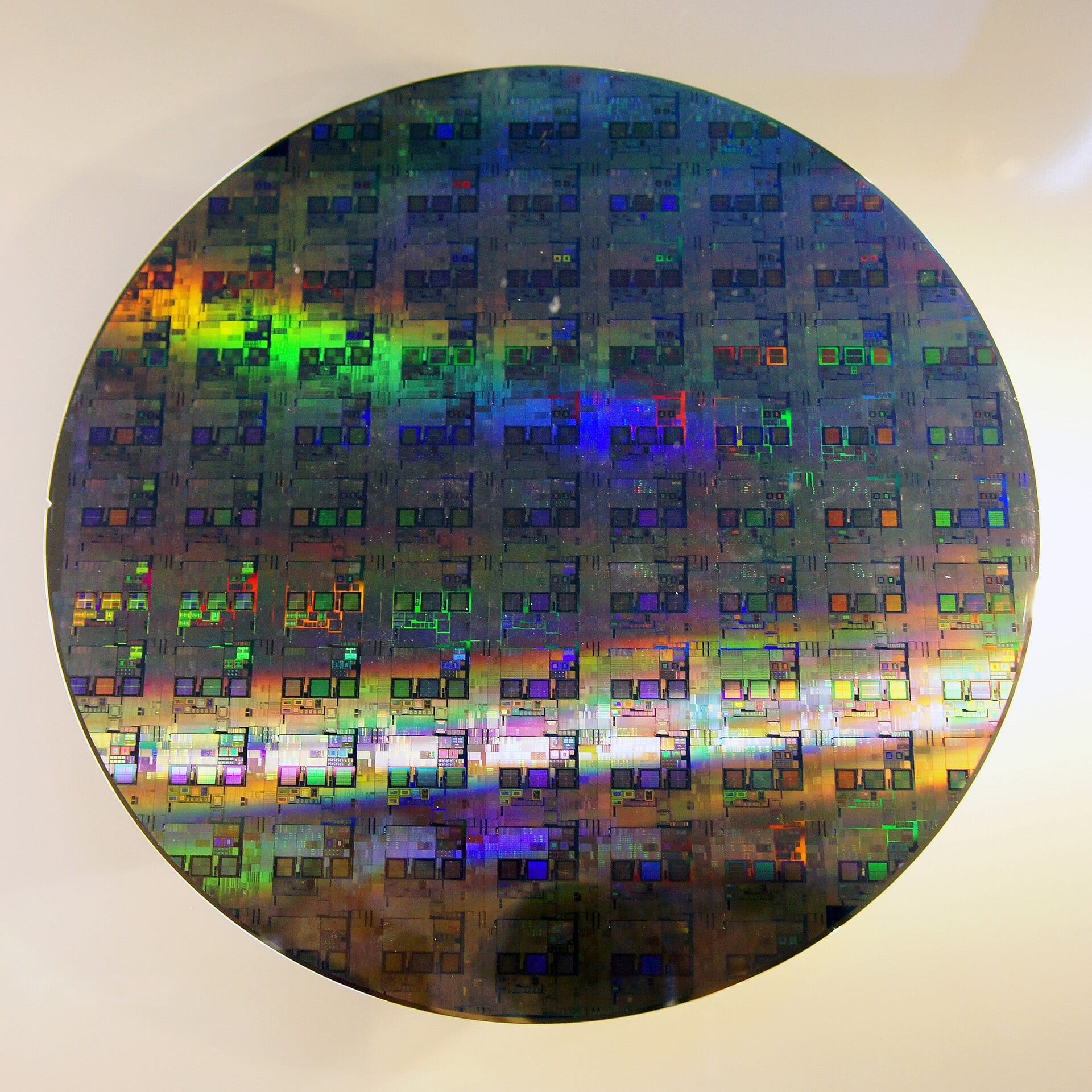
Every hop at the front of the chain is observable. Companies deploy agents; agents run on accelerators; accelerators are cut from leading-edge wafers; and those wafers come overwhelmingly from TSMC, which just lifted its 2026 growth forecast to 44% in dollar terms 2. The layer underneath shows the same signature. ASML−1.19% — ASML, down 1.19 percent today, the Dutch maker of the lithography machines every advanced fab depends on, says capacity growth of 30% in 2027 and again in 2028 still leaves it short of demand, and customers are asking to reserve 2029 and 2030 output it has not agreed to sell 3. Camtek−7.47% — Camtek, down 7.47 percent today, which sells the inspection tools advanced packaging needs, has booked more than $800 million of orders this year 4. Yesterday's column set TSMC's capex line as the test of the tool selloff; this print is the receipt.
TSMC's quarterly revenue has more than doubled since the end of 2023
Data
| Revenue | |
|---|---|
| Q4 '23 | $20.36B |
| Q1 '24 | $18.53B |
| Q2 '24 | $20.7B |
| Q3 '24 | $24.05B |
| Q4 '24 | $26.73B |
| Q1 '25 | $25.42B |
| Q2 '25 | $31.95B |
| Q3 '25 | $32.48B |
| Q4 '25 | $33.45B |
| Q1 '26 | $35.43B |
| Q2 '26 | $39.85B |
| Q3 '26 | $46.72B |
TSMC pays for the buildout from its own margin
TSMC's gross margin has climbed 12 points in three years
Data
| Gross margin | |
|---|---|
| Q3 '23 | 54.3% |
| Q4 '23 | 53% |
| Q1 '24 | 53.1% |
| Q2 '24 | 53.2% |
| Q3 '24 | 57.8% |
| Q4 '24 | 59% |
| Q1 '25 | 58.8% |
| Q2 '25 | 58.6% |
| Q3 '25 | 59.5% |
| Q4 '25 | 62.3% |
| Q1 '26 | 66.2% |
| Q2 '26 | 67.7% |
| Q3 '26 | 66.4% |
The 2026 capital budget stays at $60–65 billion, with more promised beyond 1, and TSMC is weighing US sites beyond Arizona, including Texas, run directly or with partners such as Elon Musk's Terrafab 1. That is where the money separates: TSMC holders carry the dilution, the toolmakers carry the orders, and the credit risk lands on the borrowers further down the chain.
The 2026 budget is $60–65 billion; 2027 estimates run to $85–90 billion
- Capital spending
- Estimate
Data
| Capital spending | |
|---|---|
| 2026 budget (estimate) | $62.5B ($60–65B) |
| 2027 consensus (estimate) | $75B |
| 2027 GS/UBS models (estimate) | $87.5B ($85–90B) |
The weak link is now the cost of money
Most of this week's selling was about money. The rout's stated worries are interest rates, financing for the AI buildout and the longevity of the chip cycle 8; September inflation printed 3.7% 7, and more than $1.5 trillion came off the Philadelphia Semiconductor Index, the main US chip-stock benchmark, in six sessions 8. The cycle worry sits oddly against an order book customers are trying to extend into 2030 3. CoreWeave−5.79% — CoreWeave, down 5.79 percent today, the AI cloud operator funding its data centers with debt, fell 15% as its bonds yielded about the same 9.
Margin, capex and CoreWeave's funding decide the next leg
Three disclosures decide the next leg. Whether fourth-quarter gross margin lands inside the drop of at least 0.4 points that Huang guided 1. Whether 2027 capital spending follows the $75 billion consensus 8. Goldman Sachs−0.49% — Goldman Sachs, down 0.49 percent today and UBS model $85–90 billion, and which side TSMC confirms moves every toolmaker's order book 8. And CoreWeave's next funding and backlog update, the first test of what those yields do to a leveraged buildout 9. A build funded from a 66% gross margin is the version of AI expansion a rate scare slows least: agents still reach into ordinary work on these wafers, and the pace now clears or breaks at the lenders.
Deepdive
AI-generated from this story and its cited sources. Not investment advice.