SMIC's 26-28% margin guide is the first price tag on Huawei's chip workaround; the stock fell 4.4%
The foundry behind Huawei's wafer-hungry Kirin 9050 Pro and Ascend 950 guided Q3 gross margin to 26 to 28 percent, its first real pricing power as a DUV-bound chipmaker. Sellers answered the reopening with a 4.38 percent drop and RMB 991 million of outflows, and the Q3 report now decides whether the guide is a rung or a peak.
 Vincent Jiang · 3 min read
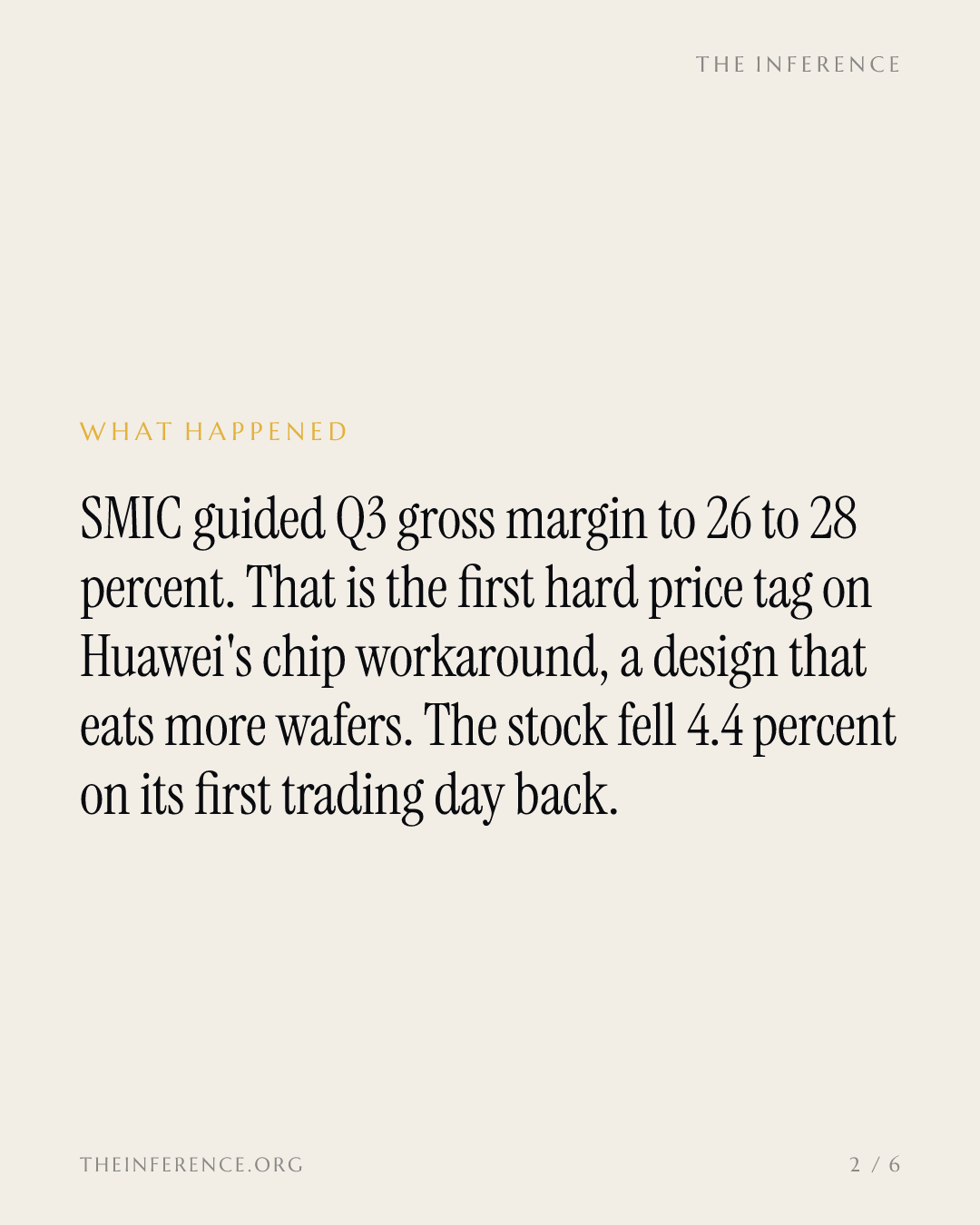
China's markets reopened after the National Day holiday on October 8, 2026, and the selling found the foundry first: SMIC closed down 4.38 percent at CNY 107.08 in Shanghai, its first session after the break 3. It fell more than 5 percent in Hong Kong with a broader semiconductor selloff, Stock Connect investors pulled RMB 991 million, about 16.28 million shares, over the latest five trading days, and the stock sits 39.3 percent below its 52-week high of CNY 176.34 3.
The margin guide that prices a secret
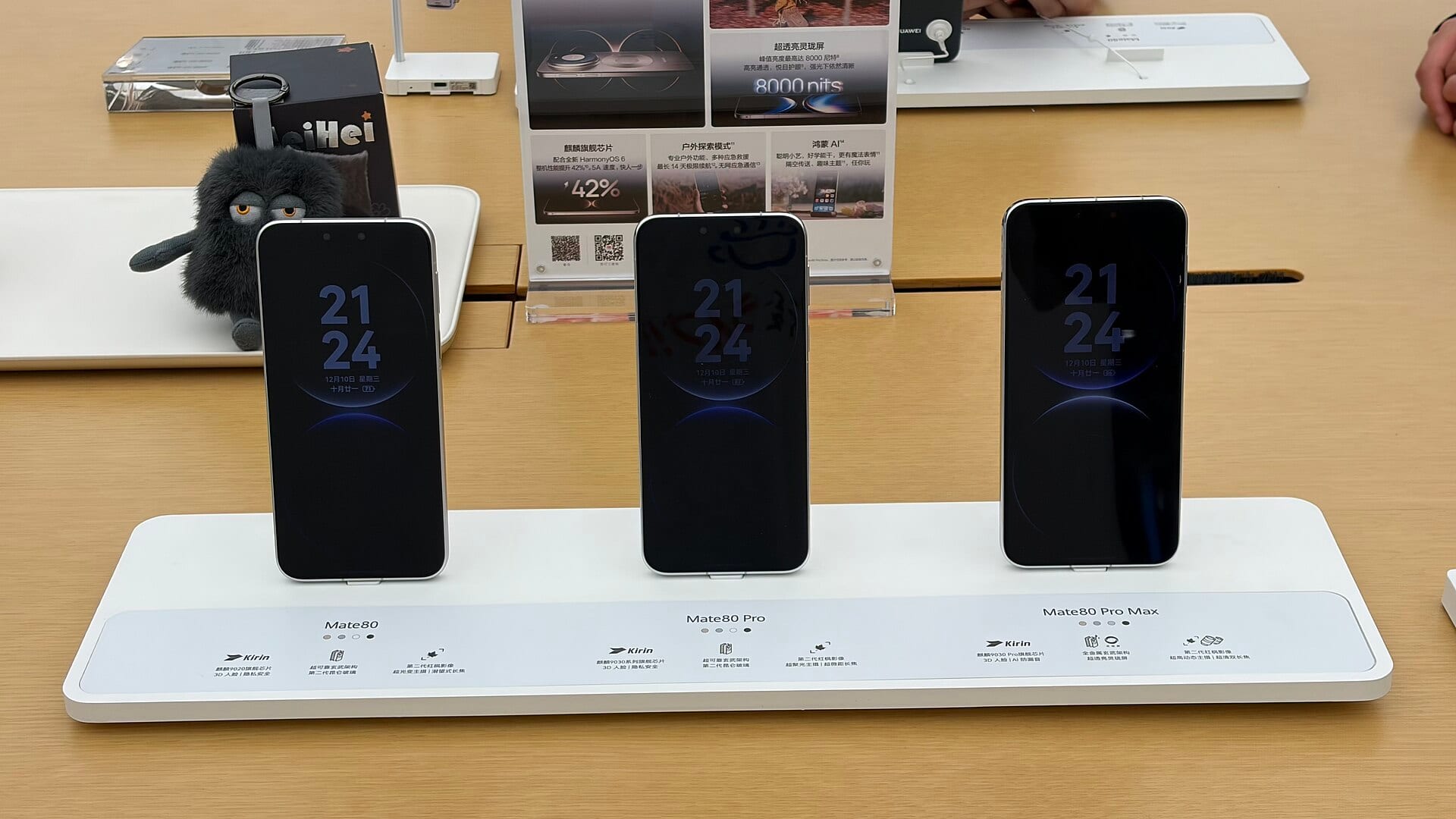
The fight is over SMIC's Q3 gross-margin guide of 26 to 28 percent 13, the first hard number attached to Huawei's chip workaround. On October 1 Huawei launched the Mate 90 with a Kirin 9050 Pro built on its LogicFolding method, which restructures chip wiring in three dimensions and requires more wafers to produce 46. Consumer chief Richard Yu said advanced semiconductor capacity "remains very limited in China" and Huawei's Ascend AI chips "draw on that same" constrained supply 6. Huawei did not disclose who makes the Kirin 9050 Pro, and SMIC did not respond to a request for comment 6.
An independent teardown says where the silicon comes from
That silence narrowed on October 3, when the Geekerwan teardown of a Mate 90 Pro Max confirmed the Kirin 9050 Pro is a two-die stack: a logic die on SMIC's N+3 process bonded face-to-face with a cache and input-output die on SMIC's N+2, joined by hybrid bonding at a 1.5-micron pitch 7. The chip Huawei will not attribute is, in silicon, a SMIC product through and through.
The scarcity is visible in the P&L
SMIC's Q2 2026 revenue reached USD 3,006 million, up 20 percent sequentially, with gross margin up 5.2 points to 25.3 percent, utilization at 93.7 percent, wafer shipments up 14.4 percent and blended average selling prices up 5.7 percent 13. Attributable profit rose to USD 479.2 million from USD 132.5 million a year earlier 2. The bill lands on Huawei and Chinese phone buyers: the Mate 90 Pro Max costs 9,999 yuan, 2,000 yuan above its predecessor, and memory adds about USD 200 per handset 4.
SMIC's Q3 guide asks gross margin to clear the 25.3 percent it just delivered
- Gross margin (%)
- Estimate
Data
| Gross margin (%) | |
|---|---|
| H1 2026 | 22.9% |
| Q2 2026 | 25.3% |
| Q3 2026 guide (estimate) | 27% (26–28%) |
Depreciation eats the next quarter
SMIC itself flags higher depreciation and power costs ahead 3. The expansion is already being booked: cleanroom leader Both Engineering won RMB 5.83 billion in first-half orders, more than all of 2025, with SMIC among its named customers, and revenue recognized six to twelve months later 5. Meanwhile Qualcomm agreed on October 5 to license Huawei's LogicFolding patents, the first time a US chipmaker has paid for a Chinese 3D architecture 7, so the wafer-hungry design is likely to spread.
Bulls and flows disagree
Goldman Sachs−0.43% — Goldman Sachs, down 0.43 percent today kept a Buy rating and raised its SMIC target from HKD 135 to HKD 153 on September 28 1. The sellers answer with flows, not forecasts: the reopening selloff and the Stock Connect outflows 3. The pricing-power read holds only if blended ASPs keep rising and utilization stays near the 93.7 percent SMIC just reported, and it fails if either flattens while depreciation builds 13. The Q3 print decides whether 26 to 28 percent is a rung or a peak, and it rests on a customer neither party will name in writing.
Deepdive
AI-generated from this story and its cited sources. Not investment advice.