Solar robot maker Charge Robotics puts its Series B, 2027 factory and fleet financing in a job posting
The solar-robotics startup's first finance chief will run its Series B end to end and arrange equipment leases and asset-backed debt for its robot fleet, in a field where rivals just landed fresh capital and EPC deals.
 Richard Tangthree-minute read
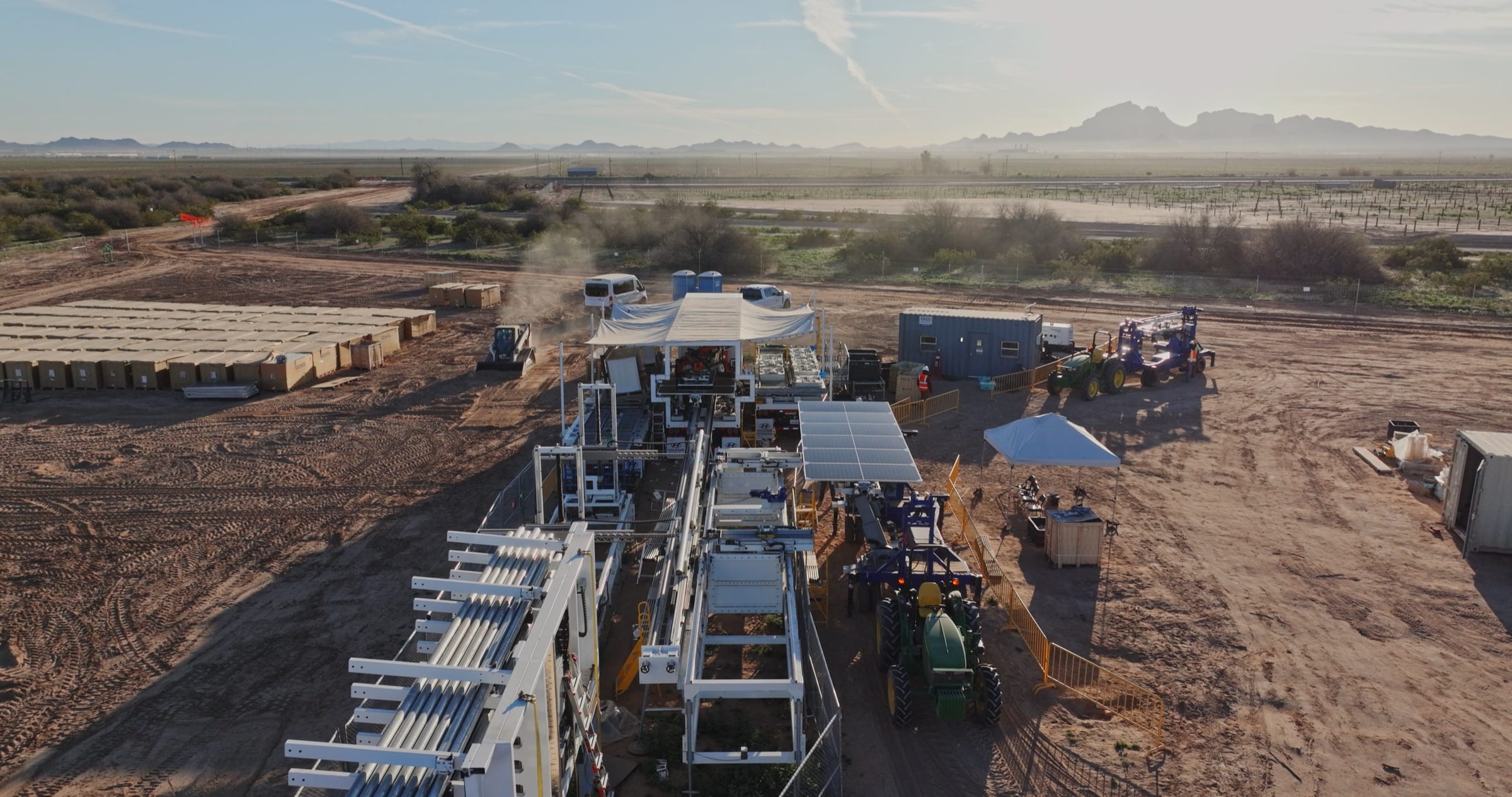
Charge Robotics has disclosed its next chapter in a job description. A Head of Finance posting dated November 1 says the startup, backed by Lux Capital and Y Combinator, will scale "from a few deployed systems today to a Series B and a dedicated manufacturing facility in early 2027," with the hire running that equity raise end to end. 1 2 A day earlier came its first Lead Recruiter. 2 Read the listing as the admission that matters: the hard part of solar robotics is no longer the robot, it is the balance sheet.
The robot works; the fleet financing does not exist yet
The technical link is built. Charge's Sunrise factory turns a utility-scale site into an assembly line, building up to 1 MW of array per shift, and its robots replace 75 percent of the labor hours in mechanical installation. 3 The company has finished a first deployment with SOLV Energy, the engineering, procurement and construction firm it calls the nation's largest solar builder. 2
What stands between those systems and a fleet is money, and that is what the posting actually advertises: equipment leases and asset-backed lending secured by the robots themselves, plus R&D-credit monetization and a first audit. 1 A machine with contracted output is collateral, so this hire is a mandate for lenders as much as for equity investors.
Company-stated robot throughput runs far past a manual crew
The machines claim the pace; the race is who finances the fleet
Data
| Value | Range | |
|---|---|---|
| Manual crew | 800 panels/day | — |
| Charge Sunrise (10-person crew) | 850 panels/day | 850–1,000 panels/day |
| Gritt-assisted crew | 3,000 panels/day | 3,000–4,000 panels/day |
Rivals re-armed while Charge was building
Gritt came out of stealth in July with $32 million for robotic arms that bolt onto the skid steers crews already run, placing panels at several times a manual crew's pace. 4 MasTec, the NYSE-listed infrastructure builder, became its second EPC customer on November 10, after Burns & McDonnell signed in August. 5 Planted raised $31.8 million in September with Alphabet's−1.04% — Alphabet, down 1.04 percent today Google among its investors. 6
And SOLV, Charge's launch customer, is hedging: it is the EPC on Terabase's first Terafab V2 deployment, autonomous rovers delivering assembled panel tables at Matrix Renewables' 457 MW Tormes project in Texas, announced November 12. 7 SOLV is itself Nasdaq-listed and guides to about $4 billion of revenue this year, so the one customer running rival systems is easy to watch. 7
The race now belongs to whoever funds the fleet
Every deck in this field wagers on the same chain: panels are cheap, construction crews are retiring, robots close the gap, and the far end is construction labor itself. 4 What none of them has yet is fleets, and fleets are bought, not demoed. Charge just posted the job that buys them. The builder that turns working robots into financed fleets on real sites deserves to win this, and the next year shows who does it.
Get Robotics & Defense by email, free
Robots, self-driving vehicles, drones and AI in defense. In our daily email, every weekday.
Reader comments
0 comments