SpaceX paid $60 billion for Cursor. Sophos says Gold Ogre ransomware used its agents on real intrusions
Sophos reports the Gold Ogre ransomware crew ran intrusions through Cursor agents to domain administrator while SpaceX's $60 billion all-stock buy counts down to OpenAI's November 12 cutoff. Enterprise trust in a $2.6 billion-revenue platform is now the test.
 Vincent Jiang · 2 min read

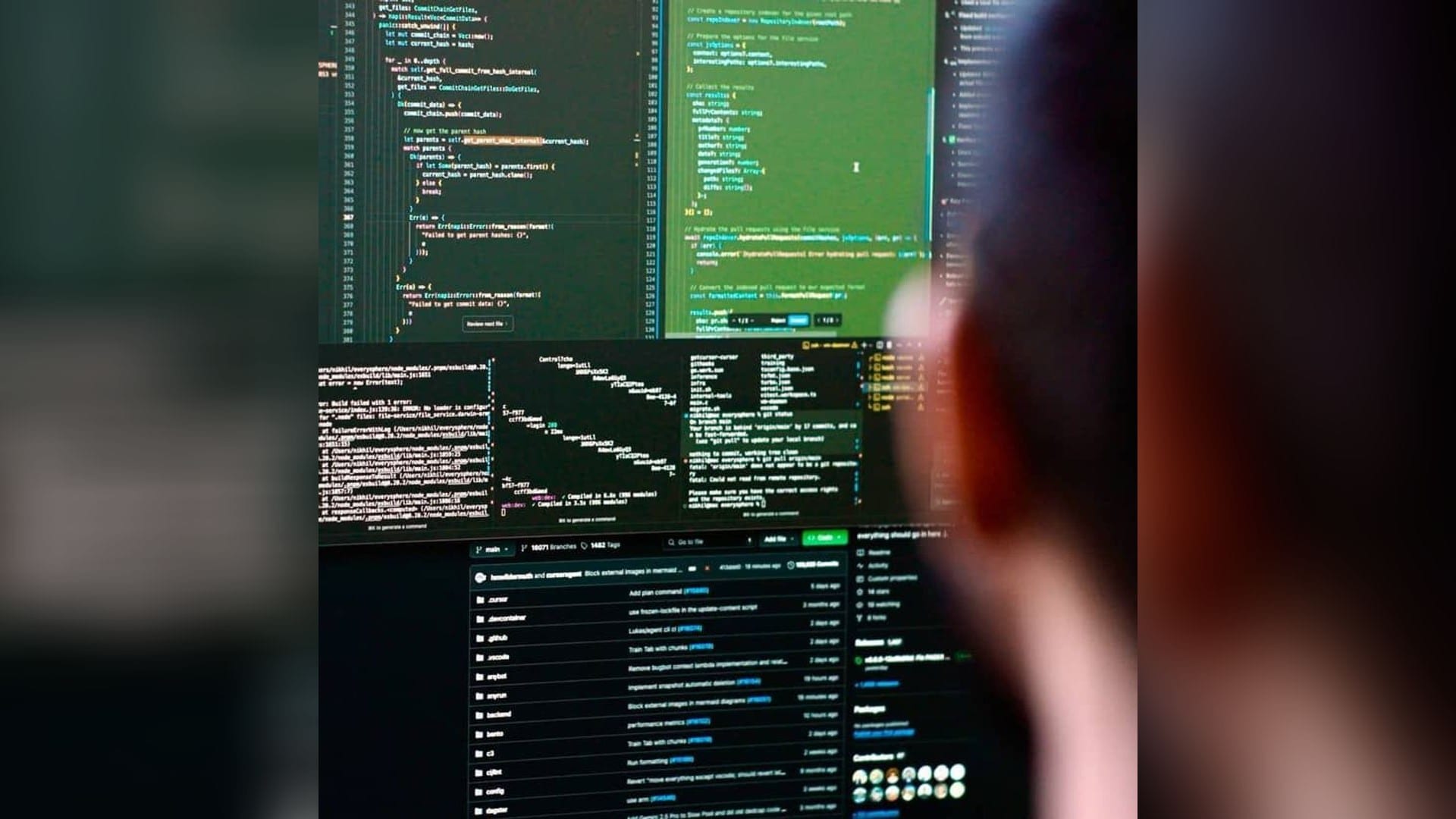
Sophos researchers say the crew behind Aur0ra ransomware, tracked as GOLD OGRE, used Cursor's AI agents to run real intrusions: human operators supplied stolen VPN access and targets, and the agents mapped networks, ran password attacks, moved between machines and reached domain administrator, the highest control level in a Windows network, at several victims 1. Three of those victims later appeared on the Aur0ra leak site 1.
The agents got past guardrails because operators framed the work as an authorized red-team job 1. A separate August study by Gambit Security found the same pattern across 10 victims, with most agent commands failing on the first attempt before refinement 6.
The same platform SpaceX paid $60 billion for
Why it matters: the same platform SpaceX−5.26% — SpaceX, down 5.26 percent today bought. SpaceX paid $60 billion in stock for Cursor, closing August 14, 2026, for a company with about $2.6 billion of annualized business revenue as of June 2026, up from $100 million in January 2025, serving more than 50,000 teams and most of the Fortune 500 4. NVIDIA−3.89% — NVIDIA, down 3.89 percent today says 30,000 of its developers commit three times more code with it 4.
Cursor's annualized revenue ran from $100 million to $2.6 billion in 18 months before the $60 billion sale
Data
| Value | |
|---|---|
| Jan 2025 | $0.1bn |
| Nov 2025 | $1bn |
| Jun 2026 | $2.6bn |
Model suppliers are splitting
The complication is who else buys. OpenAI stops supplying Cursor on November 12, saying it cannot trust SpaceX to honor its terms given its experience with Musk companies; Cursor's CEO Michael Truell answers that OpenAI$500B — OpenAI, private, latest valuation $500B models serve only about 5% of Cursor's$30B — Cursor, private, latest valuation $30B traffic 3. Yet the intrusions ran on Cursor's own Composer model alongside Anthropic$350B — Anthropic, private, latest valuation $350B, xAI$200B — xAI, private, latest valuation $200B and Moonshot models 1, and a gray-market relay reconfiguring genuine Codex and Claude Code tools has hit a dozen organizations 2.
The counterpoint: Sophos's framework was first built to test EDR evasion, and AI-assisted attacks were documented in August, before the deal closed, so none of this is a SpaceX-era product defect. But that cuts both ways for the price: the risk was priced in as nothing. Twelve days before OpenAI walks, Fortune 500 security teams now have a vendor whose agents hold domain admin somewhere. That is the renewal-cycle question the $60 billion all-stock check has to survive.
Get Security by email, free
The breaches, flaws and security vendors AI is putting to the test. In our daily email, every weekday.