SpaceX pays Singulus $67 million for the first Starmind solar-cell line, its first priced orbital hardware
The first priced order for Elon Musk's orbital data centers lands while $40 billion of SpaceX's nine-month capex still builds compute on the ground. Singulus shareholders take the single-customer risk, and Friday's Starship flight sets the timetable.
 Richard Tangthree-minute read
SpaceX+1.14% — SpaceX, up 1.14 percent today has started paying cash for its orbital data centers. On Tuesday Singulus Technologies, the German solar-equipment maker, announced a supply contract for a turnkey line to manufacture high-efficiency heterojunction solar cells for Starmind, the constellation of satellites SpaceX wants running AI workloads in orbit. The first line is worth more than €60 million ($67 million), arrives in the first half of 2027, and more are planned 1, 2. SpaceX funded Singulus significantly in March and again in October 2. Starmind has lived in filings and predictions; on the public record, this is its first priced hardware.
The satellite is a power plant first
In orbit there is no grid and no cooling water: every satellite must make its own power and radiate its own heat. The first spacecraft, Starmind AI1, wraps a space-optimized Nvidia−4.66% — Nvidia, down 4.66 percent today rack in vast solar arrays and is rated for 175 kilowatts of average compute 3.
The manufacturing bottleneck is cells rather than chips, so SpaceX is buying the tooling: Singulus says its line will scale at the planned Gigasat plant in Bastrop, Texas toward more than 100 gigawatts of production equipment 2, 4. That is the 100 gigawatts a year in Musk's orbital arithmetic, worth $1 trillion of annual revenue 5. The FCC application covers up to one million satellites, first launches expected in late 2027 1.
The money is still on the ground
SpaceX spent $48 billion on capital projects in the first nine months of 2026 5. The Super Intelligence segment, which holds the ground data centers, took $40 billion of it 5.
Capex is compounding toward the biggest quarter in SpaceX's history
Q4 guidance would nearly double the Q3 spend
- Capital spending
- Estimate
Data
| Capital spending | |
|---|---|
| Q1 2026 | $10.1B |
| Q2 2026 | $18.4B |
| Q3 2026 | $19.6B |
| Q4 2026 (guide) (estimate) | $37.5B ($35–40B) |
No analyst estimate values orbit yet: consensus for fiscal 2028 is $335 billion, almost all of it from renting out ground compute, against the 2.2 gigawatts SpaceX was running at the end of October 5. Musk has conceded that plentiful, cheap compute would cut SpaceX revenue 5. Singulus shareholders, up 10% on the day, hold a one-customer story with no flight heritage, while SpaceX investors fund both builds at once 1.
Discount the calendar, not the direction
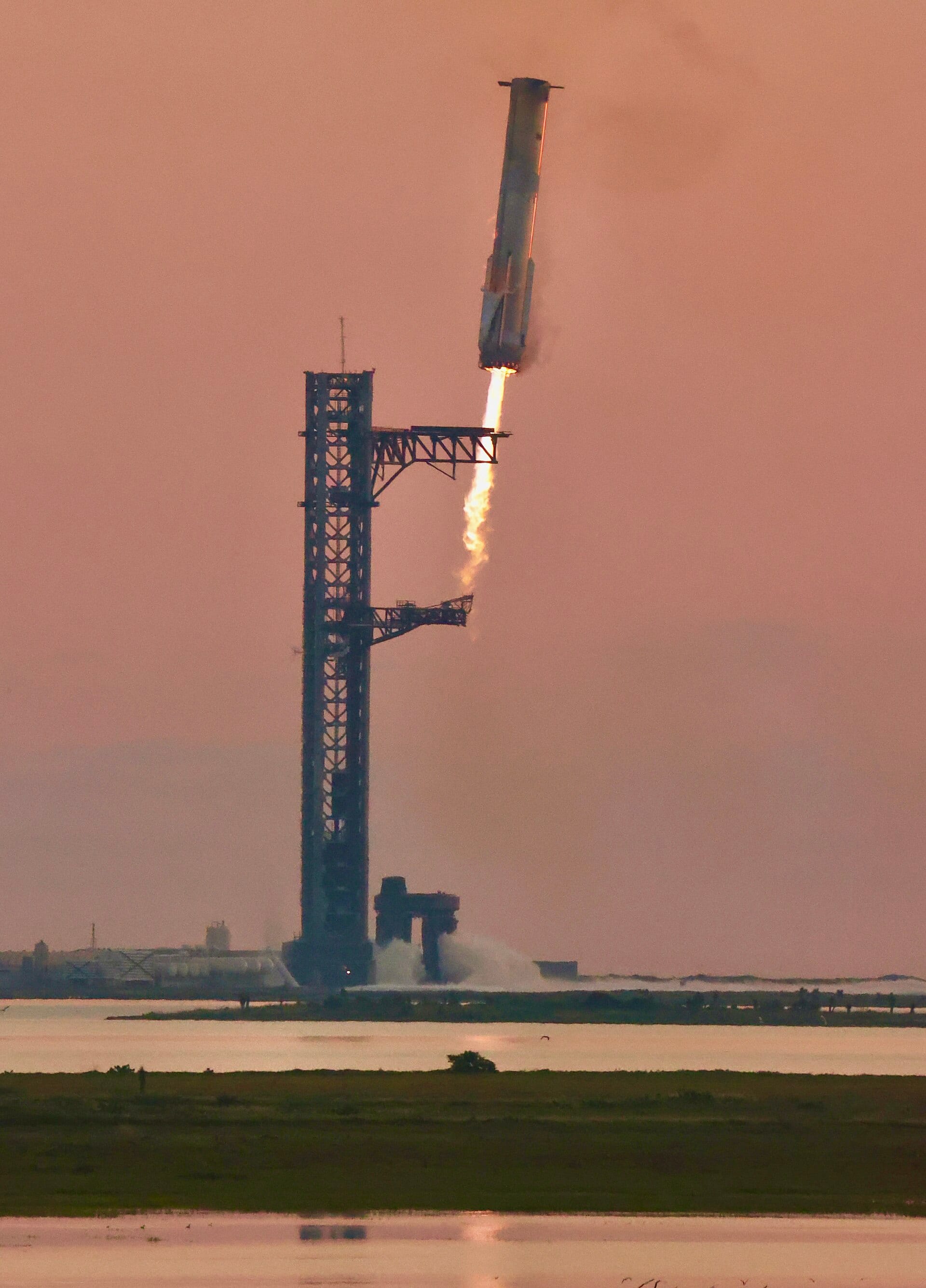
SpaceX's own S-1, filed in May 2026, told regulators the orbital program relies on "unproven technologies, or technologies that do not exist," with deployment "as early as 2028" 3, a year past the 2027 dates Musk gives in public 6. Sam Altman's stated objections are launch cost and on-orbit maintenance 4; only cadence answers either. Musk has promised weekly Starship flights in the first half of 2027 5. Flight 15, targeted for November 13, will attempt the first catch of both stages, the reuse step any cadence depends on 7.
The catch is the first real test
The arc is credible: the power and cooling case for orbit is physics, and resistance on the ground is now electoral, with voters in ten states approving bans or moratoriums on new AI data centers last week 8. Tuesday's order is real money on that arc. The calendar is still a promise, and Friday's catch is its first test.
Get Robotics & Defense by email, free
Robots, self-driving vehicles, drones and AI in defense. In our daily email, every weekday.