Taiwan's binding nuclear referendum passed with 62% of votes, and TSMC's Taiwan risk waits for 2028
Taiwan's nine-in-one elections ended in a split: the KMT held Greater Taipei, the DPP took Taichung and the nuclear referendum passed as binding. For AI and chip investors the status quo holds, and the real decision waits for the early-2028 presidential vote.
 Richard Tangfive-minute read
Drafted with AI from the documents listed under Sources, then edited and fact-checked by Richard Tang. How we work
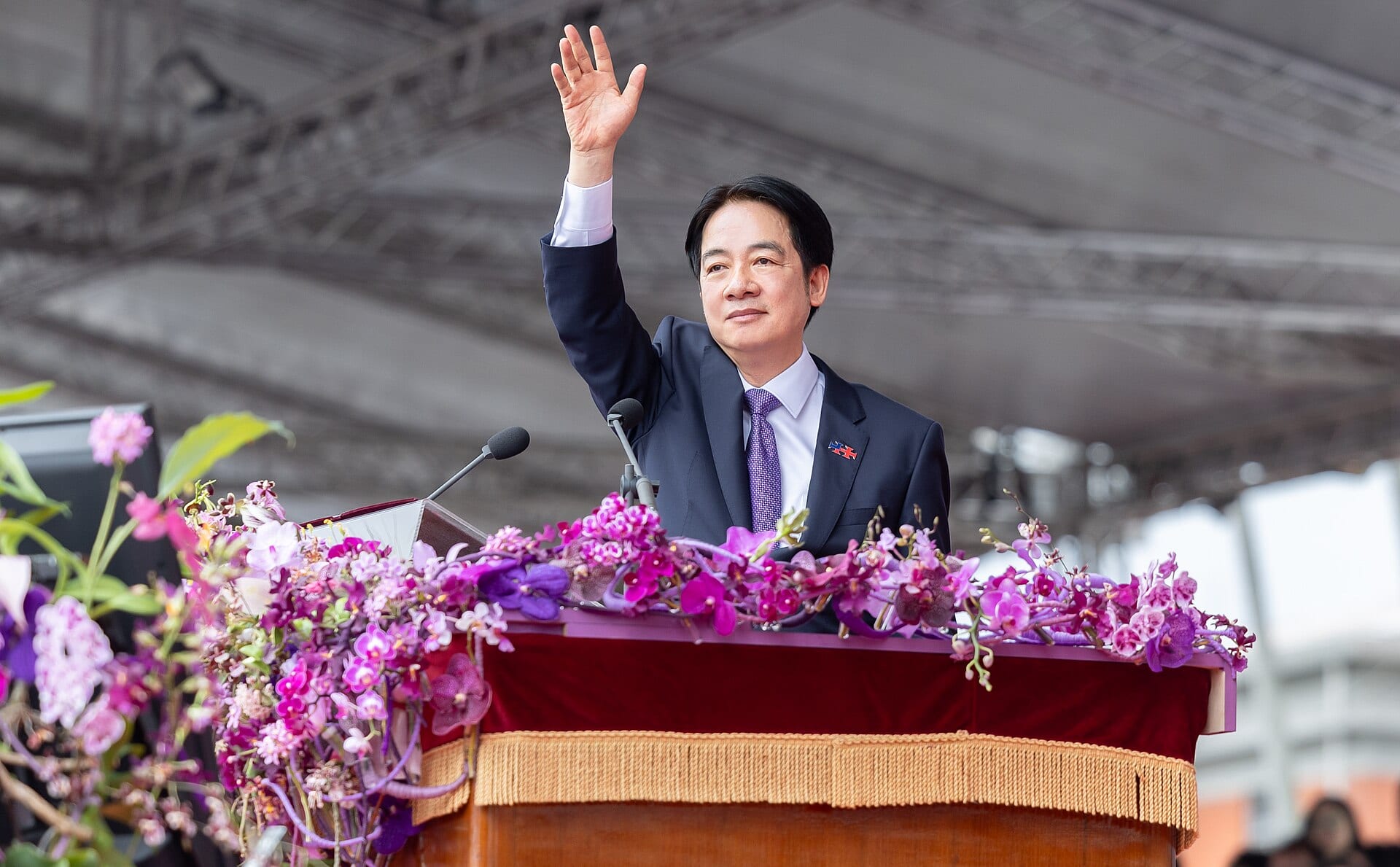
Taiwan voted on Saturday in its nine-in-one local elections, and delivered a split: the opposition KMT held Greater Taipei, the ruling DPP took Taichung and a KMT-backed nuclear referendum passed, clearing the legal thresholds to be binding 457. For markets the message is continuity. The presidency stays with the DPP until 2028, nothing in these ballots touches 2026 chip shipments, and we see no change for US stocks, macro or the AI trade 457.
Nothing in Saturday's vote moves the trade
US stocks: no change, medium. Taiwan's local ballots have not moved the chip trade before, and this mixed result leaves the DPP presidency intact; Friday's QQQ close at 650.99, up 2.7 percent, was set by US risk appetite 12.
Macro: no change, high. County-level politics does not touch US rates or the dollar; the 10-year Treasury yield ended the week at 4.94 percent 3.
AI: no change, medium. The cross-strait decision waits for 2028, and the nuclear result supports TSMC's+3.08% — TSMC, up 3.08 percent today domestic power supply, a modest positive already priced along its restart path 45.
The DPP gained ground locally without breaking the KMT's hold on the north
Taiwan's "nine-in-one" elections fill nine categories of local office, 11,051 posts down to village chiefs, every four years 6. This year the six biggest cities split three and three: the KMT kept Taipei, New Taipei and Taoyuan, while the DPP held Kaohsiung and Tainan and retook Taichung, where Ho Hsin-chun defeated Johnny Chiang, the chosen successor of outgoing mayor Lu Shiow-yen 47. The DPP won nine city and county executive seats overall, up from five four years ago 7.
Taipei holds, and the Ocean Current stalls
In the capital, KMT incumbent Chiang Wan-an won a second term, leading DPP challenger Puma Shen by roughly 53.8 to 45.6 percent with most stations counted 8. Shen, a lawmaker who specializes in China's information warfare, was sanctioned by Beijing and wanted by Chinese police over separatism allegations 7. The youth-driven "Ocean Current" around Shen energized the DPP nationally, but Greater Taipei held; Shen still ran the party's best Taipei race in three decades 4. KMT chairwoman Cheng Li-wun, whom China backs for closer cross-strait ties, did not resign after the mixed result, keeping her 2028 nomination path open; Lu Shiow-yen's weakened position dims hers 14.
The nuclear referendum passes and binds at 62 percent
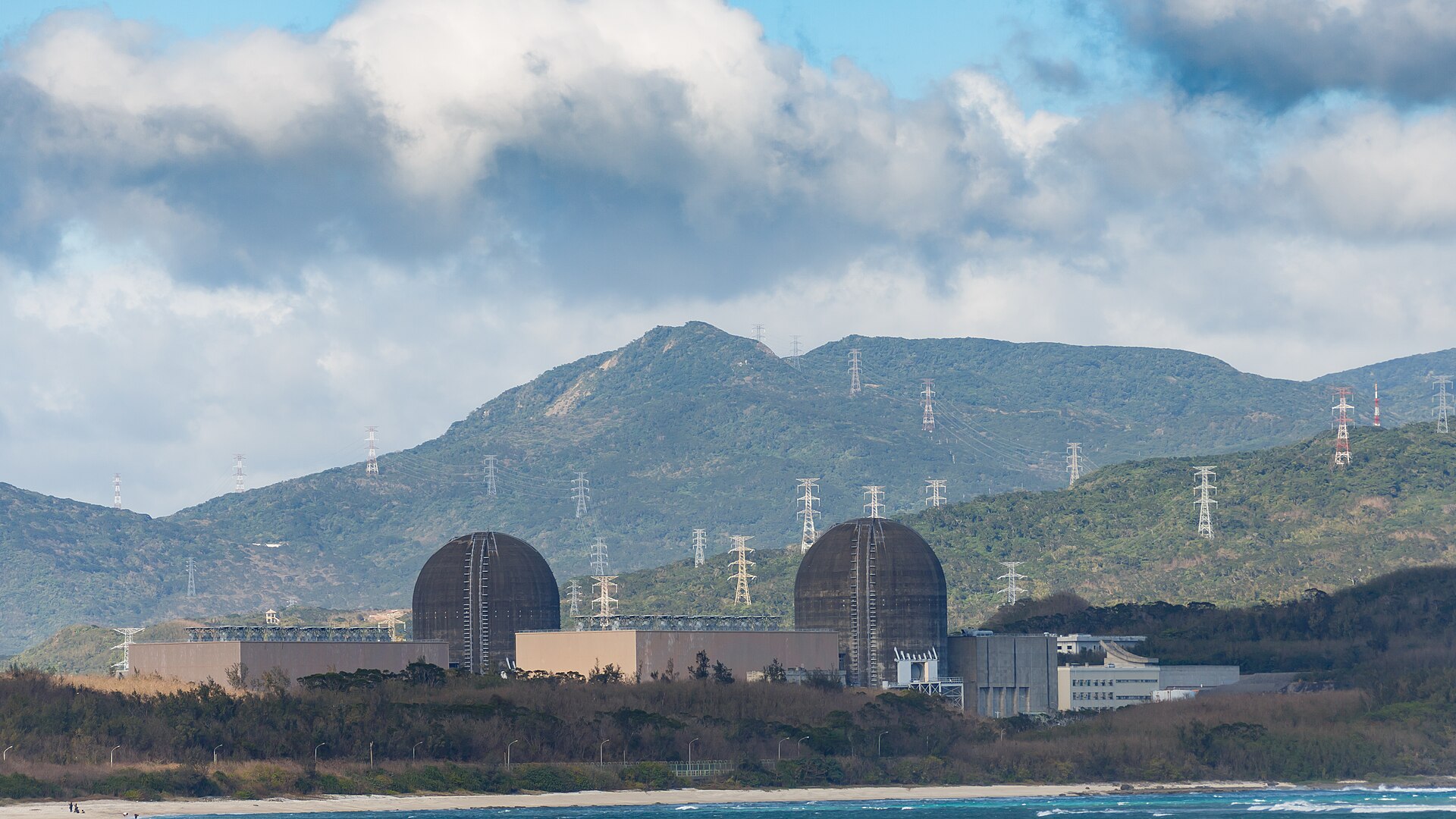
A referendum asked whether Taiwan should use nuclear power to boost the economy and abandon its nuclear-free homeland policy. It passed with about 62 percent of valid ballots, above the quarter-of-the-electorate floor required to make it binding 5. It was Taiwan's fourth nuclear referendum in eight years and the first since the island's last reactor shut in May 2025 8. President Lai Ching-te had already opened to nuclear power in March, citing AI's growing electricity demand, and Cheng Li-wun called the result a mandate for a comprehensive restart 5. The Cabinet still requires safety reviews and a waste plan, and the measure names no reactor or deadline 5.
Local landslides have not predicted the presidency
Taiwan's local votes have a record of misleading on the presidency: the KMT won 15 of 22 local posts in 2018 and the DPP's Tsai Ing-wen still won reelection in 2020, then the KMT won 14 in 2022 and Lai won the presidency in 2024 9. The presidency, not city hall, sets cross-strait and defense policy, and Saturday leaves the KMT-TPP legislative majority intact 69. Beijing's longer-term approach is unlikely to hinge on one local vote 9. That is the chain link that matters, and it did not move.
The KMT won 15, then 14, local executive seats and still lost the presidency twice
- KMT
- DPP
Data
| KMT | DPP | |
|---|---|---|
| 2018 | 15 | — |
| 2022 | 14 | 5 |
| 2026 | — | 9 |
The AI story is electricity, and relief is months away
The genuine AI story is electricity. Taiwan's chip and AI build-out is straining the grid, the referendum aligns with the restart path the Lai administration had already taken, and the Maanshan restart passed its initial safety review in September 5. Taipower's assessments come next, so supply relief is months away, not days. TSMC's large US capacity build-out, which we reported earlier, hedges the geography risk either way. Friday's tape confirms the market driver sits elsewhere: QQQ closed at 650.99, up 2.7 percent 2; SMH closed at 440.06, up 4.2 percent 10; and the VIX fell 11 percent to 23.81 11.
Chips led Friday's tape while the VIX fell 11%
Data
| Change on the day | |
|---|---|
| QQQ | 2.7% |
| SMH | 4.2% |
| VIX | -11% |
| Company | Ticker | Better or worse | Why |
|---|---|---|---|
| TSMC | TSM | Slightly better | Binding nuclear vote backs the domestic restart path TSMC's fabs need; geography risk already hedged by US capacity 5 |
| VanEck Semiconductor ETF | SMH | No change | Taiwan governance unchanged; 2026 shipments untouched 10 |
| Nvidia and the AI complex | NVDA and peers | No change | Local ballots leave the legislative majority and policy status quo in place 6 |
Three ways this call breaks
Beijing reads the KMT night as validation and escalates: CSIS expects a strong KMT showing to invite amplified reunification narratives and selective engagement with KMT-led cities 9. A slide from carrots to visible coercion, on top of the roughly 33 Chinese military sorties reported across the vote 8, would reprice the risk.
The restart path stalls: if Taipower's safety assessments or Cabinet review drag past 2027, the power-positive for TSMC's domestic fabs becomes 2028-plus noise 5.
Cheng Li-wun consolidates the KMT nomination early and runs hard on closer ties with China, pulling cross-strait policy to the center of the campaign a year ahead of schedule 19.
The next tests are Taipower's filings and the KMT race
Taipower's Maanshan restart safety filings, the next concrete step from referendum to megawatts 5.
The KMT nomination contest: Lu Shiow-yen is expected to announce a presidential bid within weeks, with Legislative Yuan president Han Kuo-yu waiting behind her 4.
Early-2028 presidential and legislative elections, the vote that actually sets cross-strait policy and, with it, the geography of the AI supply chain 19.
Sources
- 1The Economist, The world in brief: A warm-up vote in Taiwan, 28 November 2026
- 2The Inference, Nasdaq 100 (QQQ) index, as of 27 November 2026
- 3The Inference, 10-year Treasury yield index, as of 27 November 2026
- 4New Bloom Magazine, "Ocean Current" Defeated in 2026 Elections, Even as Overall Results a Mixed Bag for Both KMT and DPP, 28 November 2026
- 5the deep dive, Taiwan Votes to End Nuclear Phaseout After Election Law Change, 28 November 2026
- 6Voice of America, Explainer: Why Beijing is watching Taiwan's local elections, and what they could mean for 2028, 27 November 2026
- 7Outlook India, Taiwan's Ruling DPP Makes Gains In Local Polls, KMT Retains Capital, 28 November 2026
- 8Firstpost, Taiwan voters back nuclear power revival in referendum as opposition retains Taipei, 28 November 2026
- 9CSIS, Taiwan's 2026 Nine-in-One Elections: Things to Watch, 25 November 2026
- 10The Inference, Semiconductors (SMH) index, as of 27 November 2026
- 11The Inference, VIX index, as of 27 November 2026
Get Power by email, free
How AI's hunger for electricity moves utilities, power plants and the grid. In our daily email, every weekday.

Reader comments
0 comments