Technoprobe lost more than 15% in two days as a rate scare hit its 66 times earnings AI memory bet
A rate scare swept chip stocks on October 15–16, 2026, and took more than 15% off Europe's AI-test champion. The order book is still compounding; what re-priced was the assumption that AI memory demand never pauses.
 Richard Tang · 3 min read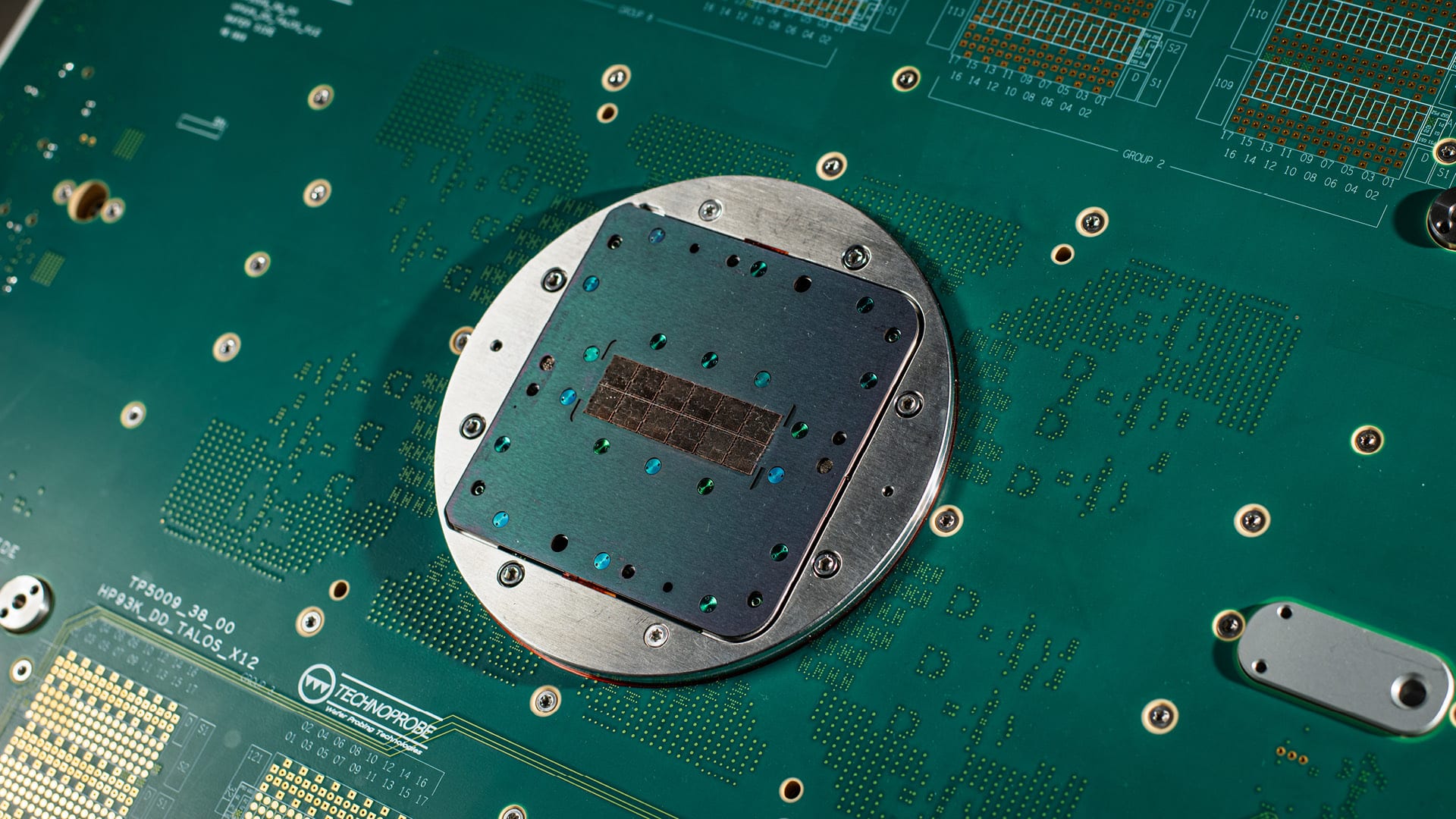
Technoprobe−5.15% — Technoprobe, down 5.15 percent today, the Italian maker of the probe cards that test memory chips before they ship, fell 10.3% on October 15, 2026, the worst stock on Milan's FTSE MIB index, and lost more than 15% across two sessions, to €26.5 123. The shares had climbed from about €9 in the summer of 2025 to a June peak above €37 3. The trigger sat far from its factories: US inflation of 3.7% revived fear of rate hikes, and doubt about the debt behind AI data centers swept chip stocks worldwide 21. What re-priced was the assumption underneath the shares, that AI memory demand never pauses.
From about €9 to a June peak above €37, then a two-day fall to €26.5
Data
| Share price | |
|---|---|
| Summer 2025 | €9 |
| June 2026 peak | €37 |
| 16 October 2026 | €26.5 |
Every AI memory chip has to pass through a probe card
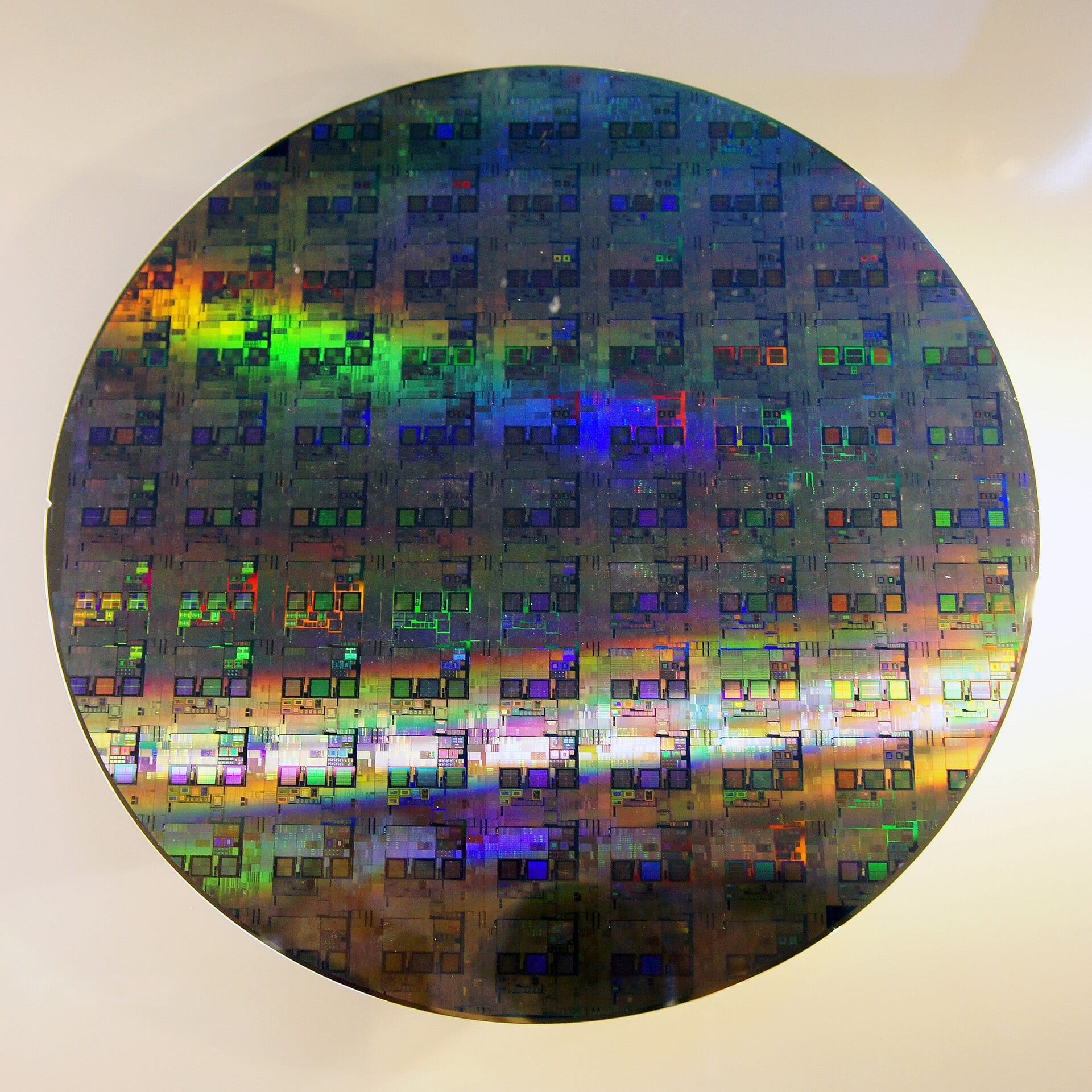
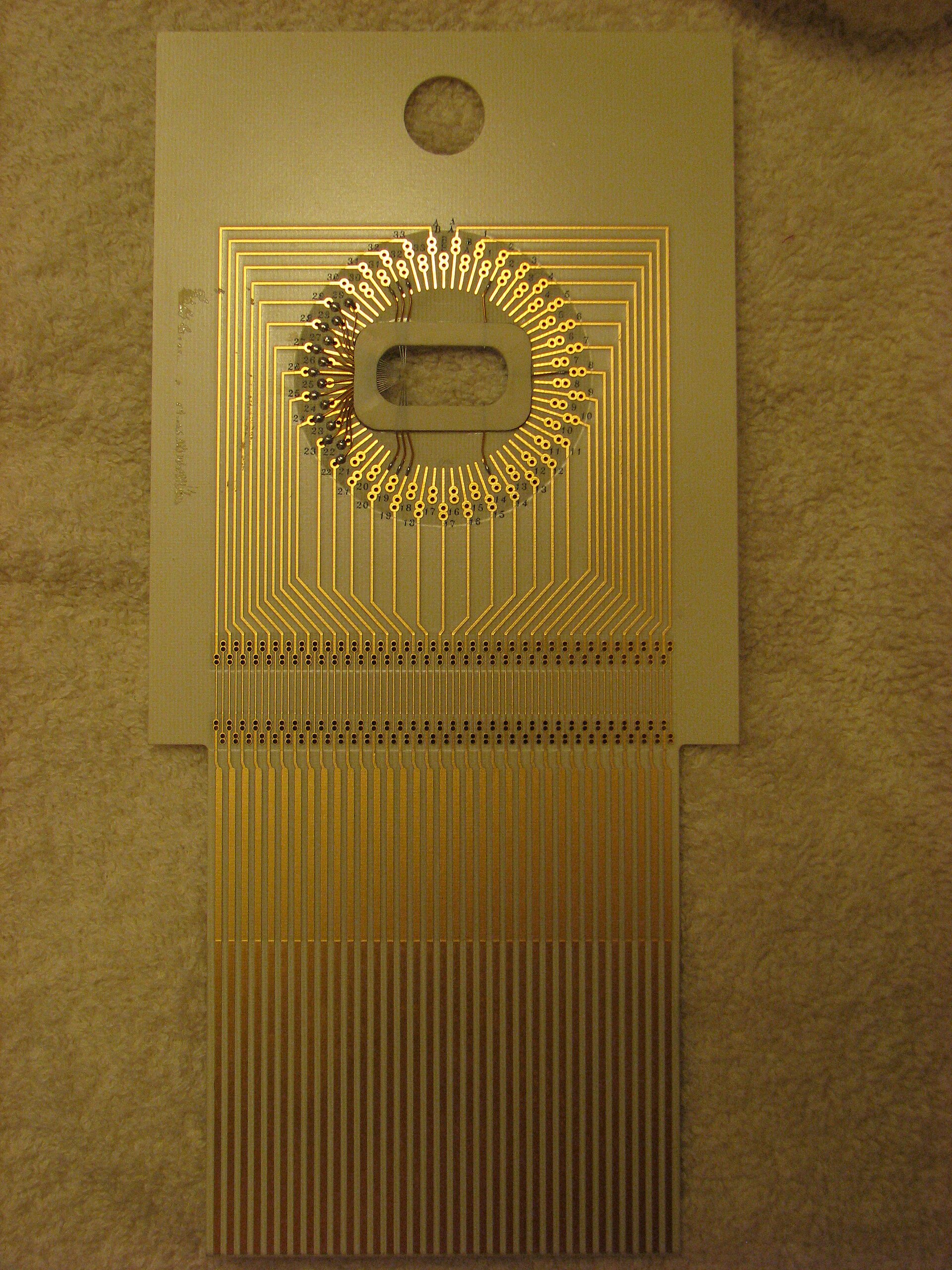
AI data centers run on advanced memory, and no chip ships untested. A probe card is the custom electromechanical interface whose contacts touch a chip while it is still on the silicon wafer and connect it to a tester that checks whether it works; one card can carry more than 50,000 contacts, and each card is built for a single chip design 4. The more advanced the memory the buildout demands, the more validation work lands on Technoprobe's order book 3.
The books delivered what the chain promised
First-half 2026 revenue reached €464 million, 42% more than a year earlier 3. EBITDA, earnings before interest, tax, depreciation and amortization, doubled to €206 million, with the margin up from 32% to 44% 3. Net profit rose to €143 million from €34 million 3. Management lifted 2026 guidance and set a 2027 target that implies revenue more than doubling in two years, at a 46–48% EBITDA margin, and the balance sheet can fund it: no debt and €700 million of cash 3.
Revenue is guided to more than double between 2025 and 2027
- Revenue
- Estimate
Data
| Revenue | |
|---|---|
| 2024 | €540M |
| 2025 | €628M |
| 2026 guidance (estimate) | €1,050M (€1,000–1,100M) |
| 2027 target (estimate) | €1,600M |
The repricing came from the cost of money
The sell-off began with that inflation print, which brought rate-hike fear back into the market 2. Higher rates attack the debt that finances AI data centers, and the market reads that stress through CoreWeave−12.18% — CoreWeave, down 12.18 percent today, the debt-heavy AI data-center operator, whose bonds due in 2032 have slid to 78 cents on the dollar 7. The memory makers upstream were hit harder still: SK hynix−6.61% — SK hynix, down 6.61 percent today and Samsung have each lost more than half from their June highs 6.
Sold-out memory trades at two to three times earnings
Record results have stopped moving prices. TSMC−2.33% — TSMC, down 2.33 percent today, the world's largest contract chipmaker, beat estimates on revenue and profit, and Anthropic$350B — Anthropic, private, latest valuation $350B, the AI lab, booked about $16.8 billion of quarterly revenue, yet chip stocks fell anyway 12. The constraint has shifted from production capacity to financing costs: memory is effectively sold out through 2027, and the companies that make it trade at two to three times forecast earnings 56.
A thin float carries the whole repricing
T Plus, the holding company of the founding Crippa family, controls just over half the capital and nearly two-thirds of the votes, and Teradyne−5.89% — Teradyne, down 5.89 percent today, the US test-equipment maker, holds another 10% 3. Market-wide judgments about AI therefore land on a small traded float, which is how a stock up more than 220% in twelve months can lose a tenth in a day 23. Before the fall it traded at about 66 times expected 2026 earnings, against below 30 for Nvidia−1.59% — Nvidia, down 1.59 percent today, the AI trade's flagship 3. The buyer at that price is underwriting one specific claim: that the compounding runs on without a pause, long enough for earnings to grow into the multiple.
Technoprobe traded at more than twice Nvidia's forward multiple
Data
| Value | |
|---|---|
| Technoprobe | about 66x |
| Nvidia | below 30x |
| Memory makers | 2–3x |
Rates, not probe engineering, will settle this bet
The company earns its growth: it closes the gap between fabricated memory and shippable chips, work the AI buildout cannot skip 4. The bet at 66 times is a different claim, and it will be settled by interest rates and AI balance sheets rather than by probe engineering. The next marker is close: SK hynix, the South Korean memory maker, gives its fourth-quarter outlook on October 28 6.
Deepdive
AI-generated from this story and its cited sources. Not investment advice.